| Late stage barnacle larvae (cyprids) of the abundant Semibalanus balanoides can tolerate weeks embedded in sea-ice
After thawing, most larvae survive, settle, metamorphose, and grow to reproduction. For larvae kept in sea-ice for two weeks, there is little penalty in terms of survival, settlement, metamorphosis, and growth to reproduction. Furthermore, freezing conditions changes cyprid's settlement behavior
In southern New England, USA, Semibalanus settlement in the intertidal coincides with the coldest water and air temperatures, which are often freezing. Thus, larvae sometimes face freezing conditions when settling. Here are some photos of the intertidal, the larvae , and some brave lab members. You can read the whole story here.
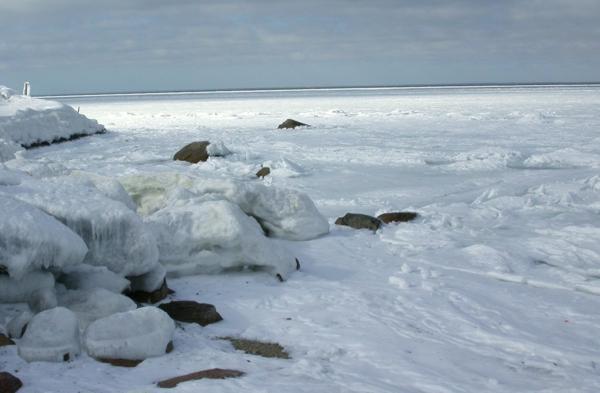 Park Rd. site, in Buzzards Bay, Massachusetts, USA, 41.5325°N, 70.671°W. Other photos of sites covered with ice: 1, 2, and 3. 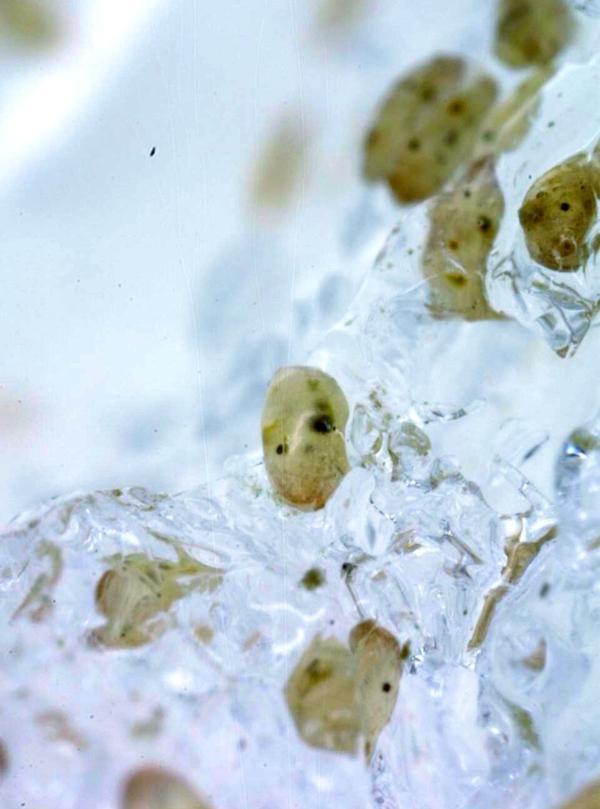 Semibalanus balanoides in ice, sampled from the field.  Semibalanus balanoides in ice, sampled from the field (2). 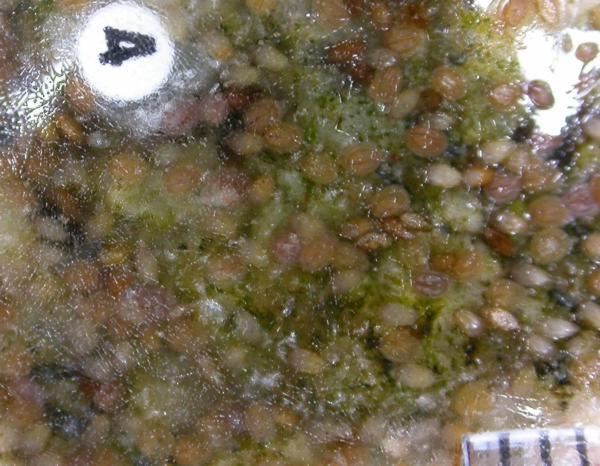 Natural settlement substrate, frozen. (This is actually one of our photo-quadrats.) Recently settled cyprids and metamorphs under a thin ice layer. 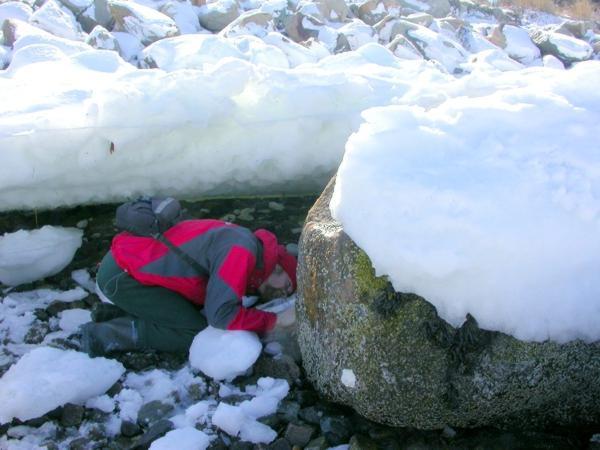 Tom Bird, looking for barnacle settlers. |