
Research Topics and Projects
*Larval transport and larval dispersal *Settlement, recruitment and population ecology *Nearshore and coastal ecology: biological-physical interactions
Research in our lab addresses the factors that determine the distribution and abundance of benthic organisms. We conduct our research in temperate and tropical environments, and our research interests include the following:
- Consequences of environmental heterogeneity, particularly hydrodynamic phenomena, on larval behavior, larval transport, larval dispersal, settlement, recruitment and population dynamics
- Population ecology of nearshore benthic species
- Consequences of physical heterogeneities, particularly hydrodynamic processes and small-scale temperature variability, on the distribution of benthic and large pelagic species
- Geographic and vertical ranges of benthic marine invertebrates, and bathymetric patterns of species diversity
Population Ecology
One goal in our lab is to study population dynamics of benthic species. We address this problem with field, lab, and modelling techniques, studying both the larval and adult phases of benthic invertebrates.

Behavior and Distribution
Larval transport is dependent on larval behavior and physical transport. Larval behavior is also central to understanding how larvae survive predators and feed in a dilute environment.
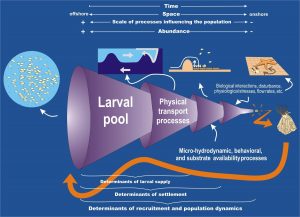
Settlement and Recruitment
Why study larval transport, settlement, and recruitment? Why follow settlers all the way to reproduction?
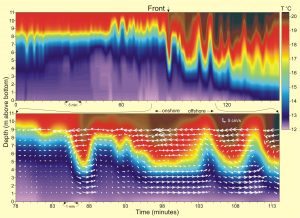
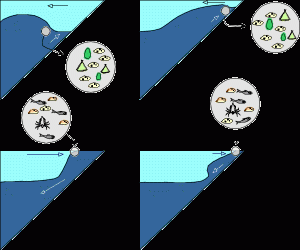
Transport by Internal Bores and Waves and other processes
Mass transport by internal waves is challenging to measure in the field. In particular, transport of plankton by internal waves has rarely been measured. The problem of larval transport by internal tidal bores has multiple facets, and the phenomena involved occur at a variety of temporal and spatial scales, from the fine-scales of larval accumulation at propagating fronts, to the large-scale geophysical modulation of the internal bores.
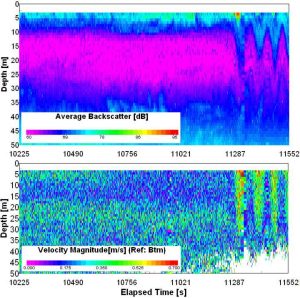
Plankton and nekton distribution in internal waves and bores and other small-scale convergences
Our lab addresses the influence of internal waves and bores and small-scale on zooplankton and nekton distribution.
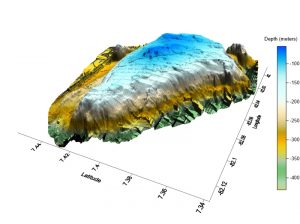
Ecology and Oceanography of Banks
Shallow banks are ecological hotspots, in the sense that densities of key species are elevated. Our lab investigates the ecology of shallow banks and coastal seamounts.
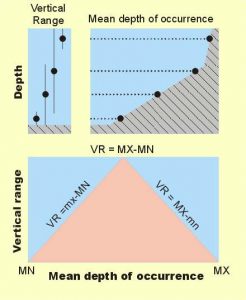
Bathymetric Ranges and Depth Patterns in Species Diversity
This lab is interested in the distribution of bathymetric ranges of benthic deep-sea taxa and how boundaries to distribution determine parabolic patterns in deep-sea diversity observed in "real" taxa.
Select Projects
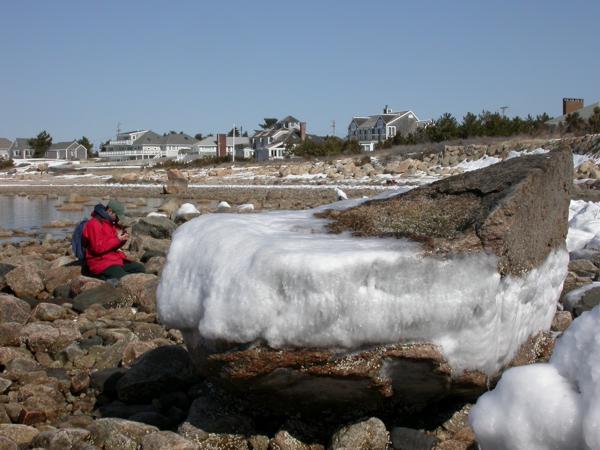
Regional Patterns in Reproduction and Settlement
Species whose geographic ranges span over various regions with different seasonal regimes have different reproductive schedules, with consequences to population connectivity. This project takes advantage of high resolution (weekly) reproduction observations of an abundant barnacle, and larvae collected weekly over 20 years ago in sites spanning from Rhode Island (USA) to Nova Scottia (Canada). The goal is to investigate the consequences of environmental change (temperature) on phenology, larval dispersal and connectivity. This project is the basis of the Ph.D. dissertation of Dr. Jane Weinstock, with the collaboration of Carolyn Tepolt.
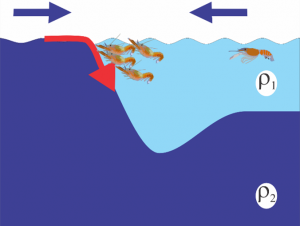
Concentration of lobster larvae and other organisms in small-scale convergences
We are investigating abundance patterns of American lobster larvae and other pelagic and benthic organisms in the surface ocean (neuston). In particular, we are testing whether lobster larvae accumulate in small-scale convergences, where other organisms and prey would could provide refuge and a rich trophic environment. This research also addresses larval condition in convergences, and their color patterns. In collaboration with Carolyn Tepolt and other colleagues.
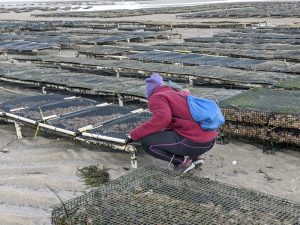
Barnacle Biofouling in oyster farms
Barnacles are a nuisance to oyster farmers, and our lab is investigating the key biological and ecological processes involved. Our current research is also testing potential solutions to mitigate the problem
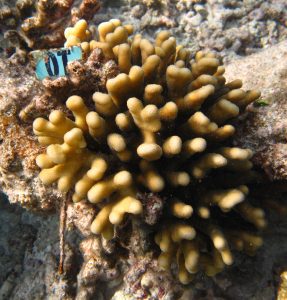
Coral bleaching and small-scale (100's m) temperature variability
In 2010, a major bleaching event in the central Red Sea showed that coral mortality varied not just between reefs but even within different sides of the same reef. Surprisingly, corals in the harshest thermal environment sometimes fared better, suggesting that exposure to frequent temperature extremes may help them adapt to warming seas. This finding is significant because it highlights how small-scale physical processes can shape coral survival, offering clues to where natural “refuges” from climate change may exist.