Biofouling in oyster farms
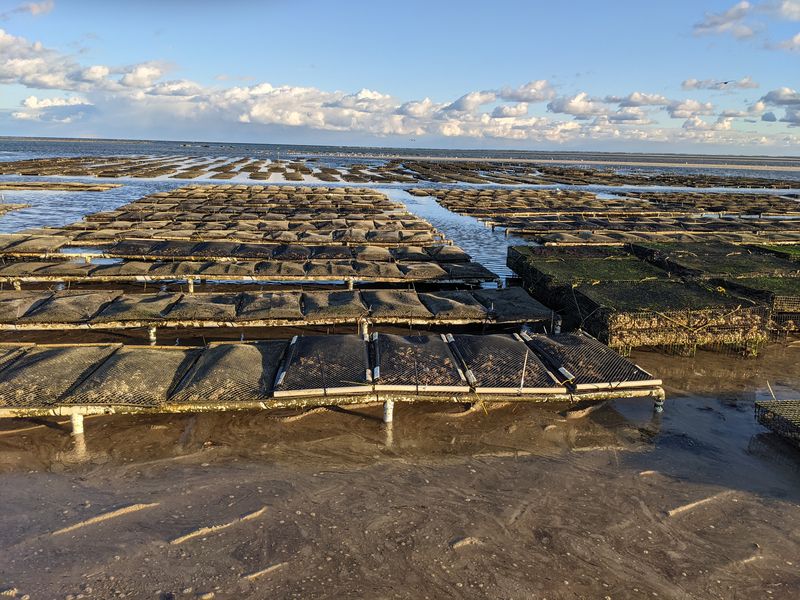
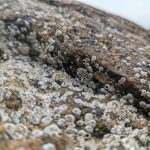
Barnacle biofouling poses a significant challenge for oyster aquaculture, threatening farm productivity through increased mortality, reduced fitness, and costly maintenance. On Cape Cod, four species are the primary barnacle biofoulers, with settlement timing varying by species and site. The first project investigates species-specific biofouling dynamics and population connectivity across New England. Working with oyster farmers, researchers we are measuring the timing, extent, and species composition of barnacle settlement, conduct analyses of reproduction and settlement phenology, and survey farmers about fouling impacts. Genetic analyses are comparing population structure of species with long versus short larval durations, testing whether local reproduction predicts local settlement.
The second project focuses on an emerging biofouler, a subtropical species expanding northward into Cape Cod Bay. We are investigating the biological and ecological on the benthos and in the water column that drive dispersal and survivorship. A circulation and dispersal model will be coupled with field data on reproduction, settlement, temperature, and biofouling growth. Experiments will test mitigation strategies. By identifying whether invasion is controlled by dispersal, temperature, or competition, this project will clarify the mechanisms of biofouling under environmental climate change and provide practical tools for oyster farmers to adapt.
Funding Agencies
NOAA, through the Woods Hole Sea-Grant and MIT Sea-Grant have funded this research

Partners/Collaborators
Jane Weinstock, Carolyn Tepolt, Josh Reitsma and Jim Churchill (WHOI). Also, Dale Leavitt (Blue Stream Shellfish), Jamie Davenport (Davenport Oyster Company), and Tommy Tucker and Owen Nichols (Center for Coastal Studies).