Project Highlight: Autonomous Discovery of Biological Hotspots with Audio-Visual AUV
Coral reefs are known to be hotspots of biological activity and biodiversity in the ocean, with over 25% of all marine species spending some portion of their life cycle on a coral reef. However, standard tools used by biologists to study coral reefs, including diver transects and passive acoustic monitoring lack the spatial resolution to resolve which portions of a reef is most biologically active. To address this, we have developed a system for an AUV to use passive acoustics and vision to locate and map hotspots of biological activity on a reef with sub-meter accuracy.
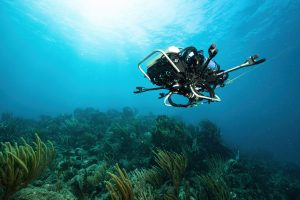
CUREE with hydrophone array on Tektite Reef, USVI
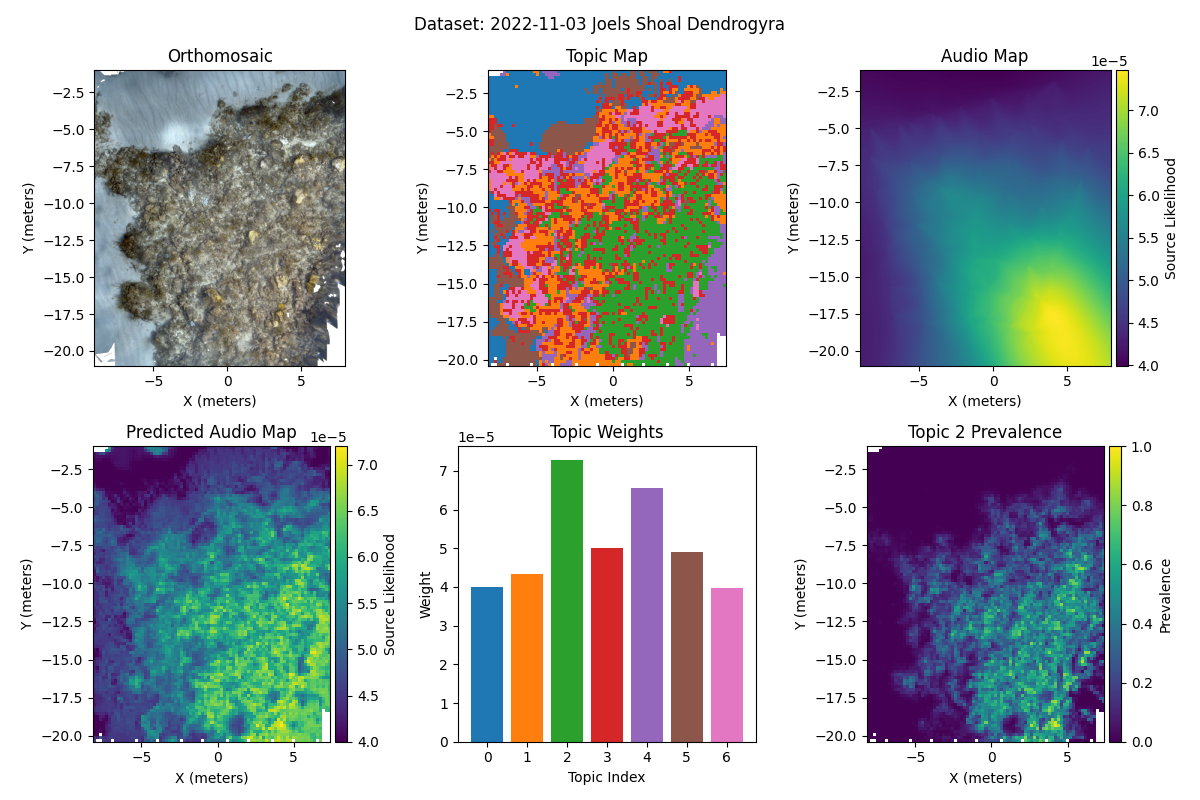
The hardware platform for this work is the Curious Underwater Robot for Ecosystem Exploration (CUREE) developed in Dr. Yogi Girdhar's WARPLab. Using a directional 4-element hydrophone array, CUREE can determine the bearing to acoustic sources underwater. By combining these bearing-only observations into a single map, CUREE can triangulate source locations during an acoustic survey. CUREE also has two stereo pairs of cameras, which it can use to make visual maps of the reef benthos. Using machine learning tools, we can segment the benthos into distinct visually-similar and semantically-distinct habitats. Combining the acoustic and visual sensing lets us reason about the preferences of individual organisms, even when we can't see the organisms directly as is the case with the ubiquitous snapping shrimp. Using targeted detectors such as our YOLO Fish Call Detector we can focus on mapping habitats for specific species.
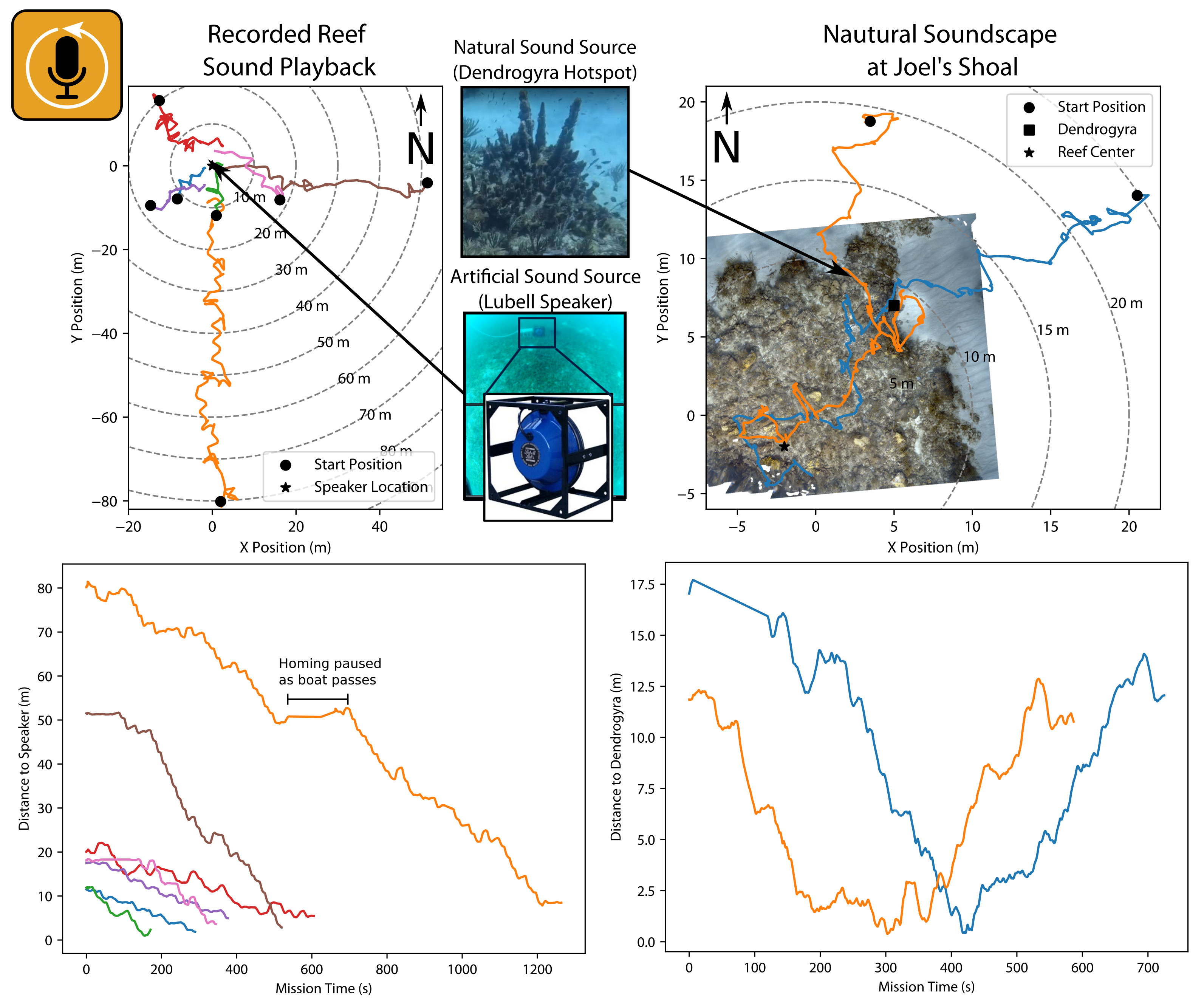
However, mapping hotspots only works when we have a good idea of their position in the first place. To locate completely new hotspots, we can integrate the acoustic localization in a closed-loop homing behavior, using the reef soundscape intensity to guide CUREE to locations with significant biological activity. In tests on Joel's Shoal reef in St. John, USVI, CUREE located an active hotspot near a Dendrogrya Cylindrus pillar coral. Combining this behavior with the audio-visual mapping above enables CUREE to function as a totally autonomous aid to reef scientists.
Funding Agency
