
Red Sea Coral Reefs and small-scale temperature variability
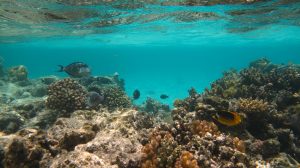
In summer 2010, a severe bleaching event impacted Stylophora pistillata populations in the central Red Sea, but mortality patterns revealed complex spatial dynamics. Coral death varied across two spatial scales: hundreds of meters across reef flats and tens of kilometers between reefs. While inner reefs experienced prolonged thermal stress (+1.4 °C above 2009 maxima), mortality was unexpectedly higher on the seaward, less extreme side, compared to the shoreward side with the highest overall mean temperatures. Outer and mid reefs, with only modest warming (+0.5 °C), showed little mortality. This counterintuitive result suggests that corals regularly exposed to high-frequency thermal variability may develop greater physiological resilience to warming. Our results underscores the importance of small-scale physical processes in shaping bleaching outcomes and highlights natural refugia that could buffer coral populations against climate-driven thermal stress. Such findings are critical for predicting reef futures and refining conservation strategies under accelerating environmental change.
Funding Agencies
The King Abdullah University of Science and Technology funded this reserach
Partners/Collaborators
This work includes collaborations with Ann Tarrant, Steve Lentz, and others, and a paper led by postdoc Kiristen Davis.

Select Papers
- Two spatial scales in a bleaching event: Corals from the mildest and the most extreme thermal environments escape mortality
- Observations of the thermal environment on Red Sea platform reefs: a heat budget analysis
- The characteristics and dynamics of wave-driven flow across a platform coral reef in the Red Sea