Search the Collection
The databases below contain core, grab, and dredge locations for our searchable holdings listed in the SESAR and Bythos databases. This is a complete list of our digital holdings, however it is not representative of our entire collection. The SESAR and Bythos databases will be continuously updated with new information as we continue to digitally collate our collection. If you have difficulty finding sample information, we invite you to email SFSL staff at seafloorsampleslab@whoi.edu.
A Note on IMLGS: As of May 2025, the Index to Marine and Lacustrine Geologic Samples (IMLGS) has been decomissioned. Plans are in place to create a replacement for its services.
Additional information can be found on the SESAR website here. During this transition period, we encourage users to search Bythos, our in-house resource, as well as SESAR's development site and GeoMapApp.
Any questions regarding sample location can be directed to the curatorial staff at seafloorsampleslab@whoi.edu.
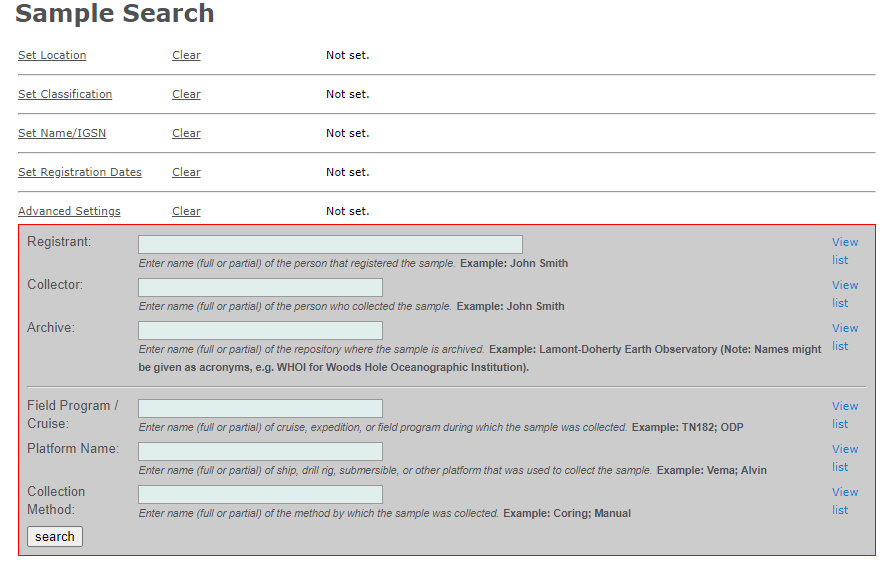
System for Earth Sample Registration (SESAR) provides access to a global digital index of samples, specimens, and related sampling features from collection that are registered in SESAR by the WHOI Seafloor Samples Lab. SESAR allows you to search the sample holdings by International Geo Sample Number (IGSN), institution, ship, collection method, sample classification, registration date, and location.
WHOI’s samples can be found in the database as well as links to subsamples, sample photos, and miscellaneous data for various samples.
SESAR is currently developing a replacement service for the former IMGLS. Further information can be found here and on SESAR's development site.
Bythos
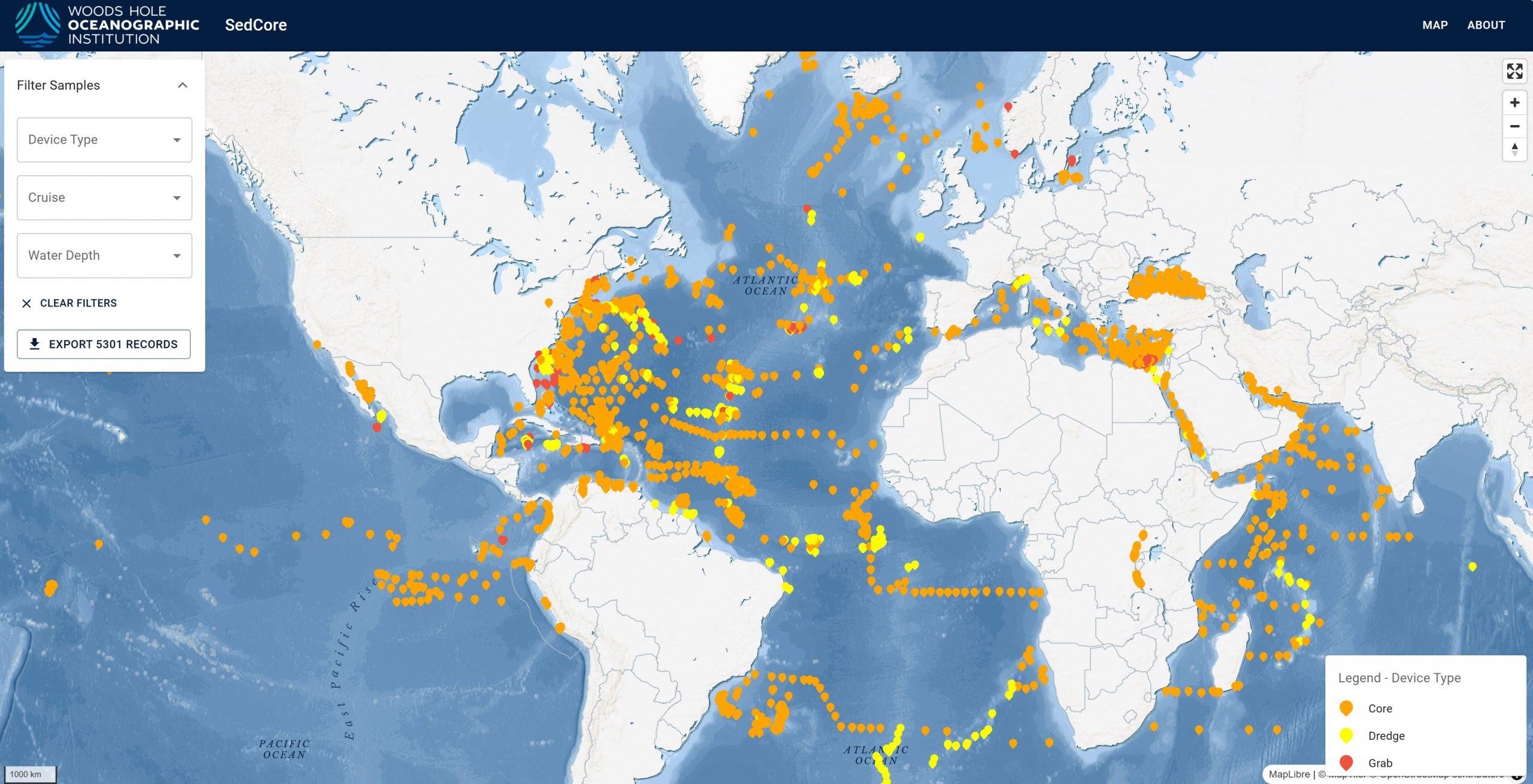
Bythos is a comprehensive search software and was created to allow you to explore our sea floor samples collection and data related to the sample inventory. It is an in-house database containing information about the samples stored at the WHOI Seafloor Samples Laboratory alone.
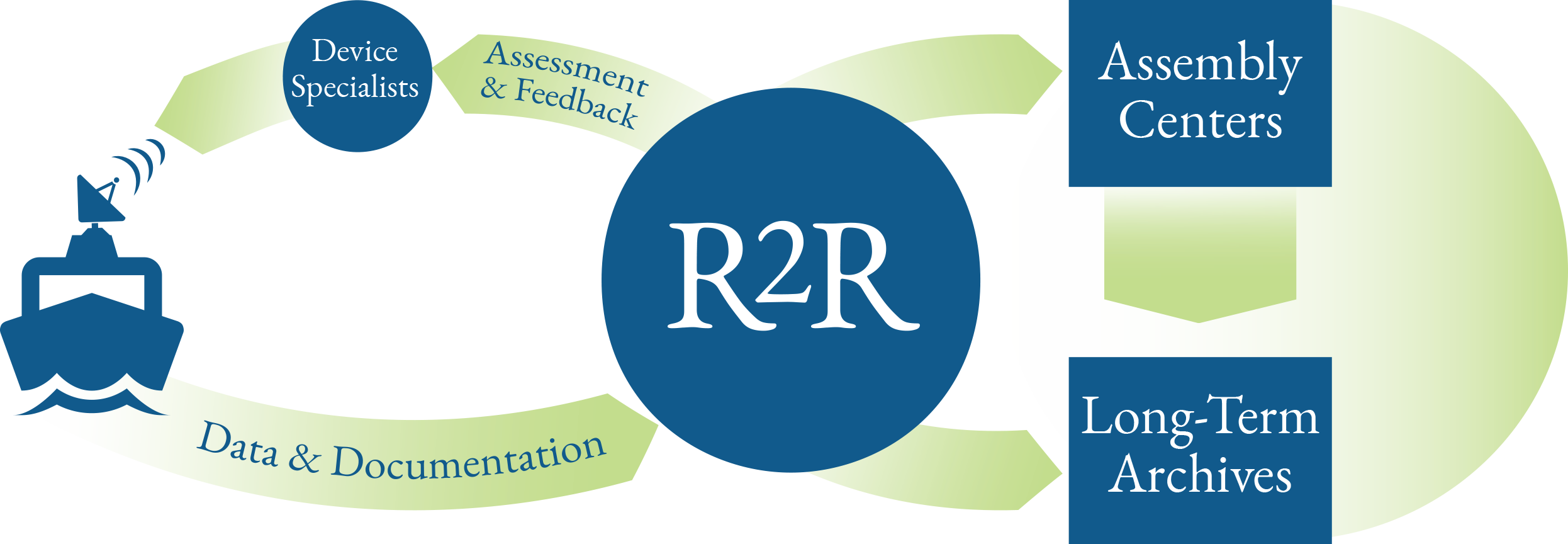
R2R catalogs and submits the underway environmental sensor data routinely acquired on research expeditions to long-term public archives, including the NOAA National Centers for Environmental Information (NCEI). Data from each cruise are submitted directly to R2R by the vessel operator.