
Latest News
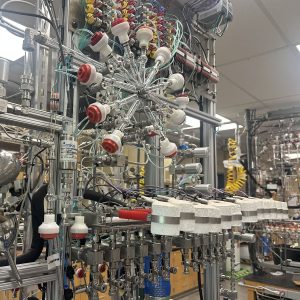
NOSAMS has expanded its dissolved inorganic carbon (DIC) capabilities with the completion of a second REDICS (Rapid Extraction of DIC System) line. Our original REDICS system continues to produce highly reliable, high-quality data. The new system is interfaced with a custom 12-port CO₂ storage and graphitization system that splits the CO₂ generated by REDICS, storing an aliquot for ¹³C analysis and graphitizing the remainder for radiocarbon analysis.
The new line accommodates 10 different sample volumes, providing greater flexibility for samples with variable DIC concentrations, such as groundwater. This complements the original system, increasing our capacity and representing the first new hydrogen-reduction graphitization line built in-house in 20 years.
Alconini, S., & Sánchez-Canedo, W. (2026). Sacred Sounds, Exchange, and Copper Bells in the Ancient Southeastern Andes: The Yamparas and Inka Empire. Cambridge Archaeological Journal, 1–18. https://doi.org/10.1017/S095977432610064X
Emslie, S. D. (2026). Late Holocene occupation history of the southernmost Adélie penguin colonies at Cape Royds and Cape Barne, Ross Island, Antarctica. Antarctic Science, 1–9. https://doi.org/10.1017/S0954102026100807
Jones, A. G. (2026). Reconstructing Past Alpine Glacier Lengths With the In Situ 14C10Be Chronometer [PhD Dissertation, University of Wisconsin - Madison]. ProQuest Theses & Dissertations. https://www.proquest.com/openview/eae37d47dc90fbb79cf060be24525181/1?pq-origsite=gscholar&cbl=18750&diss=y
Mojarro, A., Jost, A. B., Uveges, B. T., Bergmann, K. D., Mackey, T., Dumit, D., Roberts, M. L., Vinther, J., Svennevig, K., Pedersen, L. L., Allaart, L., Bennike, O., & Summons, R. E. (2026). Geochemical data links Late Quaternary-age concretion formation to North Atlantic cold climate episodes. Geochimica et Cosmochimica Acta. https://doi.org/10.1016/j.gca.2026.08.029
Oh, S., Ryu, Y., Han, H., Na, T., Kim, T.-W., Park, J., Kim, G., Druffel, E. R. M., & Hwang, J. (2026). Subglacial Lake Discharge Affects the Age and Concentration Distribution of Dissolved Organic Carbon in Ross Sea Surface Waters. AGU Advances, 7(5), e2026AV002385. https://doi.org/10.1029/2026AV002385
A full bibliography of publications utilizing NOSAMS analyses can be found here.
Did we miss your recent NOSAMS publication? Email us here.
New GO-SHIP samples arrived from tropical North Pacific
A new batch of seawater samples has arrived at NOSAMS from the recently completed Global Ocean Ship-based Hydrographic Investigations Program (GO-SHIP) expedition along the P04E transect in the tropical North Pacific.
NOSAMS was founded in part to spearhead the analysis of Δ14C dissolved inorganic carbon (DIC) from repeat hydrography cruises. The data, archived in the publicly accessible CLIVAR and Carbon Hydrographic Data Office database (CCHDO) have become an invaluable resource for tracking circulation, ventilation, and changes in the global carbon cycle over time.
The P04E line was last occupied in 1989. Revisiting this transect more than three decades later provides an opportunity to compare radiocarbon distributions across a full generation of ocean change, offering new insights into how the tropical North Pacific has evolved since the late 20th century.
We look forward to adding these new measurements to the long-term GO-SHIP record and continuing to support the global oceanographic community with high quality radiocarbon data.


Highlights from the Recent Literature
Catena, S., Rossi, V., Cacciari, M., Vecchi, A., Marchesini, M., Marvelli, S., Giuliani, S., Bellucci, L., Pellegrini, C., & Amorosi, A. (2026). A 10,000-year record of environmental change and human forcing in the Po Delta (northern Italy). Palaeogeography, Palaeoclimatology, Palaeoecology, 699, 113992. https://doi.org/10.1016/j.palaeo.2026.113992
Connolly, C.T., Spencer, R.G.M., and McClelland, J.W. (2026) Elucidating the Reactivity and Fate of Dissolved Organic Matter in Groundwater Entering the Alaska Beaufort Sea Coast using 14C Ramped Oxidation. Geophys. Res. Lett. 53: e2025GL121357. https://doi.org/10.1029/2025GL121357
Kim, D., Kim, J.-H., Kang, S., Bong, Y.-S., & Shin, K.-H. (2026). Significant contribution of petrogenic organic carbon to suspended particulate organic carbon in the Beaufort Sea. Limnology and Oceanography, 71(7), e70455. https://doi.org/10.1002/lno.70455
Lee, S.-C., Lee, G.-H., Koh, H., Lee, E.-J., Yu, B.-Y., Hur, J., Kim, S., Shin, K.-H., & Oh, N.-H. (2026). Oxidation method affects radiocarbon analysis of natural solid samples: Implications for elemental analyzer vs. closed tube combustion. Marine Pollution Bulletin, 233, 120160. https://doi.org/10.1016/j.marpolbul.2026.120160
McKeon, K., Donnelly, J. P., Piecuch, C. G., Maio, C. V., Hawkes, A. D., Barnett, L. L., Bigelow, N., Blanco, C. L., Bogardus, R., Hatfield, V., LaClair, C., McDonald, K., Nissen, G., Oleyer, P., Patterson, A., Sanborn, L., Starr, M., & Winkler, T. (2026). North Pacific Extreme Storms Reconstructed With a Novel Approach to Estimating Storm Frequency and Uncertainty. Paleoceanography and Paleoclimatology, 41(7), e2025PA005387. https://doi.org/10.1029/2025PA005387
Min, J.-O., Lee, B., Shim, C., Ko, Y. W., Kim, S.-H., Kang, S., Park, J., & Ha, S.-Y. (2026). Anthropogenic Black Carbon Signatures in Antarctic Fjords: Implications for Carbon Cycling. Environmental Science & Technology, 60(26), 18684–18695. https://doi.org/10.1021/acs.est.6c05186
Xu, L., Gagnon, A., Roberts, M., Hansman, R.L., Elder, K.L., Seewald, J.S., Harris, R., Lang, S.Q. (2026) A simple and effective method to remove hydrogen sulfide from fluid and gas samples prior to radiocarbon analysis of CO2 gas and dissolved inorganic carbon. Radiocarbon. https://doi.org/10.1017/RDC.2026.10218
A full bibliography of publications utilizing NOSAMS analyses can be found here.
Did we miss your recent NOSAMS publication? Email us here.
Congratulations to the 2026 NOSAMS Graduate Student Interns
NOSAMS is pleased to announce the recipients of the 2026 graduate student internships:
Phyllis Koh (Columbia University): "Investigating past source water variability of the Florida Current using radiocarbon measurements of Siderastera Siderea coral"
Fan Liu (University of California, Santa Barbara): "Radiocarbon and thermochemical constraints on terrestrial carbon export to the Arctic Ocean"
Kaitlyn Tucker (University of Florida): "Bomb 14C in Otolith Protein as a Novel Method of Age Validation for Deepwater Fishes"

Highlights from the Recent Literature
Adomako-Mensah, E., Johnson, W. P., Carter, S. C., Solomon, D. K., Mace, W. D., Hynek, S. A., & Hurlow, H. (2026). Significance of ancient artesian fresh groundwater below the playa of a hypersaline terminal lake of hemispheric significance. Journal of Hydrology, 668, 134813. https://doi.org/10.1016/j.jhydrol.2025.134813
Ballalai, J. M., Vázquez Riveiros, N., Santos, T. P., Nascimento, R. A., Mudelsee, M., Piacsek, P., Venancio, I. M., Dias, B. B., Belem, A., Costa, K. B., Toledo, F., & Albuquerque, A. L. S. (2026). Modes of deep-water circulation in the subtropical South Atlantic over the last 770 kyr revealed by a zonal δ13C gradient. Palaeogeography, Palaeoclimatology, Palaeoecology, 689, 113679. https://doi.org/10.1016/j.palaeo.2026.113679
Bao, R., Che, Y., Liu, M., Zhang, N., Zhou, Y., Dong, L., Li, S., Sherwood, O. A., Yu, M., Chen, Z., Yang, S., Wang, N., Zhu, L., Chen, J., Bao, M., Li, H., Chen, L., Wu, W., Ma, H., & Burdige, D. J. (2026). Efficient preservation of old methane-derived organic carbon in deep-sea surface sediments. Nature Communications. https://doi.org/10.1038/s41467-026-74250-2
Brown, G. A., Love, A. J., Banks, E. W., Broadley, M. W., Tyne, R. L., Chambers, T. E., Deslandes, A., Suckow, A., Musan, I., Cahill, K. L., Jenkins, W. J., & Seltzer, A. M. (2026). Integrated groundwater noble gas and isotope tracers constrain hydroclimate variability and subsurface volatile sources. Earth and Planetary Science Letters, 690, 120173. https://doi.org/10.1016/j.epsl.2026.120173
Chu, M., Liu, K., Cai, Z., Rasbury, T., Kölling, M., Zabel, M., McHugh, C., Strasser, M., Ikehara, K., & Bao, R. (2026). Sediment-modulated seafloor residence time controls efficient organic carbon burial in subduction zones. Nature Communications. https://doi.org/10.1038/s41467-026-72049-9
Cisternas, M., Saldaña, B., Ely, L. L., Wesson, R. L., Guerra, M., Brill, D., Melnick, D., Espinoza, A., Dura, T., & Pilarczyk, J. (2026). Paleoseismic evidence for the 1730 Mw ≥9 Chile earthquake in a former coastal lagoon: An infrequent, shallow, tsunamigenic rupture with plausible near-term recurrence. Quaternary Science Reviews, 375, 109789. https://doi.org/10.1016/j.quascirev.2025.109789
Clift, P. D., Wycoff, B., Carter, A., Muñoz, S., Neubeck, N., Gregory, B., Wilson, C. A., Rittenour, T., Blusztajn, J., & Ali, T. (2026). Climatic and anthropogenic controls on late Holocene sediment transport to the Gulf of Mexico by the Mississippi River. Earth-Science Reviews, 275, 105401. https://doi.org/10.1016/j.earscirev.2026.105401
Finkenbinder, M. S., Lane, T. P., Adamson, K. R., Finney, B. P., Abbott, M. B., Monteath, A. J., Ianno, A., Papp, C. N., Fortune, A. F., Delpais, M. J., Novak, M. E., Delgado Rodriguez, A. Y., & Baratta, D. D. (2026). Lake sediment records of deglaciation and post-glacial paleoenvironmental conditions, northeast Pennsylvania, USA. Quaternary Science Reviews, 389, 110132. https://doi.org/10.1016/j.quascirev.2026.110132
Hathorne, E. C., Bertlich, J., Hembury, D., & James, R. H. (2026). The effects of shell size and mass on trace element incorporation in different species of planktonic foraminifera. Frontiers in Marine Science, 13. https://doi.org/10.3389/fmars.2026.1792234
Henne, P. D., Stolze, S., Kehrwald, N. M., Brice, B., & Allen, C. D. (2026). Millennial-scale climatic and cultural impacts on vegetation and fire at the southern edge of the Rocky Mountains, USA. Quaternary Science Reviews, 376, 109821. https://doi.org/10.1016/j.quascirev.2026.109821
Lee, S.-C., Lee, K., Cha, J.-Y., Lee, E.-J., & Oh, N.-H. (2026). Highly varying radiocarbon isotope ratios of dissolved organic carbon in forest headwater streams in South Korea. Journal of Hydrology, 664, 134616. https://doi.org/10.1016/j.jhydrol.2025.134616
Lucas, A., Pallacks, S., Incarbona, A., Mortyn, P. G., & Ziveri, P. (2026). Tropicalization and biodiversity restructuring of calcifying plankton in a rapidly warming Mediterranean Sea. Global and Planetary Change, 259, 105314. https://doi.org/10.1016/j.gloplacha.2026.105314
Paradeisis-Stathis, S., Waters, M. N., Willard, D. A., & Vachula, R. S. (2026). Cyanobacteria and aquatic ecosystem dynamics across 28,000 years of environmental changes in subtropical North America. Quaternary Science Reviews, 376, 109842. https://doi.org/10.1016/j.quascirev.2026.109842
Repasch, M., Anderson, S. P., Anderson, R. S., Arcuri, J., Galy, V., Koch, J. C., & Overeem, I. (2026). Erosional and Hydrological Controls on the Age and Thermochemical Stability of Particulate Organic Carbon in an Arctic River. Global Biogeochemical Cycles, 40(6), e2026GB009202. https://doi.org/10.1029/2026GB009202
Zhu, F., Carter-Champion, A., Wharton, J. H., Bracamontes-Ramírez, J., Burke, A., de Menocal, P. B., Fairman, D., Keigwin, L. D., Marchitto, T. M., Papachristopoulou, E., Rae, J. W. B., Rosenthal, Y., Zhao, N., & Thornalley, D. J. R. (2026). Co-ordinated shifts in deep-water formation and Gulf Stream migration during abrupt climate changes. Nature Communications, 17(1), 4966. https://doi.org/10.1038/s41467-026-73832-4
A full bibliography of publications utilizing NOSAMS analyses can be found here.
Did we miss your recent NOSAMS publication? Email us here.
NOSAMS Graduate Student Internship opportunity - deadline extended to June 10
Two internships are awarded annually to U.S. based graduate students to carry out research at NOSAMS. Successful applicants are awarded funds to cover all analytical costs (for a modest number of analyses), round-trip travel and accommodation for a stay at WHOI, and subsistence while in Woods Hole, but not field work and sampling. Applications are due by June 10, 2026; see here for more information or to apply.

Highlights from the Recent Literature
Anderson, L., Finney, B.P. & Baxter, W.B. (2026) Shifting winter atmospheric teleconnections to the North Pacific reconcile Younger-Dryas and Holocene δ18O signals. Nature Communications 17, 2287.
https://doi.org/10.1038/s41467-026-68841-2
Alcorn, R., Ontiveros-Cuadras, J. F., Govindankutty Menon, A., Glock, N., Tappa, E., Burke, J., Castillo, M.L.M., and Davis, C. (2026). Expansion of the Eastern Tropical North Pacific oxygen minimum zone during the last deglaciation recorded by planktic foraminifera. Paleoceanography and Paleoclimatology, 41, e2025PA005370. https://doi.org/10.1029/2025PA005370
Ke, Y., West, A.J., Geyman, E.C., Huy, K.A., Dion-Kirschner, H., Smith, M.I., Andau, J.S., Magyar, J.S., Lamb, M.P., and Fisher, W.W. (2026) Persistent organic carbon storage in river floodplains over millennia. Nat Commun. https://doi.org/10.1038/s41467-026-72405-9
Ryu, Y., Han, H., Na, T., Kim, G.., and Hwang, J. (2026) Marginal seas as potential sinks for refractory carbon. Limnol Oceanogr, 71: e70297. https://doi.org/10.1002/lno.70297
Liu, F., Macdonald, F.A., Galy, V., Li, L., Raven, M.R., Li, G., Chen, J., Li, G.K. (2026) Tectonic and climatic controls on organic carbon burial in a tropical arc-continent collision zone. Earth Planet. Sci. Lett. 687 https://doi.org/10.1016/j.epsl.2026.120057
Herlinger, J. F., Allen, K. A., Hall, B. L., Putnam, A. E., Handley, M. J., Lowell, T. V., & Russell, J. L. (2026). Intensified meltwater influx during Heinrich Stadial 1 recorded in the Gulf of Maine, USA. Paleoceanography and Paleoclimatology, 41, e2026PA005442. https://doi.org/10.1029/2026PA005442
Mailloux, B.J., Ahmed, K.M., Akter, A., Blau, S., Bostick, B., Buchholz, B.A., Choudhury, I., Ellis, T., Harvey, C., Kahn, M., Killough, M., Vetter, M.C.Y.L., Michael, H., Mozumder, R., Scanlan, K., Slater, G., Trembath-Reichert, E., van Green, A. (2026) Advected carbon younger than sediment fuels microbial metabolism in a pumped deep aquifer. Commun. Earth Environ. https://doi.org/ 10.1038/s43247-026-03590-0
Bongers, J.L., Dalton, J.A., Marsh, E.J., Mejia, J.G., Robinson, J.R., Osborn, J., Milton, E.B.P., Yaber, A.R., Sarmiento, I.A., Pizarro, N.O., Kassadjikova, K., Fehren-Schmitz, L. (2026 Ancient DNA reveals a family ossuary and long-distance migration on the Pacific coast before the Inca Empire. Nat Commun 17, 4222. https://doi.org/10.1038/s41467-026-72216-y
A full bibliography of publications utilizing NOSAMS analyses can be found here.
Did we miss your recent NOSAMS publication? Email us here.
Announcement: MICADAS Users Workshop
We are pleased to announce that the 2nd MICADAS User Workshop will be held on the campus of University of California Irvine on September 9–10, 2026, co-organized by KCCAMS (UCI), NOSAMS (WHOI) and AEL-AMS (uOttawa). The workshop is intended for individuals who currently have a MICADAS or related instrument at their institution, or who are actively planning to acquire one. Attendees are expected to share best practices, recent advances, successes, and challenges related to their MICADAS and peripherals. To learn more or to register please visit here.

Second Reminder: NOSAMS Graduate Student Internship opportunity
Two internships are awarded annually to U.S. based graduate students to carry out research at NOSAMS. Successful applicants are awarded funds to cover all analytical costs (for a modest number of analyses), round-trip travel and accommodation for a stay at WHOI, and subsistence while in Woods Hole, but not field work and sampling. Applications are due by June 1, 2026; see here for more information or to apply.
Highlights from the Recent Literature
Tuross, N. and Reynard, L.M. (2026) Isotopes of feather art: location, husbandry, production and antiquity, Isotopes in Environmental and Health Studies, https://doi.org/10.1080/10256016.2026.2647478
Kolb, M. J., Seabold, E., Lincoln, N., Farnsworth-Wallace, B., & Dega, M. (2026). Dryland Swale Farming and Long-term Land Use in Upland Kula, Maui, Hawaiʻi. Journal of Field Archaeology, 1–16. https://doi.org/10.1080/00934690.2026.2633474Kol
Wendt JAF, Neeley M, Alt M, Ewing SA, Fischer GS and McWethy DB (2026) American bison kill site use and abandonment amid drought and cultural shifts in late Holocene Montana. Front. Conserv. Sci. 6:1688950. https://doi.org/10.3389/fcosc.2025.1688950
Lu, W., Oppo, D. W., Jiang, X., Dang, H., & Jian, Z. (2026). Lower glacial oxygen in the eastern equatorial Pacific concentrated in the deep sea. Geophysical Research Letters, 53, e2025GL119372. https://doi.org/10.1029/2025GL119372
Edgerton, B.A. and Chipman, M.L. (2026), Late Holocene moisture variability in Arctic Alaska from chitin δ18O. Boreas. https://doi.org/10.1111/bor.70052
A full bibliography of publications utilizing NOSAMS analyses can be found here.
Did we miss your recent NOSAMS publication? Email us here.
NOSAMS Graduate Student Internship opportunity
Two internships are awarded annually to U.S. based graduate students to carry out research at NOSAMS. Successful applicants are awarded funds to cover all analytical costs (for a modest number of analyses), round-trip travel and accommodation for a stay at WHOI, and subsistence while in Woods Hole, but not field work and sampling. Applications are due by June 1, 2026; see here for more information or to apply.

Highlights from the Recent Literature
Loope, H.M., Antinao, J.L., Hanson, P.R., Jacobs, P.M., Grimley, D.A. (2026) Last glacial maximum and late glacial aeolian sand activity, south-central Indiana, USA. Quaternary Research, no. (2026): 1-18. https://doi.org/10.1017/qua.2025.10063
Steward, B.D., Bone, S.E., Spielman-Sun, E., Marcus, M.A., Pierce, S., Boye, K., Noel, V. (2026) Organic colloid composition in variable-redox porewaters within a mountainous floodplain. Water Research https://doi.org/10.1016/j.watres.2026.125556
Collins, C.R., Parenteau, M.N., Jahnke, L.J., Kubo, M.D., Moseman-Valtierra, S. Young, K., Cardance (2026) Lipid biomarkers reveal dominance of aerobic methanotrophy in a continental serpentinizing system. Front. Microbiol. 16: 1694997. https://doi.org/10.3389/fmicb.2025.1694997
Stewart, B.D., Bone, S.E., Spielman-Sun, E., Marcus, M.A., Pierce, S., Boye, K., Noel, V. (2026) Organic colloid composition in variable-redox porewaters within a mountainous floodplain. 295: 125556. https://doi.org/10.1016/j.watres.2026.125556
Yao, Q. Liu, K.-b., McCloskey, T., Midway, S., Fang, S., Lam, N., and Wang, K. (2026) Geographically metachronous pattern of tropical cyclone activity regimes across the North Atlantic Basin. Global and Planetary Change. 260: 105379 https://doi.org/10.1016/j.gloplacha.2026.105379
Wendt, J.A.F., Neeley, M., Alt, M., Ewing, S.A., Fischer, G.S., McWethy, D.B. (2026) American bison kill site use and abandonment amid drought and cultural shifts in late Holocene Montana. Front. Conserv. Sci 6: 1688950. https:// doi.org/10.3389/fcosc.2025.1688950
Zhou, L., Su, Y., Li, Zheng, S., Han, H., Lu, P., Wang, P., Chen, X., Yu, S.-Y. (2026) Holocene flood clusters in East China driven by coupled ENSO-Western Pacific Warm Pool dynamics. Paleogeography, Paleoclimatology, Paleoecology. 689: 113671. https://doi.org/10.1016/j.palaeo.2026.113671
Wood, J.R., Mahan, S., East, A.E., Bilderback. E.L., Krolczyk, E.T., Rasmussen, B.A., Zyatitsky, K.S., Hallas, L. (2026) Geochronologic data reveal Late Pleistocene to Holocene debris-flow history and wildfire association within Whiskeytown National Recreation Area, Klamath Mountains, northern California. Quaternary Research. https://doi.org/10.1017/qua.2025.10064
Linscott, B., Wallace, A.A., Becerra-Valdivia, L., Harris, M.R.P., Fireman, A.L., Bennett, J.D., Patterson III, W.F., Vander Zanden, H.B. (2026) Bomb radiocarbon reveals keratin growth dynamics in loggerhead (Caretta caretta) and green (Chelonia mydas) turtles. Marine Biology. 173: 34 https://doi.org/10.1007/s00227-025-04792-4
McWethy, D.B., Alt, M., Tipkemper-Wolfe, A. (2026) Millennial-Scale Fire and Vegetation Change from a Rare Mid-Latitude Permafrost Fen (Beartooth Plateau, WY). Fire 9(3): 103. https://doi.org/10.3390/fire9030103
Lu, W., Oppo, D.W., Liu, Z. et al. (2025) Warmer shallow Atlantic during deglaciation and early Holocene due to weaker overturning circulation. Nat. Geosci. 18, 787–792. https://doi.org/10.1038/s41561-025-01751-y
Medina Faull LE, Taylor GT, Beaupré SR (2025) Microplastic contaminants potentially distort our understanding of the ocean’s carbon cycle. PLoS One 20(10): e0334546. https://doi.org/10.1371/journal.pone.0334546
Wharton, J.H., Renoult, M., Gebbie, G. et al. Deeper and stronger North Atlantic Gyre during the Last Glacial Maximum. Nature 632, 95–100 (2024). https://doi.org/10.1038/s41586-024-07655-y
A full bibliography of publications utilizing NOSAMS analyses can be found here.
Did we miss your recent NOSAMS publication? Email us here.
Ever wonder what happens to samples before they’re analyzed?
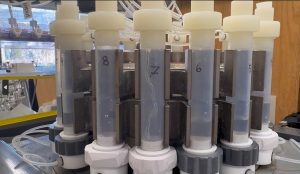
At NOSAMS, organic carbon samples are carefully pre-treated using either acid-base-acid (ABA) methods or acid leaching to ensure accurate results. For select samples, we use our automated OCtoPuS — the Organic Carbon Pretreatment System.
Curious to see how it works? Watch OCtoPuS in action in this short video.
Highlights from the Recent Literature
Keigwin, L.D., Petrie, B., Boyle, E.A. (2025) Slope water intrusions onto Canadian Atlantic continental shelf during the past 1800 Years.Paleoceanography and Paleoclimatology 40, e2025PA005183. https://doi.org/10.1029/2025PA005183
Ryu, Y., Han, H., Na, T., Kim, G., and Hwang, J. (2025) Marginal seas as potential sinks for refractory carbon. Limnol. Oceanogr. 71(1): e70297. https://doi.org/10.1002/lno.70297
Xia, P., Luo, X., Liu, B., Zhang, Y., Meng, X., and Du, J. (2026) The sources and export mechanisms of dissolved organic carbon in pore water of a mangrove swamp revealed by dual carbon isotopes. Catena 263: 109691. https://doi.org/10.1016/j.catena.2025.109691
Pasqualini, A., Smethie, W.M., Newton, R., Schlosser, P. (2026) Deep water renewal in the Amerasian Basin derived from natural and anthropogenic tracer datasets. JGR Oceans 131(1): e2025JC023245. https://doi.org/10.1029/2025JC023245
Tsalickis, A., Waters, M.N., Campbell, J., Vachula, R.S. (2026) Heavy metal-based bat guano chronologies: A cautionary tale. 36(1): 107-111. https://doi.org/10.1177/09596836251378031
Hall, B.L., Putnam, A.E., Lowell, T.V., Denton, G.H., Russell, J.L., Soteres, R.L., Spoth-Ascencao, M.M., Miles, M.L., Thomas, S.G., Moreno, P.I., Schwartz, R., and Schaefer, J.M. (2026) Rapid thinning of the Cordillera Darwin Icefield at the onset of Termination I. Quaternary Science Reviews. 373: 109754. https://doi.org/10.1016/j.quascirev.2025.109754
Boxleitner, K., Spengler, R.N., Alekseitseva, V., Chargynov, T., Abdykanova, A., Sayfuloev, N., Shnaider, S. (2026) Archaeobotanical investigations at high-elevation sites of the Pamier Mountains and Fergana foothills. iScience 29(1): 114349. https://doi.org/10.1016/j.isci.2025.114349
A full bibliography of publications utilizing NOSAMS analyses can be found here.
Did we miss your recent NOSAMS publication? Email us here.

Highlights from the Recent Literature
Barry, P.H. et al. (2025) Carbon, nitrogen, and noble gas isotopes reveal deep volatile signatures in thermal springs in the Central Volcanic Zone (CVZ) of the Andes. Earth Planet Sci. Lett. 651: 11969. https://doi.org/10.1016/j.epsl.2024.119169
Lee, S.C et al., (2025) Sediments near industrial ports can be hotspots of fossil carbon accumulation. Marine Pollution Bulletin 213: 117636 https://doi.org/10.1016/j.marpolbul.2025.117636
Walker, M.R. et al., (2025) Reconstructing Annual Δ14C During Miyake Events Using Deciduous and Evergreen Trees. Global Biogeochemical Cycles 39,e2024GB008423. https://doi.org/10.1029/2024GB008423
Shervette, V.R. et al. (2025) “Bomb radiocarbon in otoliths and eye lenses of reef fishes from Atlantic waters of the southeastern U.S..” Environmental Biology of Fishes, no. 8: 1131-1149. https://doi.org/10.1007/s10641-025-01713-8
A full bibliography of publications utilizing NOSAMS analyses can be found here.
Sue Handwork, Al Gagnon retiring
After a combined 83 years of service, NOSAMS administrator Sue Handwork and prep lab manager Al Gagnon are concluding their distinguished careers at NOSAMS. Al retired earlier this year, and Sue will soon follow. Over the years, many of you have shared how Al and Sue have shaped your experiences at NOSAMS, whether guiding you through the art of flame sealing or helping you navigate complex university payment systems.
Please join us in congratulating Sue and Al as they embark on their next chapters.
Highlights from the Recent Literature
Jones, B. M., Kanevskiy, M. Z., Ward Jones, M. K., et al. (2025) Cryptic Ice Wedge Networks in Holocene Peat, Yukon-Kuskokwim Delta, Alaska.Permafrost and Periglacial Processes, 0:1-24 https://doi.org/10.1002/ppp.70004
Sert, M. F., Bernstein, H. C., Dølven, K. O., et al. (2025) Cold Seeps and Coral Reefs in Northern Norway: Carbon Cycling in Marine Ecosystems With Coexisting Features Journal of Geophysical Research: Biogeosciences, no. 3: e2024JG008475. https://doi.org/10.1029/2024JG008475
Gremillion, S. L., Wallace, D. J., Eisemann, E. R. (2025) Interdisciplinary Applications for Identifying and Quantifying Modern Storm Washover Deposits on Pea Island, North Carolina, USA. Journal of Geophysical Research: Oceans, no. 5: e2024JC021695. https://doi.org/10.1029/2024JC021695
A full bibliography of publications utilizing NOSAMS analyses can be found here.
NOSAMS leading 14C-DIC interlaboratory comparison
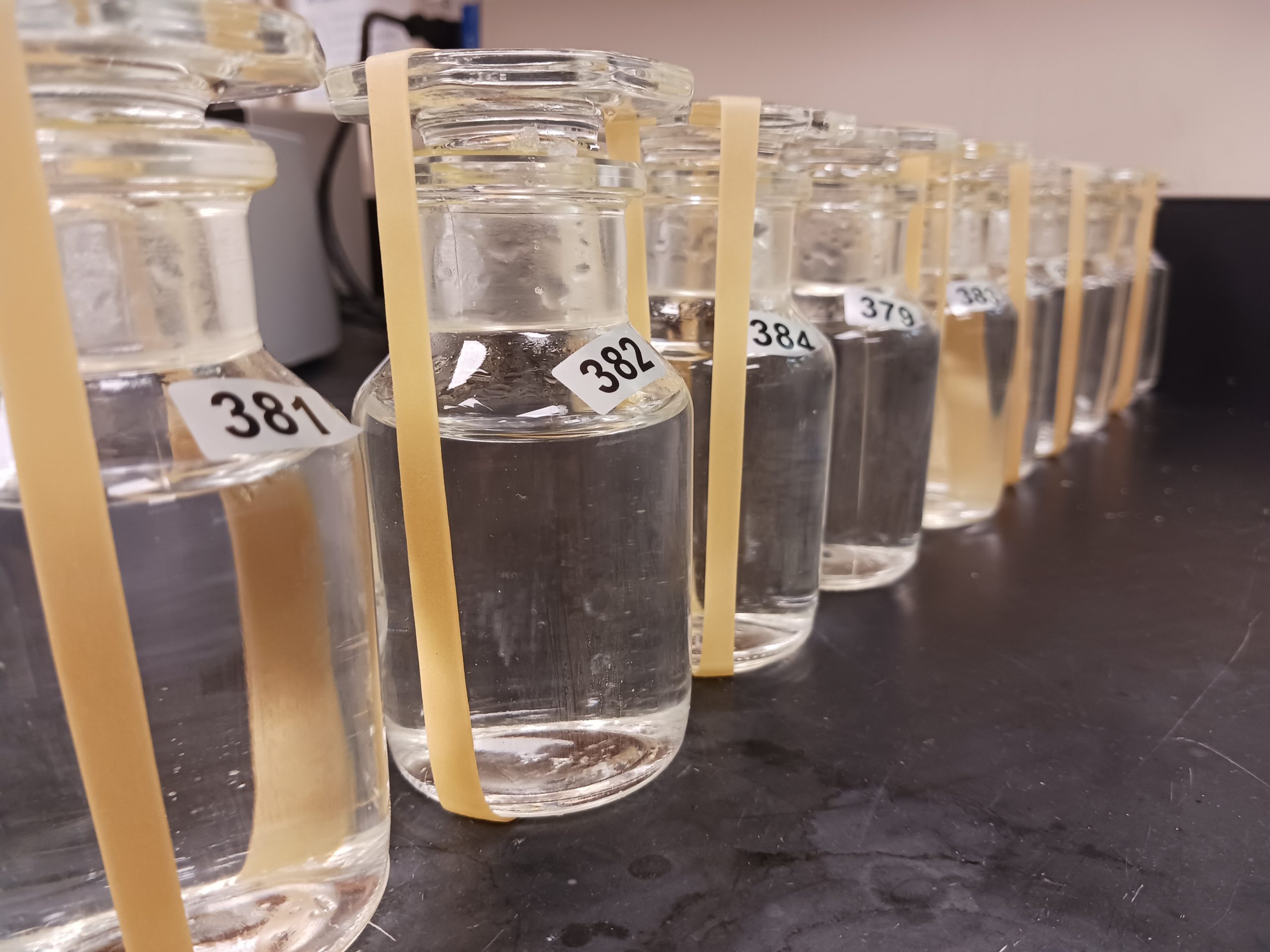
Internationally recognized standard material does not exist for the 14C analysis of dissolved inorganic carbon (DIC), creating challenges for laboratories seeking to carry out this analysis. NOSAMS is leading an effort to carry out the first 14C-DIC interlaboratory comparison. The exercise will include surface and deep (2200 m) seawater collected from Station ALOHA located in the North Pacific subtropical gyre. Depending on availability, we will also distribute radiocarbon depleted groundwater.
If you would like to participate in the intercomparison please let us know here.
Call for Applications: NOSAMS Postdoctoral Scholar
We invite applications from innovative and driven researchers to carry out radiocarbon research at the NOSAMS facility. We seek an outstanding individual to pursue work in one or both of the following areas: (i) radiocarbon in oceanic systems (ii) advances in accelerator mass spectrometry and related techniques. Applicants can carry out research with any WHOI scientific staff member on their research interests. Applications are due December 1, 2025. More information can be found here.
Highlights from the Recent Literature
Sparrow K.J., Chanton J.P., Hanke U.M., Kurz, M.D., McNichol A.P. (2024) Peatland organic matter quality varies with latitude as suggested by combination of FTIR and Ramped Pyrolysis Oxidation. PLoS ONE 19(11): e0309654. https://doi.org/10.1371/journal.pone.0309654
Tremblay, M., J.C. Stager, J.M. St-Jacques, S. Murphy, M., Peros, B.S. Carl. (2024) A 13,000 year history of vegetation and fire in a rare inland pine barrens: The Albany Pine Bush (Albany County, New York, USA). PLoS ONE https://doi.org/10.1371/journal.pone.0314101
Fang, W., Evangeliou, N., Eckhardt, Sabine, E., Xiao, H., and Li, H. (2025). Unprecedented shifts in aerosol pollution sources in China under a decade of clean air actions. Communications Earth & Environment, no. 1 (2025): 512. https://doi.org/10.1038/s43247-025-02487-8
Arora, S., Meenan, N., Srivastava, E., Cochran, D., et al. (2025) Earthquake rupture variability along the central seismic gap segment (78°– 82°E) of the Himalayan Frontal Thrust, Western and Central Himalaya. Scientific Reports, no. 1 (2025): 21916. https://doi.org/10.1038/s41598-025-07274-1
Hulver, A.M., Teixidó, N., Kemp, D. W., et al. (2025) High heterotrophic capacity favors Mediterranean coral success and resilience in the face of ocean acidification Coral Reefs, 44:1041-1054. https://doi.org/10.1007/s00338-025-02663-4
A full bibliography of publications utilizing NOSAMS analyses can be found here.