Updates
UNOLS Volunteers Leg 2
April 10, 2024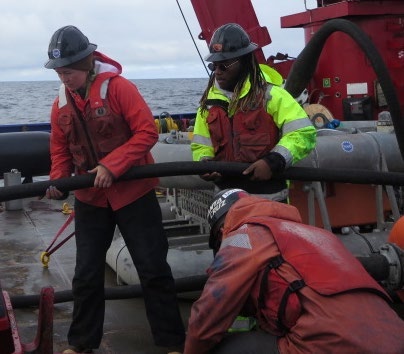
On this cruise leg, the two UNOLS Cruise Volunteers who joined the Endurance 20 team are graduate students Malik Jordan and Ellery Ohlwiler. Here they are guiding stretch hose into the ocean behind a buoy. Behind them is the MultiFunction Node of this mooring, which includes its anchor.
Thanks to @RV_Neil Crew
April 10, 2024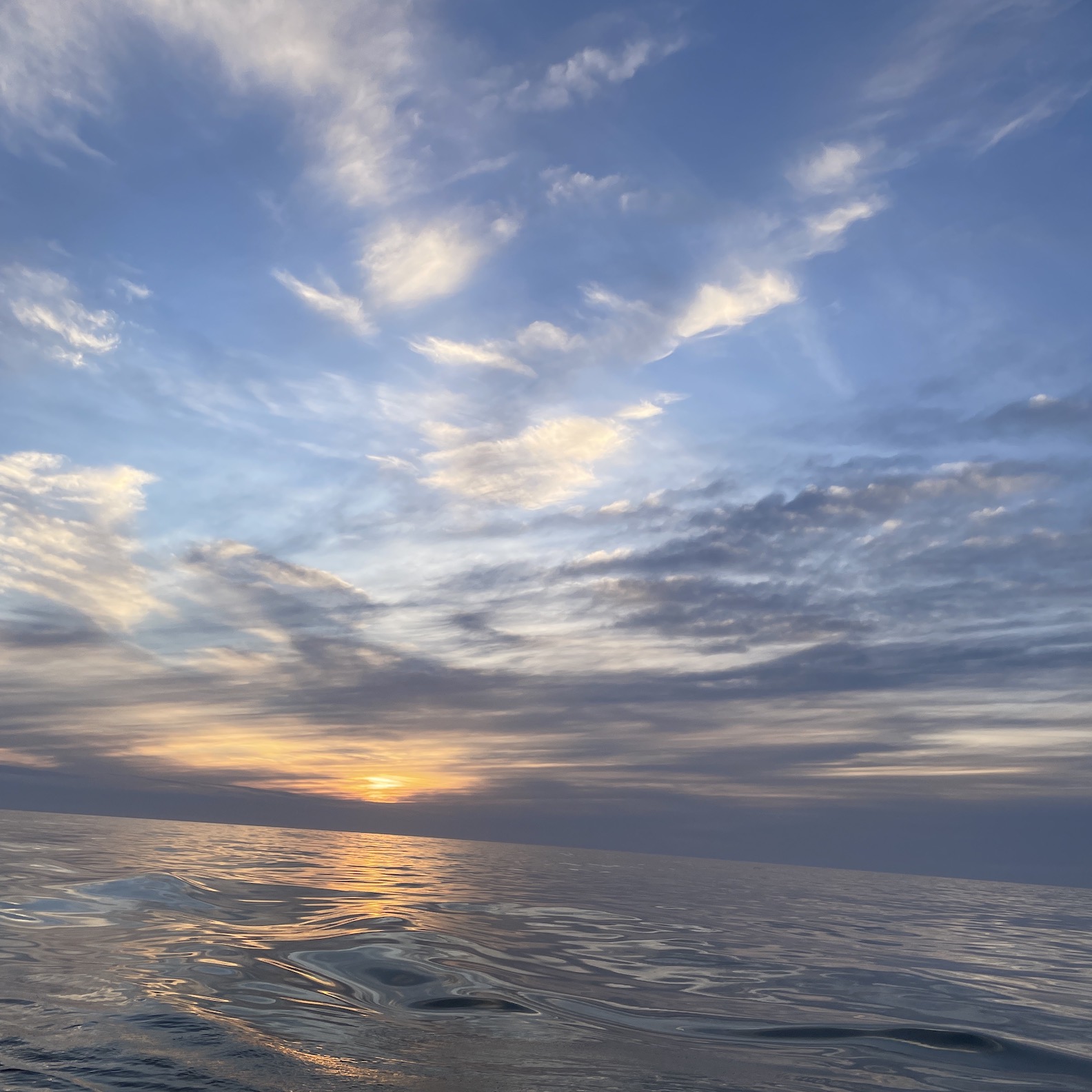
We are almost home. We are aboard the R/V Neil Armstrong off the coast of Martha’s Vineyard, waiting for the tide to change so we can safely make our way to the WHOI dock. This successful leg 1 would not have been possible without the extreme professionalism and friendliness of the R/V Neil Armstrong crew. Thanks from all of us for taking such good care of the ship and of…
And It’s a Wrap
April 9, 2024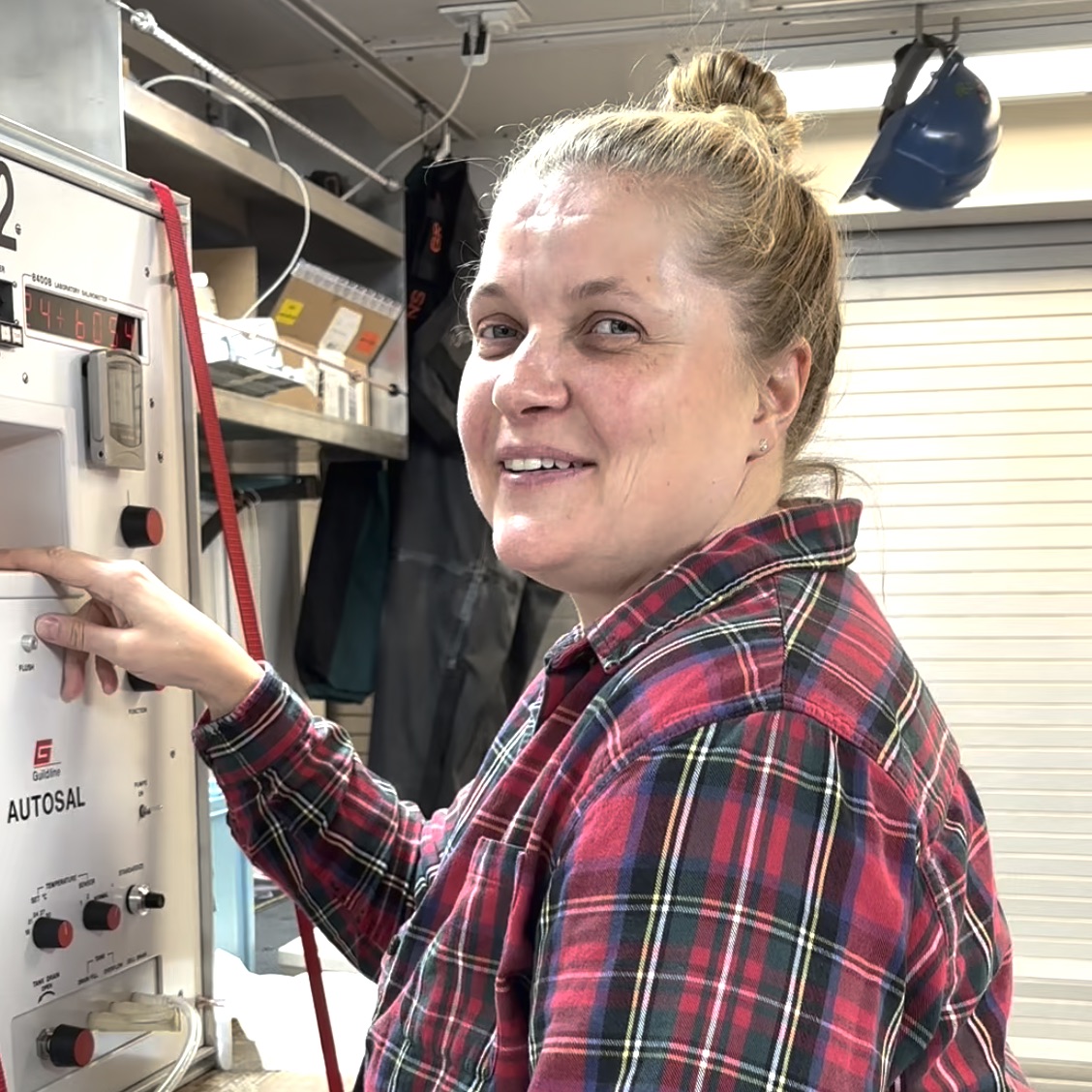
Hear what the best parts of leg 1 were from some of its participants. The Coastal Pioneer Array MAB team completed all the objectives of Leg 1 by the end of the day April 8th and started the transit home, back to the dock at Woods Hole. Taking advantage of a day in the wet lab, Glider Lead Diana Wickman took the opportunity to interview some folks about their experiences…
Sediment Traps Day
April 9, 2024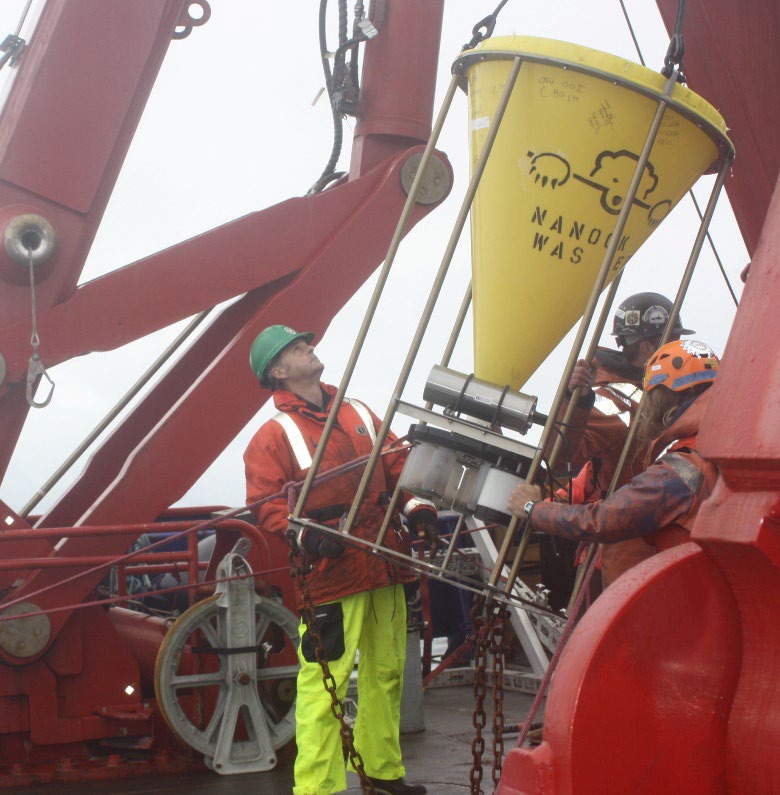
The Endurance 20 team’s main effort today was to turn a sediment trap mooring. The project is led by professors Jennifer Fehrenbacher (Oregon State University) and Claudia Benitez-Nelson (University of South Carolina). Their team is collecting foraminifera, single-celled plankton, and they are using OOI data to interpret their samples. On the ship with the team is graduate student Faith Schell from OSU and Research Associate Eric Tappa (pictured) from USC.
Radiometer Captures Eclipse
April 8, 2024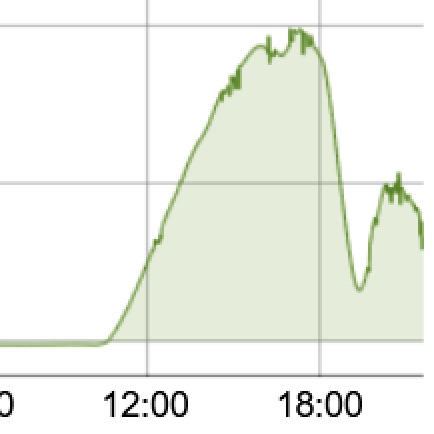
The radiometer (light sensor) on the R/V Neil Armstrong’s bow mast sensed the partial eclipse. Sunday 4/7 was a pretty clear day. The radiation increases relatively smoothly towards midday (16:00 UTC is local noon), peaking near 1000 watts per square meter, and then drops off again. Today (4/8) was a very clear, no clouds in the sky all day. The radiation increases smoothly in the morning, but there is a…
Profiler Moorings Today
April 8, 2024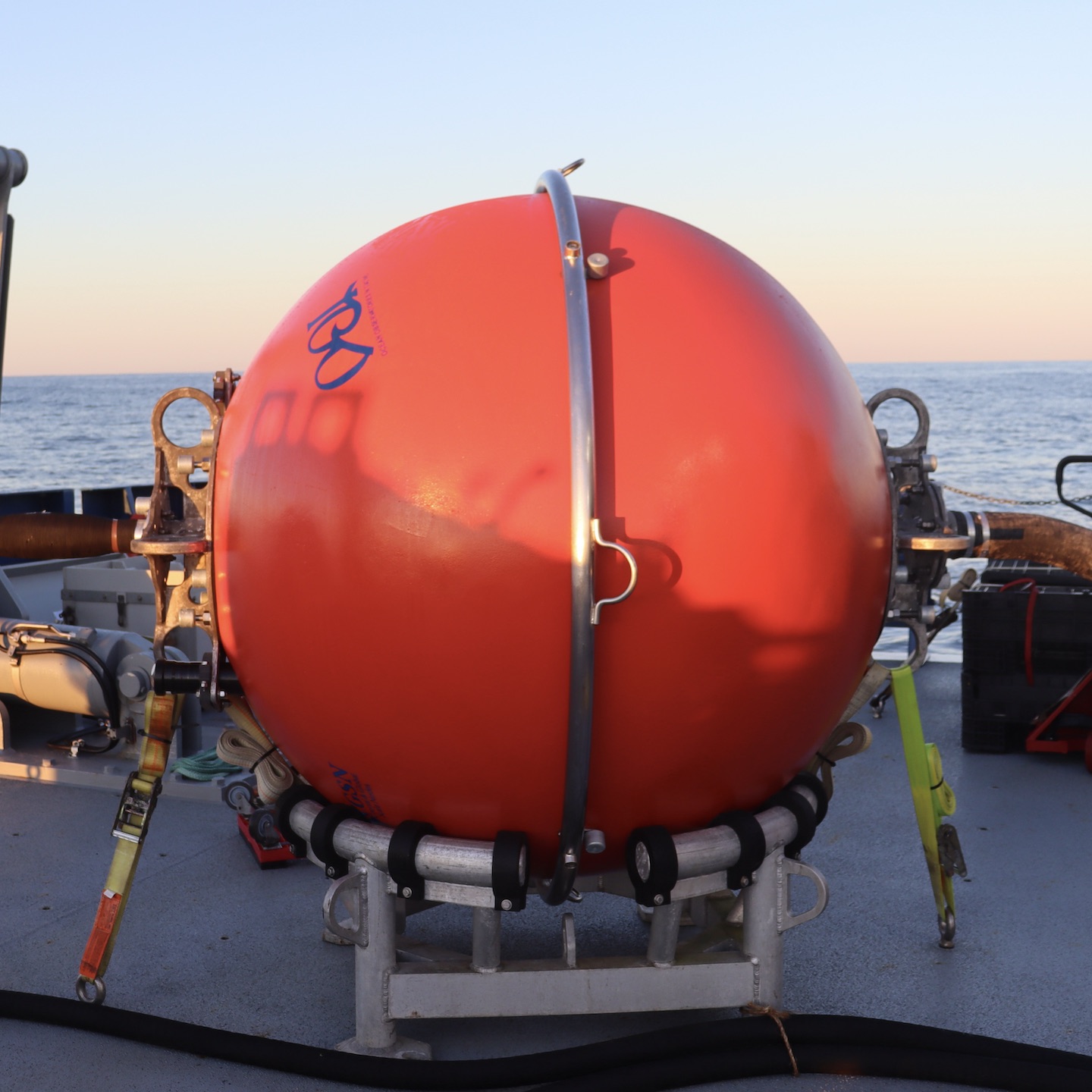
High seas are forecast at the end of the week when leg 2 was set to be on site at the new Pioneer location in the Mid-Atlantic Bight. Taking advantage of sunny skies and smooth seas, leg 1 was extended to deploy two coastal profiler moorings. The Pioneer Team successfully deployed two profilers moorings today, April 8, one at the Northern site, the other at the Southern site of the…
New Instrument Testing
April 8, 2024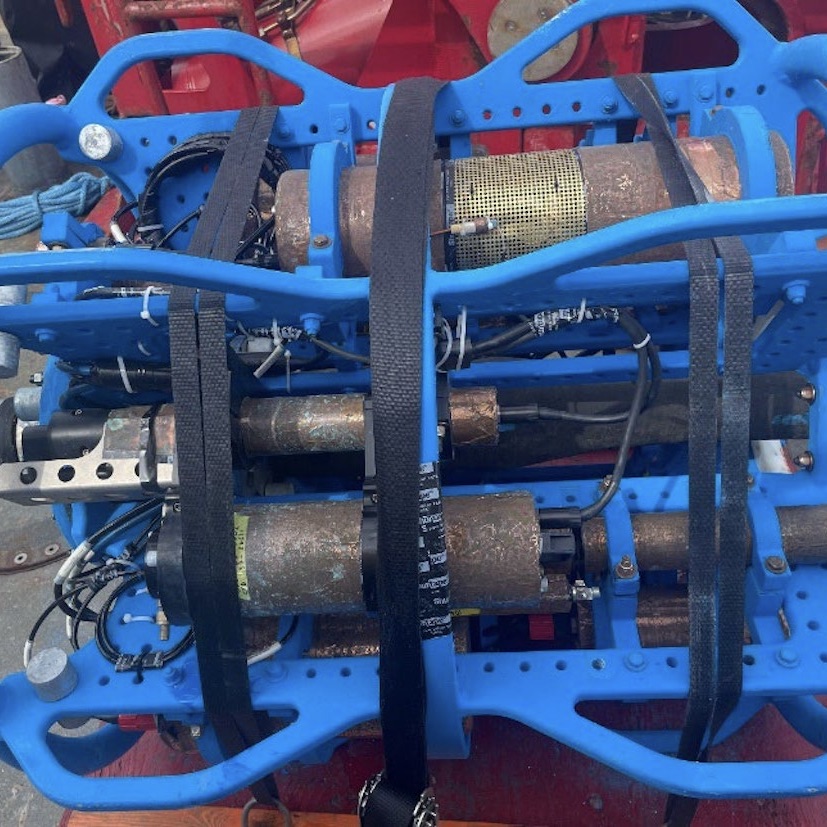
In addition to the baseline instruments the Endurance Team deploys on each cruise, this Near Surface Instrument Frame has two test instruments. They deploy them adjacent baseline instruments for comparison to evaluate potential technical improvements OOI could make. The test instruments measure pH, pCO2, conductivity, and temperature, which together are used to characterize ocean acidification.
It Takes a Village
April 7, 2024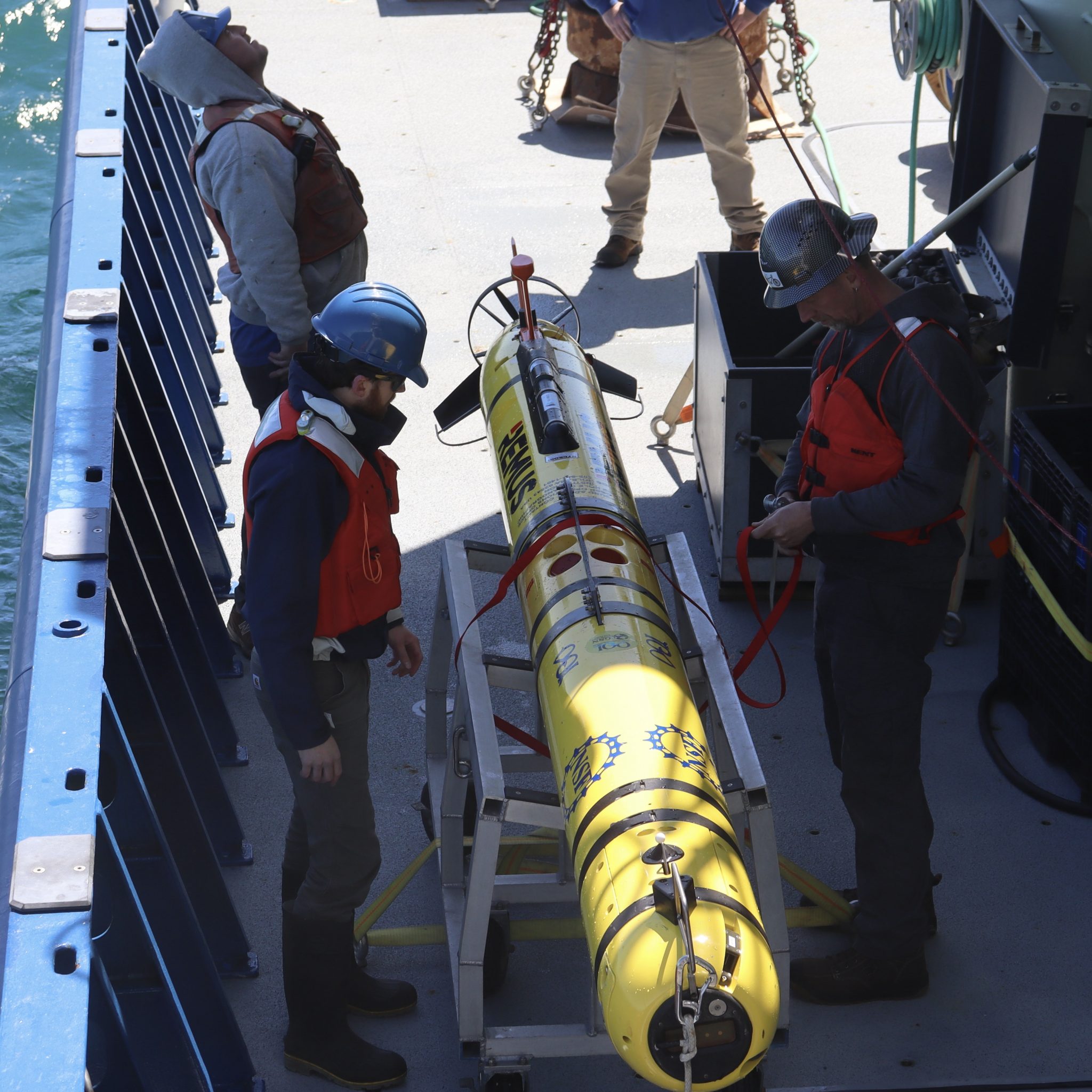
It takes a team onboard the R/V Neil Armstrong. The crew and science party work side-by-side to conduct all the deployments and recoveries for the Pioneer Array MAB. Here crew member Scott Loweth hooks the second Autonomous Underwater Vehicle (AUV) after its 20-hour transect and helps guide the vehicle back on board where it will be secured. Credit: DT Crist © WHOI.
Regular CTD Casts
April 7, 2024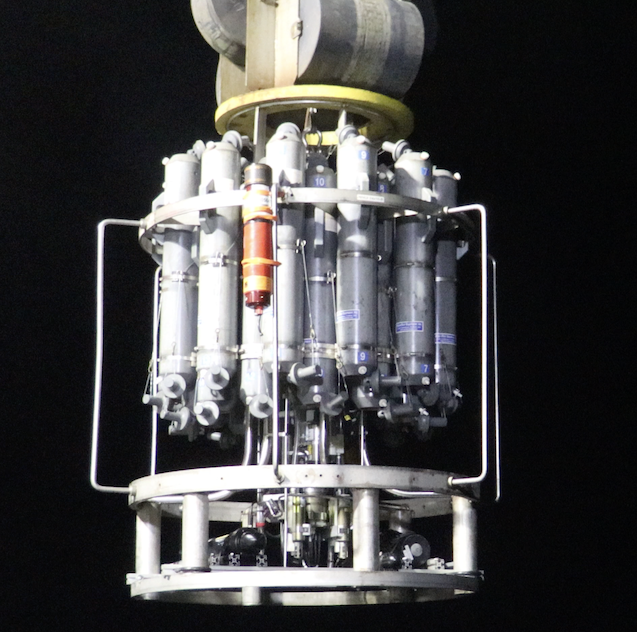
CTD casts that measure conductivity, temperature, and depth are a standard oceanographic measurement tool. The Pioneer Array MAB team are making CTD casts with water sampling at the deployment sites. One cast was completed last evening after the successful recovery of the first of two Autonomous Underwater Vehicle transects.
Back in Port
April 7, 2024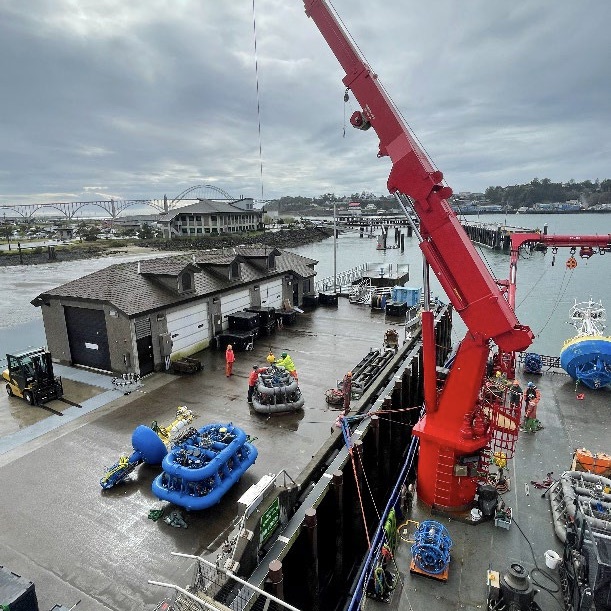
The R/V Sikuliaq’s starboard crane is lifting the bases of the Endurance 20 moorings onto the ship. The bases of the moorings, Multi-Function Nodes, house anchors and instruments. They are different colors because the one that will be deployed in shallow water has blue antifouling paint. At approximately 11,000 lbs., MFNs are the heaviest items deployed. On the upcoming cruise leg, the team will test new approaches for deploying MFNs…