Updates
Glider missions
July 11, 2022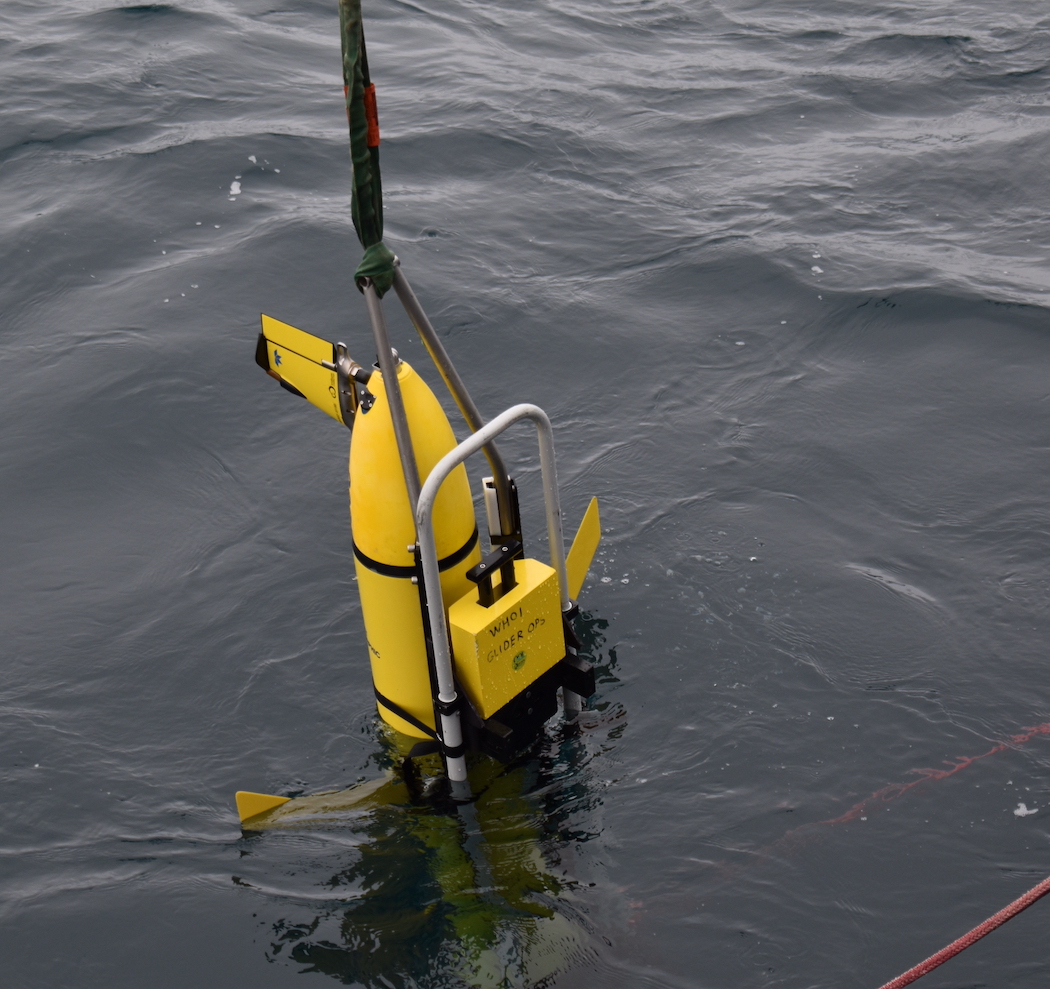
The OOI Irminger Sea Array consists of three mooring sites in a triangular with sides ~30 km long. The Surface Mooring at one corner of the array communicates to shore via satellite. But the other three moorings (two moorings share one of the sites) do not have a surface expression, so they need another way to get their data to shore. Autonomous gliders are deployed at the array and their…
Below the surface
July 7, 2022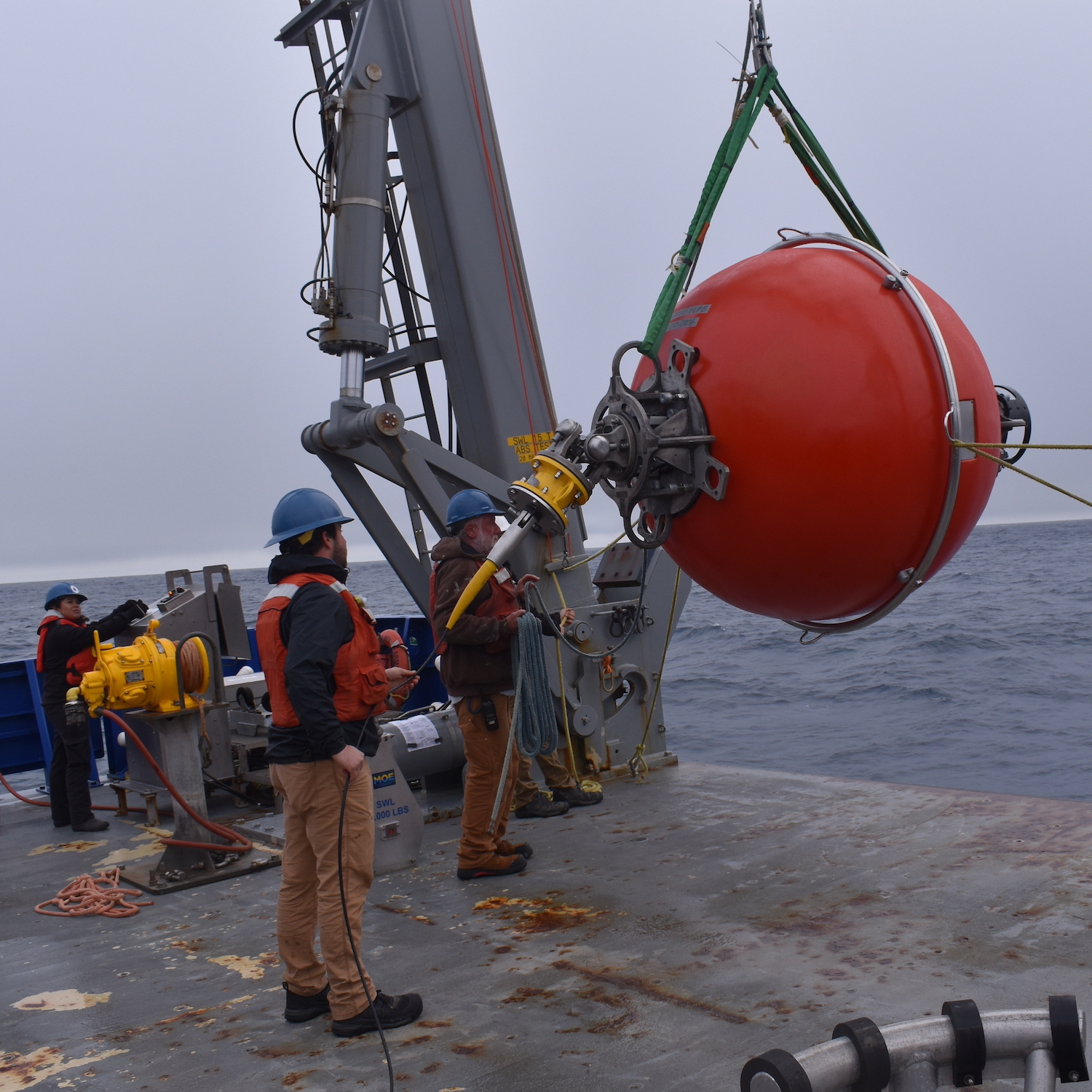
Three of the moorings the Irminger 9 team is deploying in the Irminger Sea are Subsurface Moorings, which means that the moorings are entirely underwater – there is no buoy on the surface. There are, however, multiple components that are buoyant to keep the mooring upright in the water column. There is a top sphere at 30 m depth, a mid-water sphere at 500 m depth, and back-up buoyancy at…
Pressure effects
July 5, 2022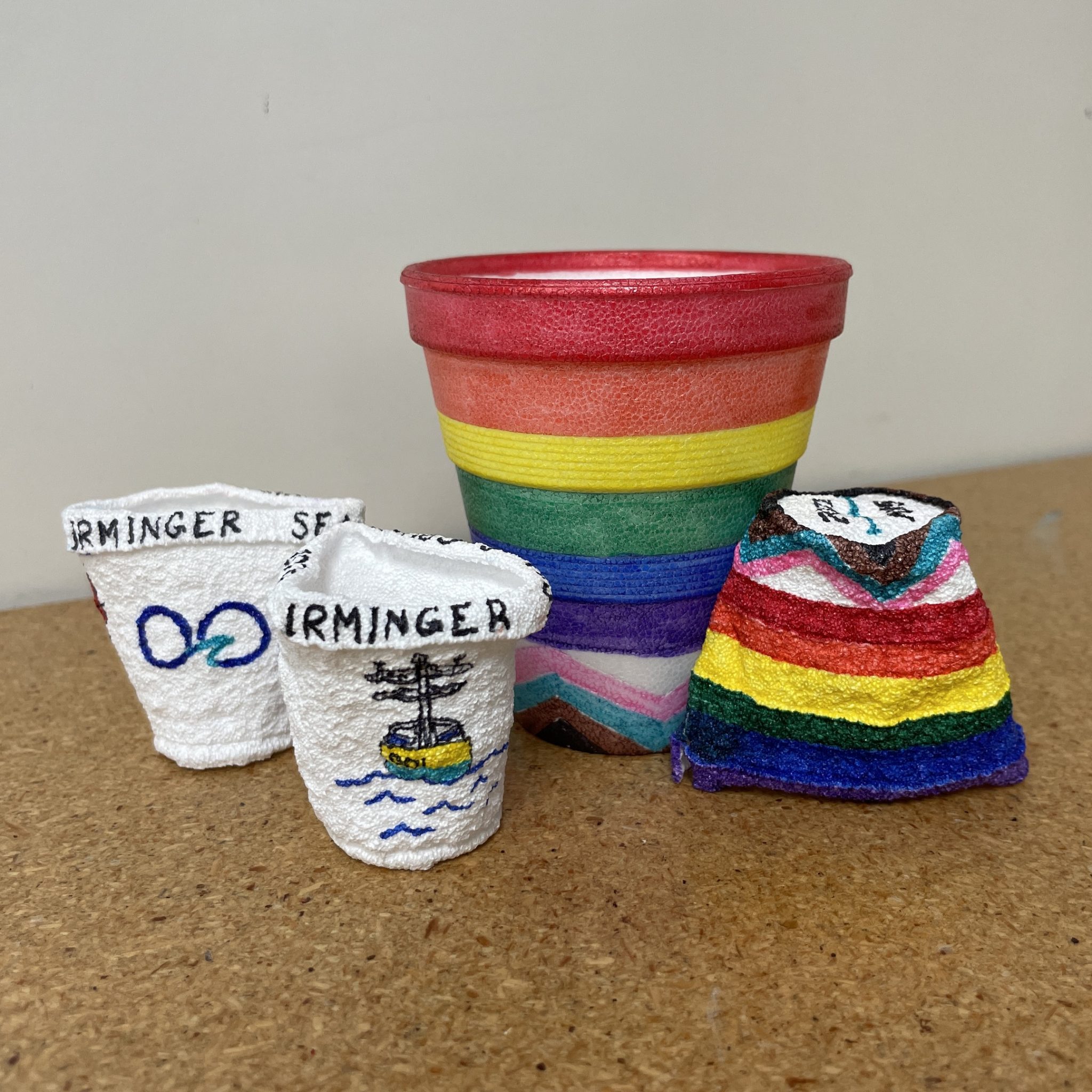
Although the team on the Irminger Sea 9 cruise is working hard every day – including weekends and holidays – they do try to throw in a little fun from time to time. A favorite past time on oceanographic cruises is decorating styrofoam cups and “shrinking” them by sending them into the deep ocean. On the Irminger Sea 9 cruise, that was accomplished by attaching them to the CTD rosette…
First mooring deployed
July 4, 2022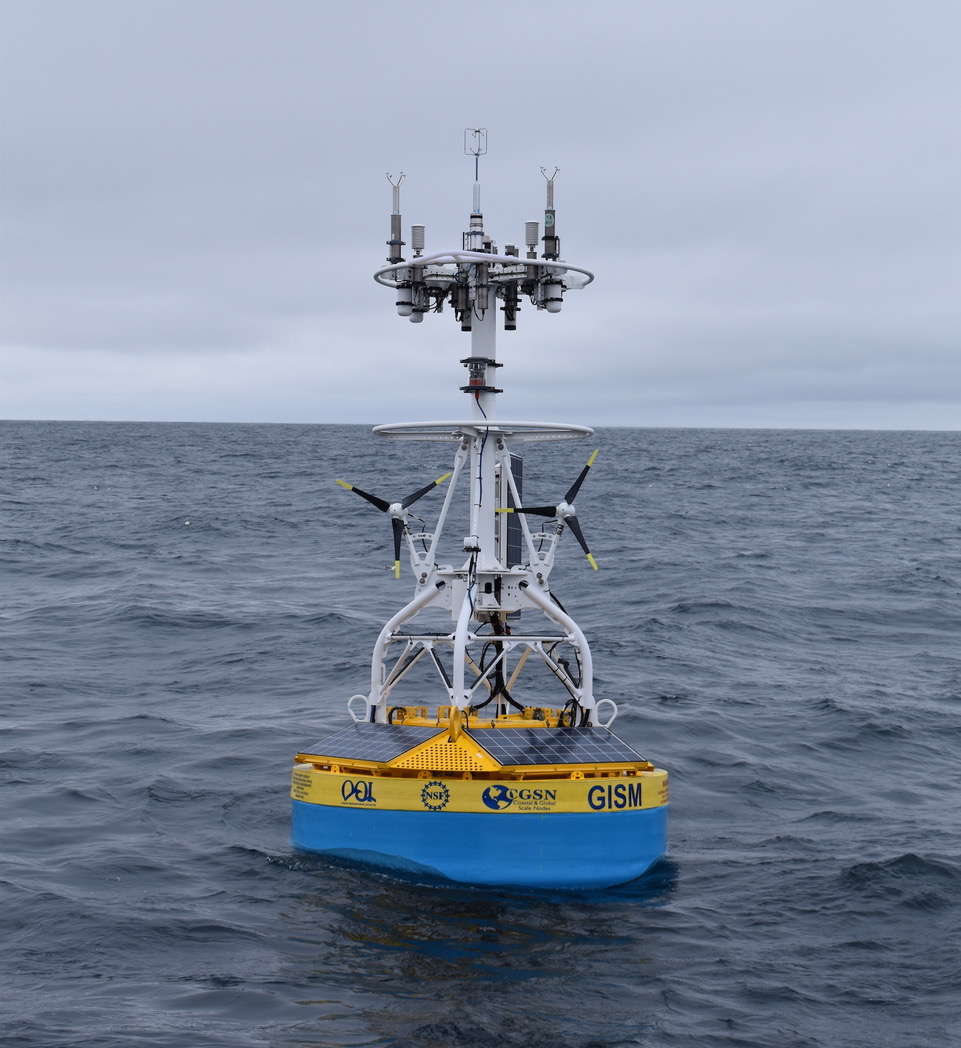
After eight days transiting from Woods Hole to the Irminger Sea, the team is happy to be there and ready to get to work. The Surface Mooring was the first mooring deployed. It consists of a large surface buoy with meteorological instrumentation, satellite telemetry, and wind turbines and solar panels to generate power, and instrumentation in the water to 1500 m depth. OOI looks forward to getting a year’s worth…
Light skies
July 2, 2022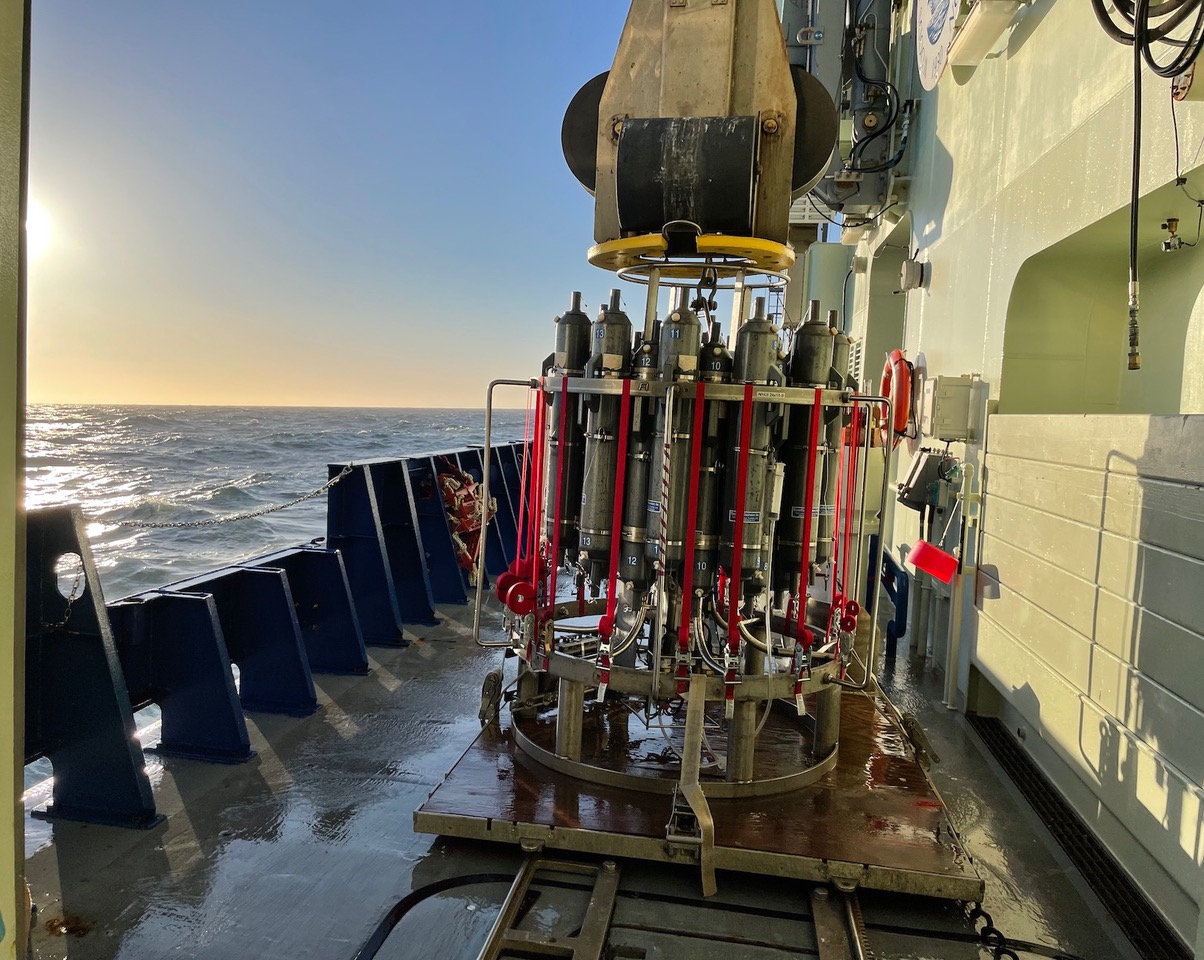
The Irminger Sea Array is at ~60° N latitude, and we are just after the summer solstice. That means it doesn’t get very dark here. With overcast skies it can be hard to tell, but when the sun is out it can play havoc with your sense of time. These pictures are from 9:30 pm local time (10:30 GMT). It can be hard to go to sleep (even after a…
Link to OSNAP blog
June 27, 2022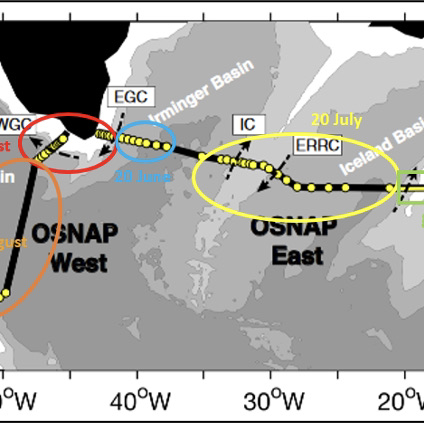
A team from OSNAP (Overturning in the Subpolar North Atlantic Program) is also onboard the Armstrong, working alongside OOI colleagues. The OSNAP team is conducting sampling and checking OSNAP moorings in the region. In her first blog post, OSNAP researcher Heather Furey provides an overview of their mission over the next month and explains how four similar expeditions are planned for the summer to recover and redeploy the entire OSNAP…
Survival suits
June 27, 2022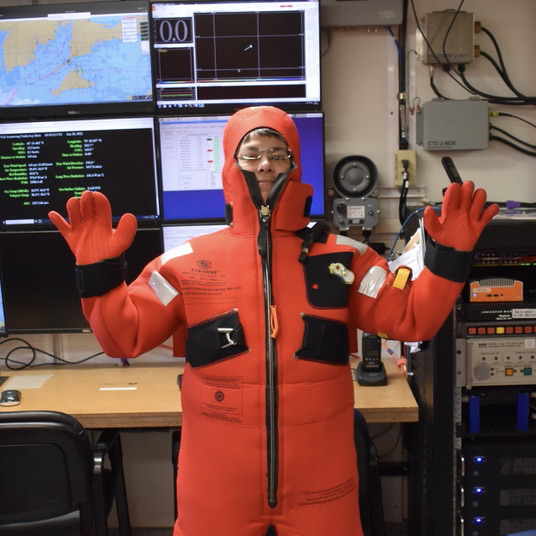
All UNOLS (University-National Oceanographic Laboratory System) ships have safety briefings and drills with the science party to ensure that everyone is prepared for emergencies at sea. This includes practicing donning immersion suits in the event that the team would have to abandon ship in the cold north Atlantic waters. One should be able to get into a suit in under 2 minutes. Chief Scientist Sheri N. White (top) and Instrumentation…
Changing conditions
June 27, 2022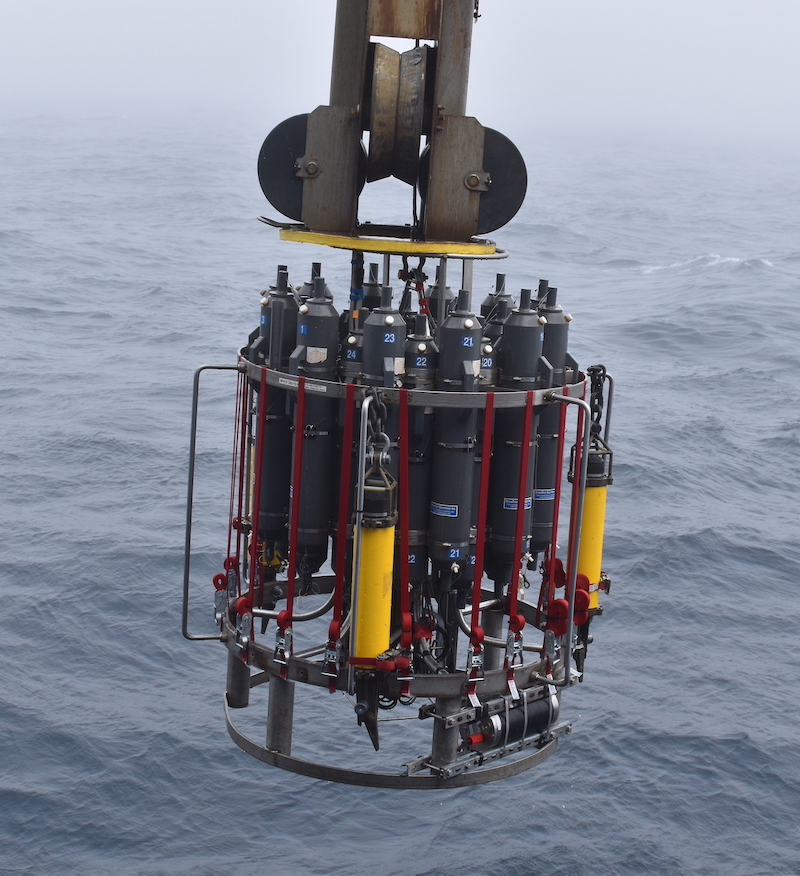
During our transit we are periodically stopping to conduct CTD casts in the Labrador Sea. We use these casts to test components and instruments that we will be deploying on the moorings in the Irminger Sea. We lower the CTD rosette to 3000 m depth to ensure components will work at that temperature and pressure, and instruments will make accurate measurements. The past couple of days we have been in…
Splicing operation
June 24, 2022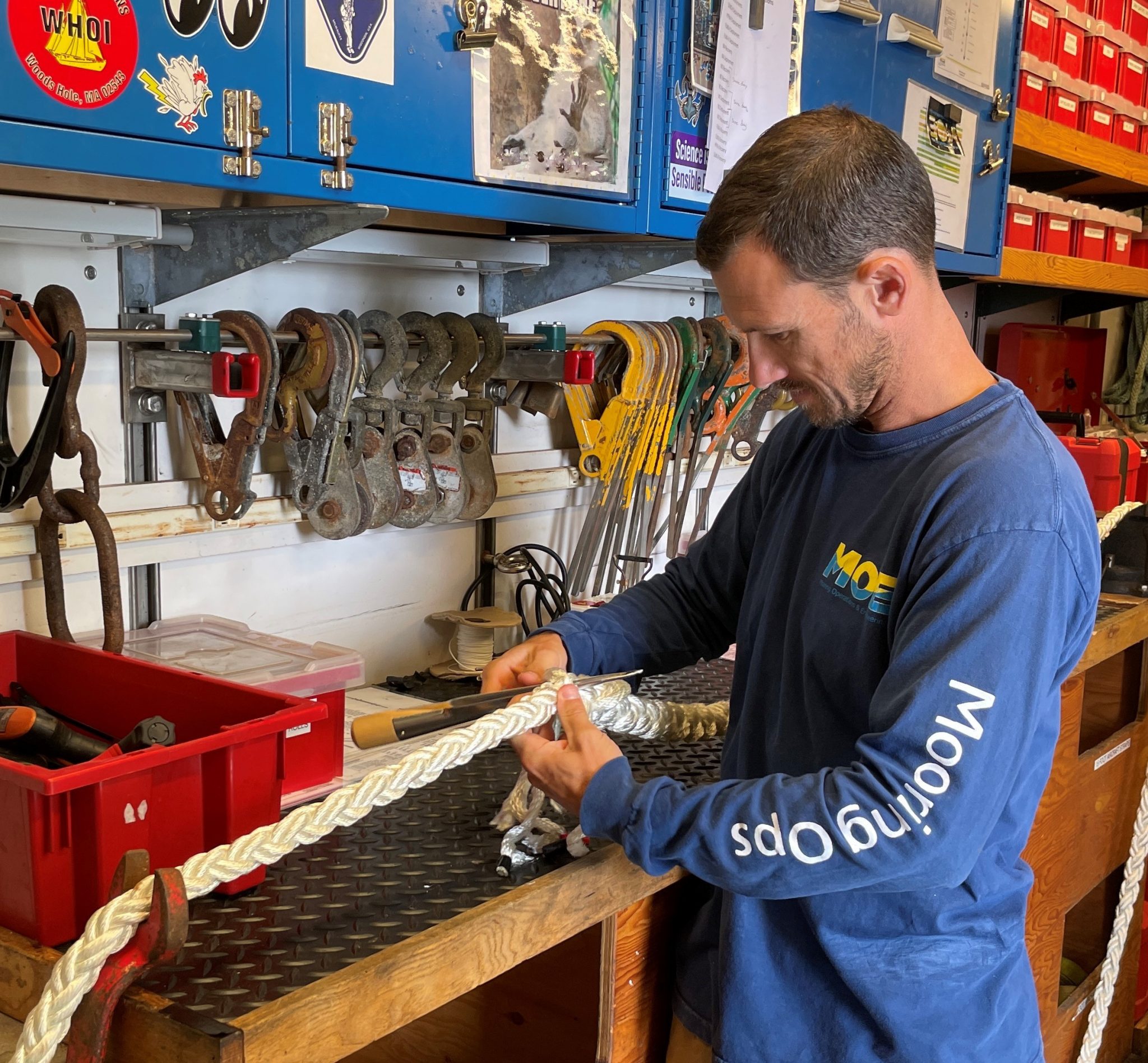
The Surface Mooring consists of a surface buoy, a seafloor anchor, and a mooring riser connecting the two. The riser is made up of numerous sections of wire rope, instrumentation frames and synthetic rope. As the team transits to the Irminger Sea Array, the mooring operations team is splicing together sections of the synthetic rope.
Big Eyes
June 22, 2022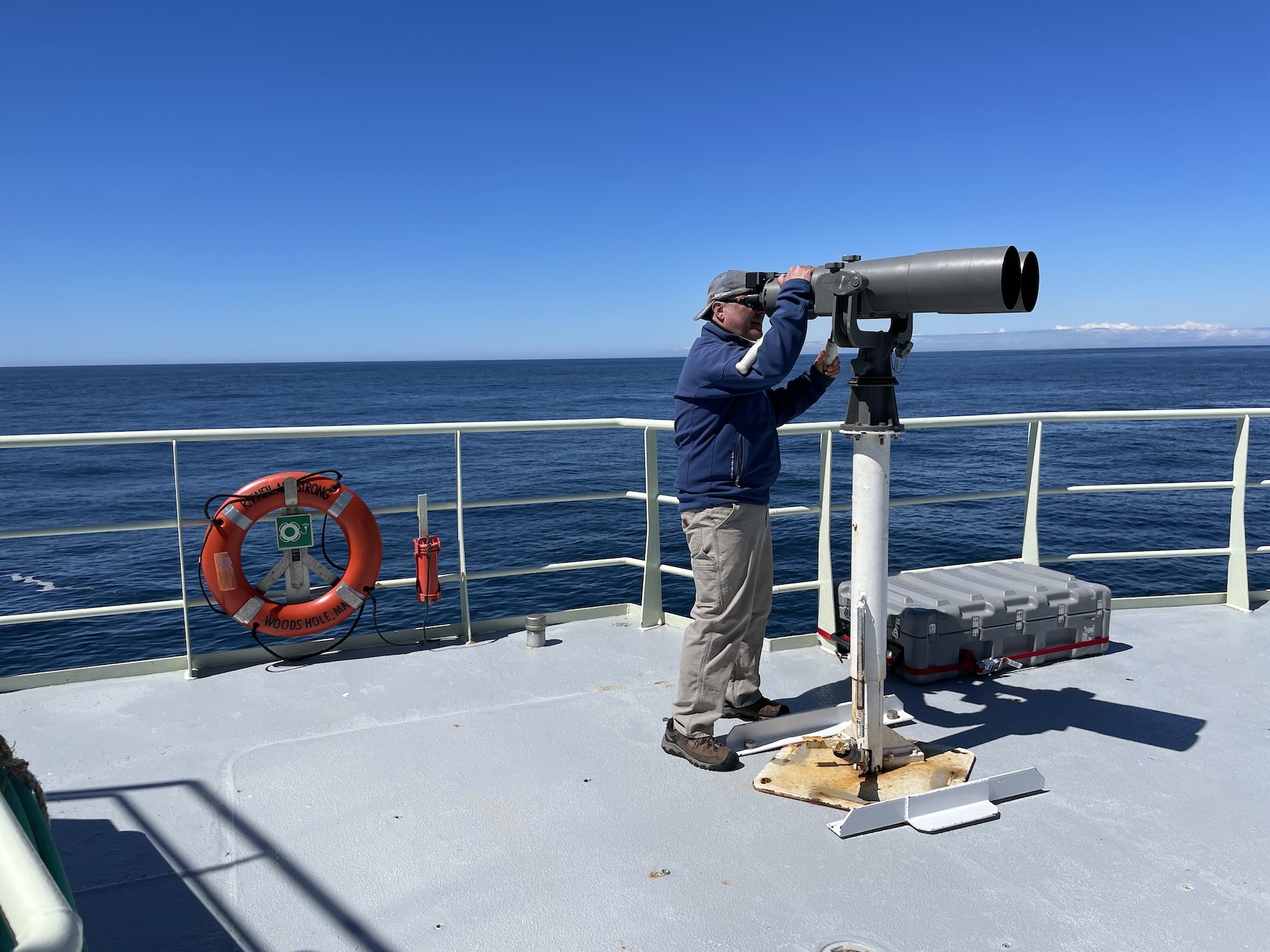
Pete Duley, from the National Oceanographic and Atmospheric Administration (NOAA), is aboard as a marine mammal observer. As we transit up the coast of Canada towards the Irminger Sea, Pete is spending his time on deck with the “Big Eyes” binoculars scanning the ocean. So far he has seen a variety of marine life – minke whales, fin whales, humpback whales, pilot whales and common dolphins – and an occasional…