2026 Dispatches

Dispatch 21: Hope you’re hungry!
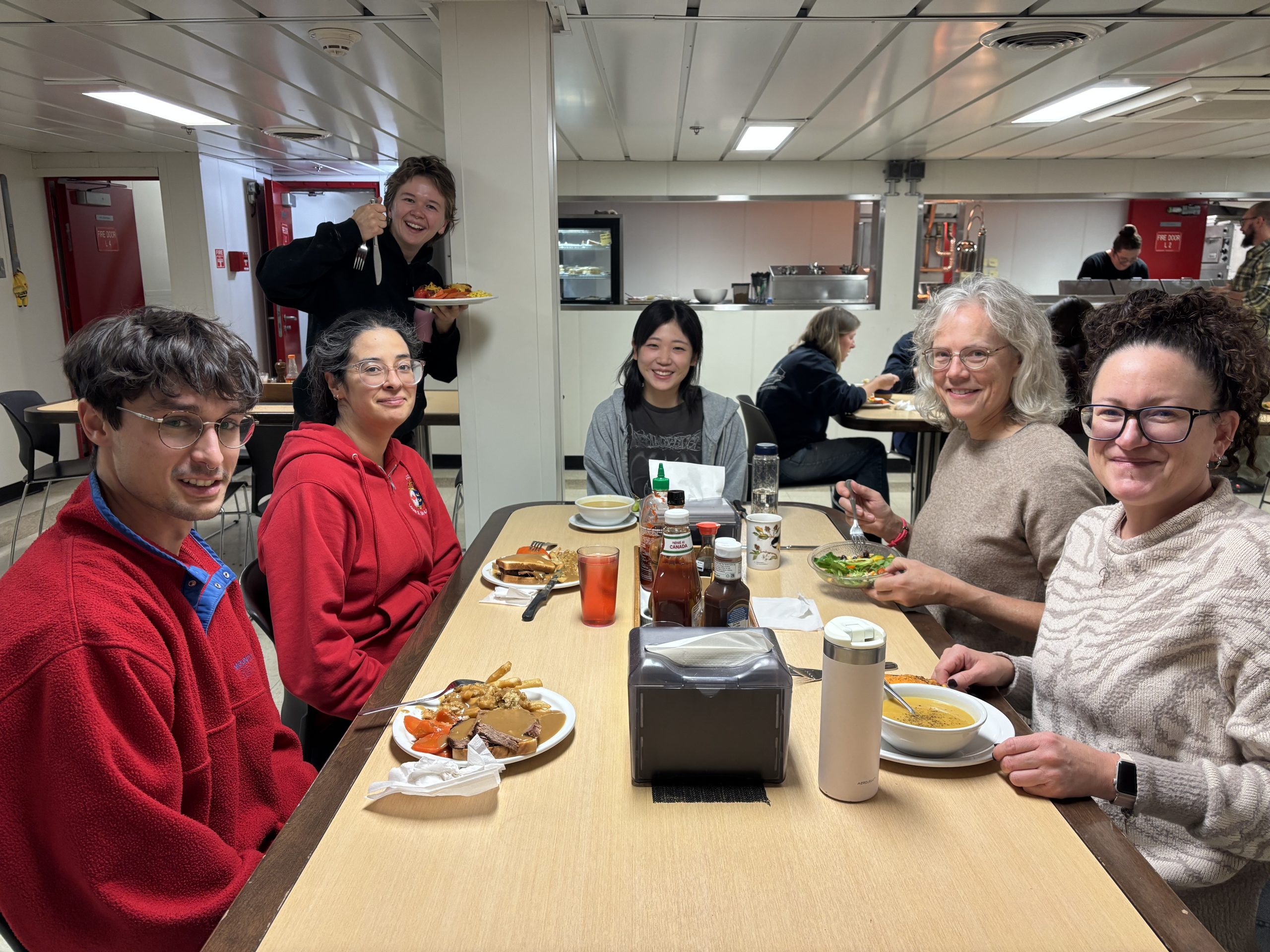
We require a lot of food to fuel our long days of work up here in the Arctic. Luckily, the galley crew and stewards take amazing care of us, preparing 3 hot meals and plenty of snacks every day! I thought it would be fun to start today’s dispatch by walking you through a typical day of eats on the Louis.
Dispatch 20: Heading south
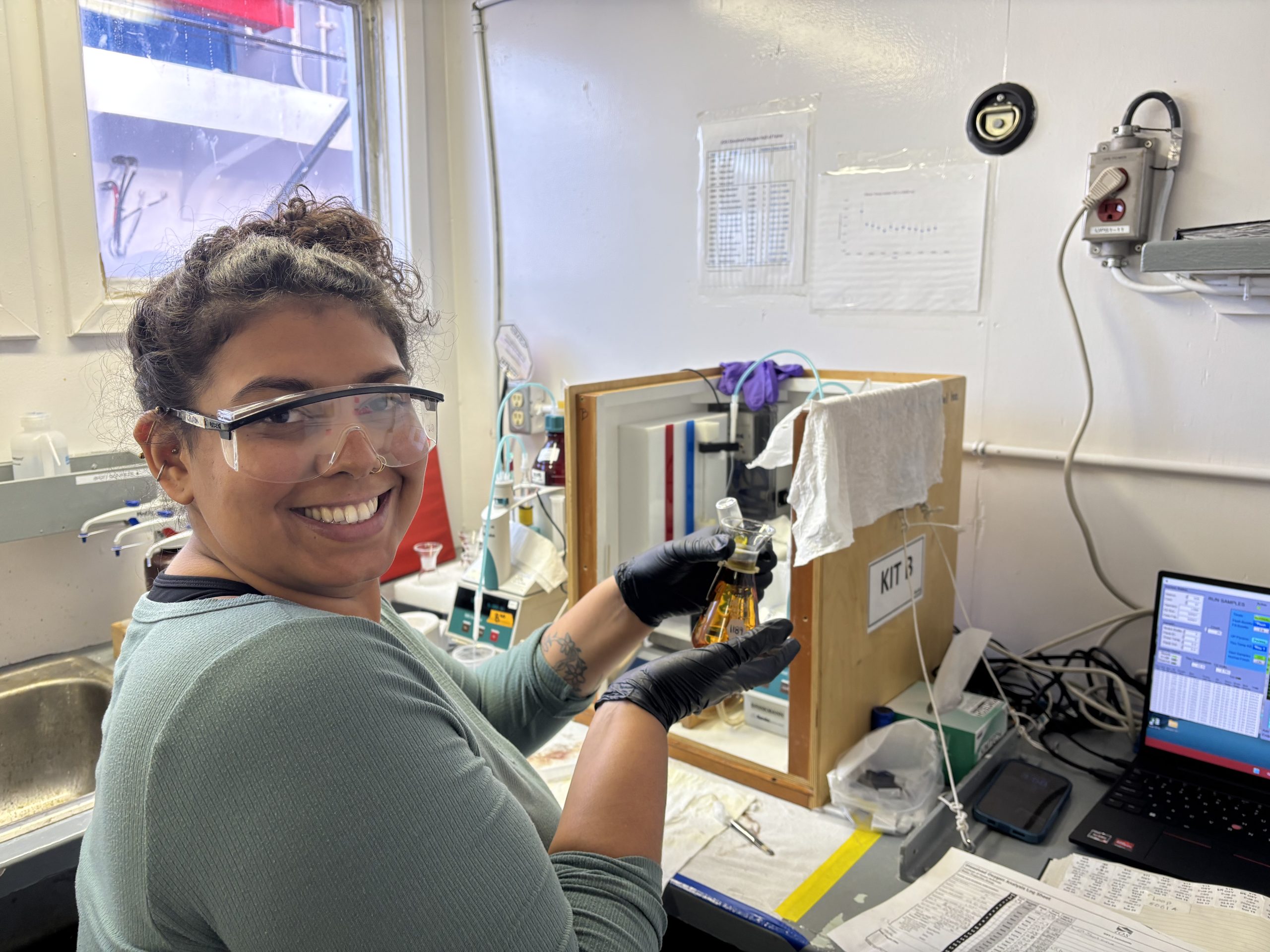
We are currently steaming southward along the 150◦W longitude line towards our third and final big mooring station (Mooring A), which we plan to tackle later this week. In the meantime, the watches will remain busy completing several CTD-rosette casts before our arrival at Mooring A on Friday.
Dispatch 19: Goodbye for now, Mooring B!
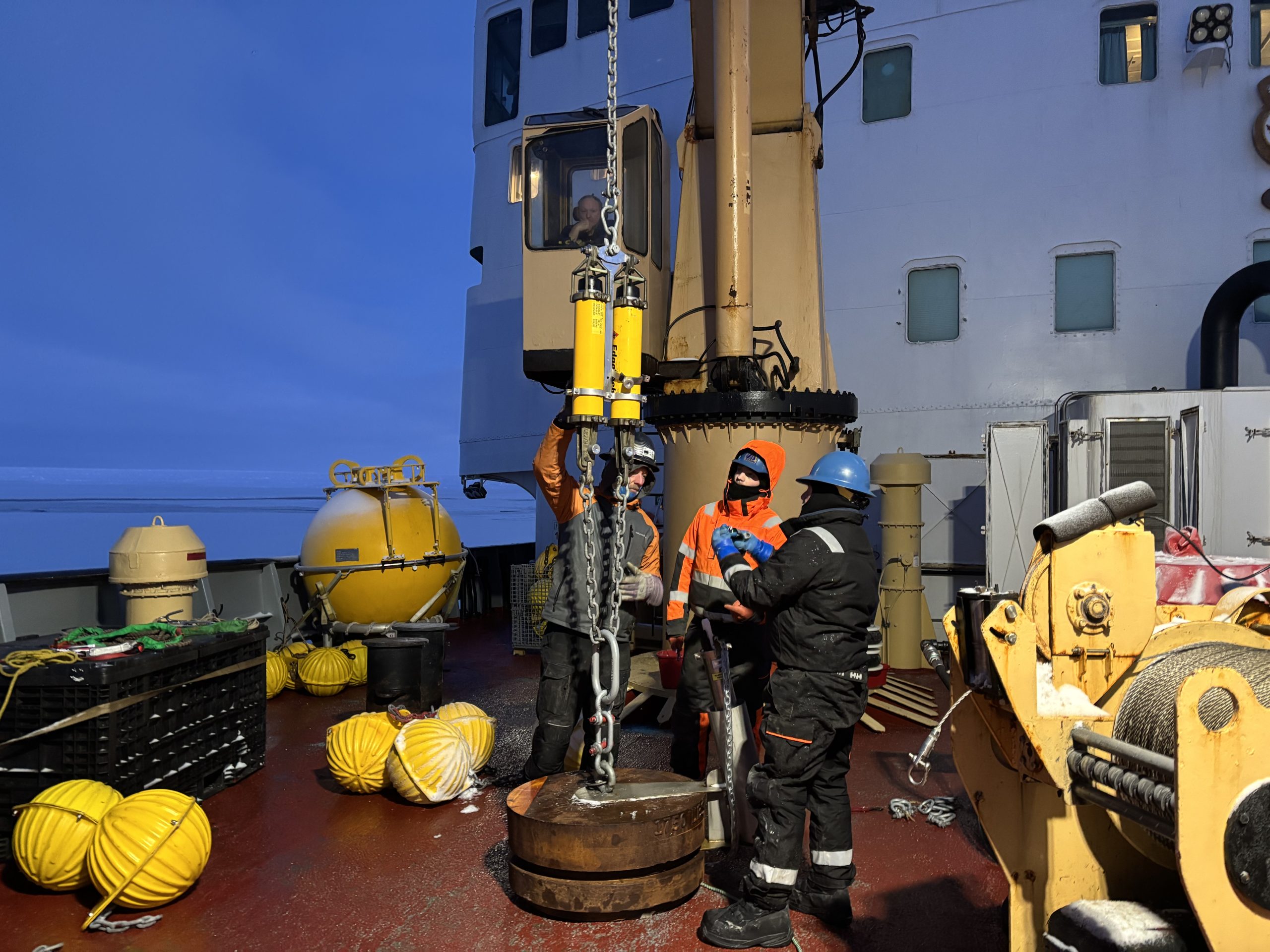
After a quick 24-hour turnaround, Mooring B has officially been redeployed! Mooring operations started before sunrise, with the WHOI team and deck crew assembling the anchor around 8:30 am. By 9:30 am, WHOI engineer Chris Basque and bosun Ashley were directing the crew to lower Mooring B’s anchor into the ocean, and the deployment was off!
Dispatch 18: Hello again, Mooring B!
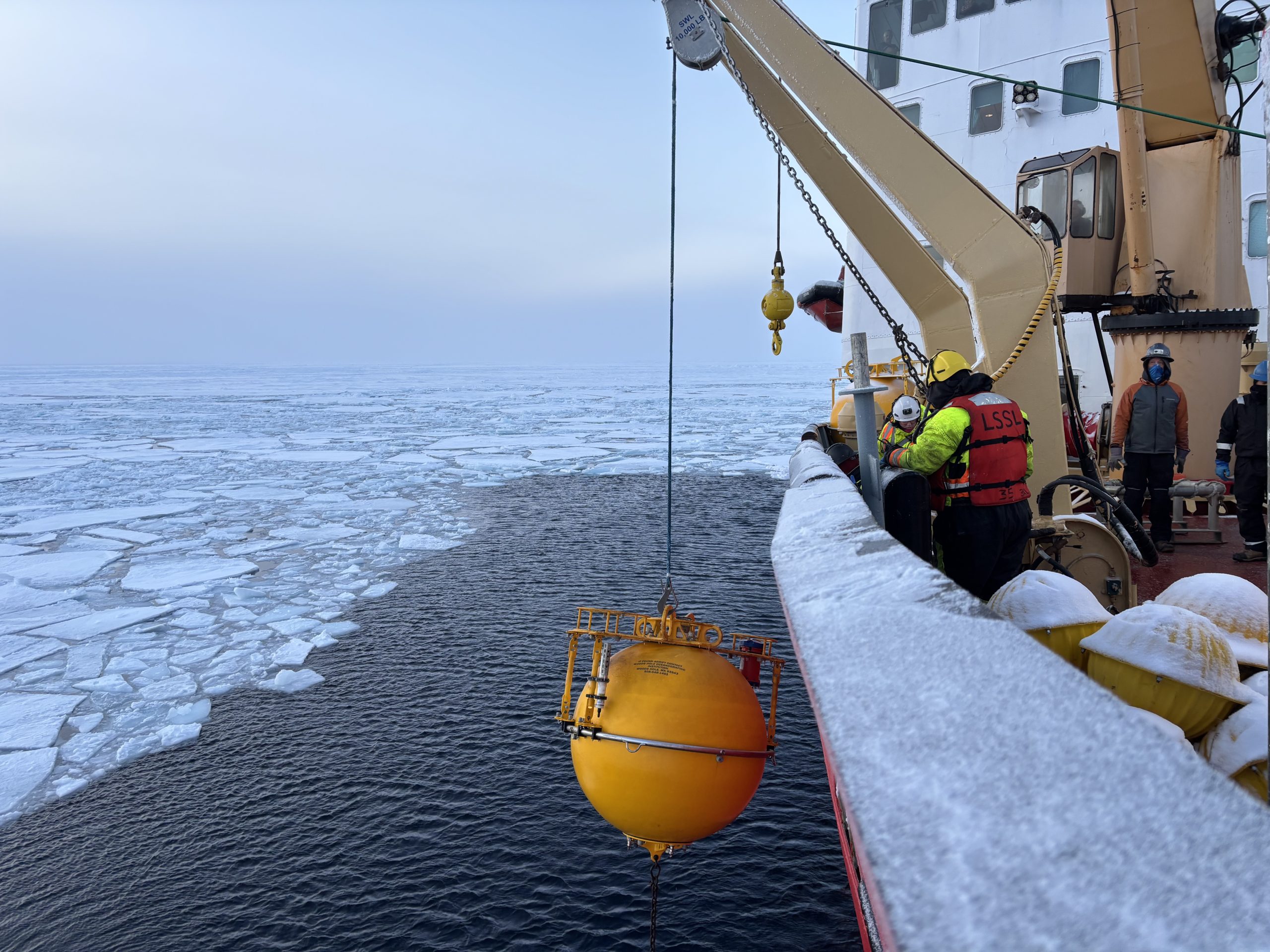
Today, we recovered Mooring B! The recovery operations started around 6 am, when the WHOI team and I met in the forward lab to identify Mooring B’s precise location. The bridge crew navigated us to 3 sites approximately 1.5 km from Mooring B’s drop location. At each site, WHOI engineer Jeff O’Brien sent an acoustic signal to the mooring releases and recorded its travel time. We then used the acoustic travel times to triangulate Mooring B’s exact location. Afterwards, we geared up for another long day of work outside, while Captain Duffett and the bridge team maneuvered the Louis to clear ice from where we expected Mooring B’s top sphere to surface.
Dispatch 17: Shrinky cups
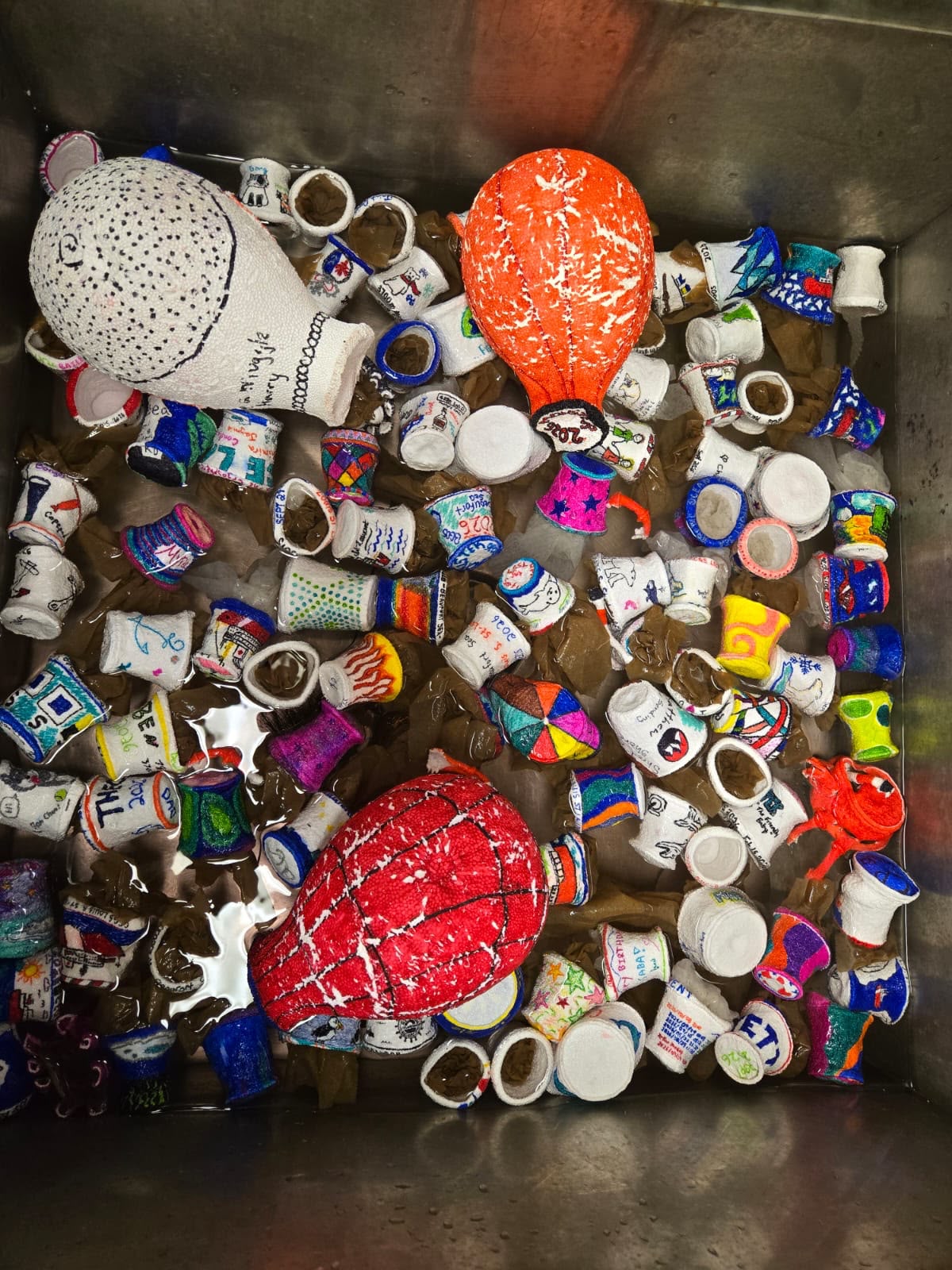
It’s time for everyone’s favorite rosette cast of the cruise – the shrinky cup cast! Shrinky cups are a beloved, long-standing tradition on the annual BGOS/JOIS cruises. Everyone on board is invited to decorate a foam cup. The cups are then collected in a mesh bag, attached to the rosette wire, and sent to the bottom of the Arctic Ocean. The weight of nearly 4000 m of water above compresses the cups, causing them to shrink to roughly 45% of their original size! These cups make great souvenirs and gifts for friends and family. Many were decorated with polar bears, seals, northern lights, and the Louis. There were also plenty of non-Arctic related cups. For example, I made a shrinky cup for one of my friends featuring her cats, Gorgonzola and Pistachio. The cups were shrunk during yesterday’s cast at CB11. Afterwards, we were all excited to collect our tiny souvenirs!
Dispatch 16: Don’t forget to charge your socks!
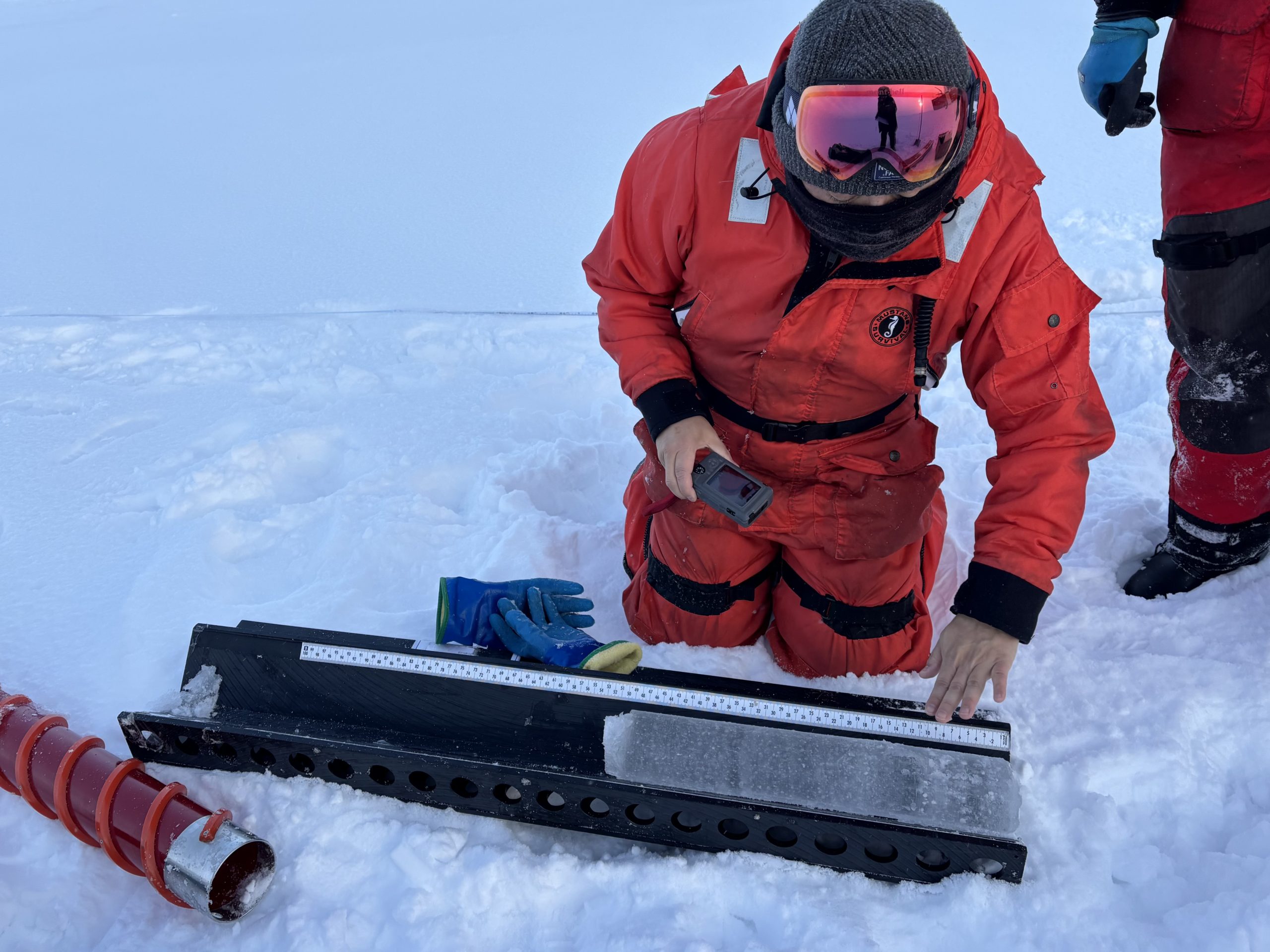
Today was one of our busiest days so far! Around 6 am, the night watch completed an extra special CTD-rosette cast at CB11 (more on that in tomorrow’s dispatch!). Captain Duffett and the bridge team then positioned us within a nearby ice floe, and we got ready to complete our third ice station!
Dispatch 15: Ice Station #2
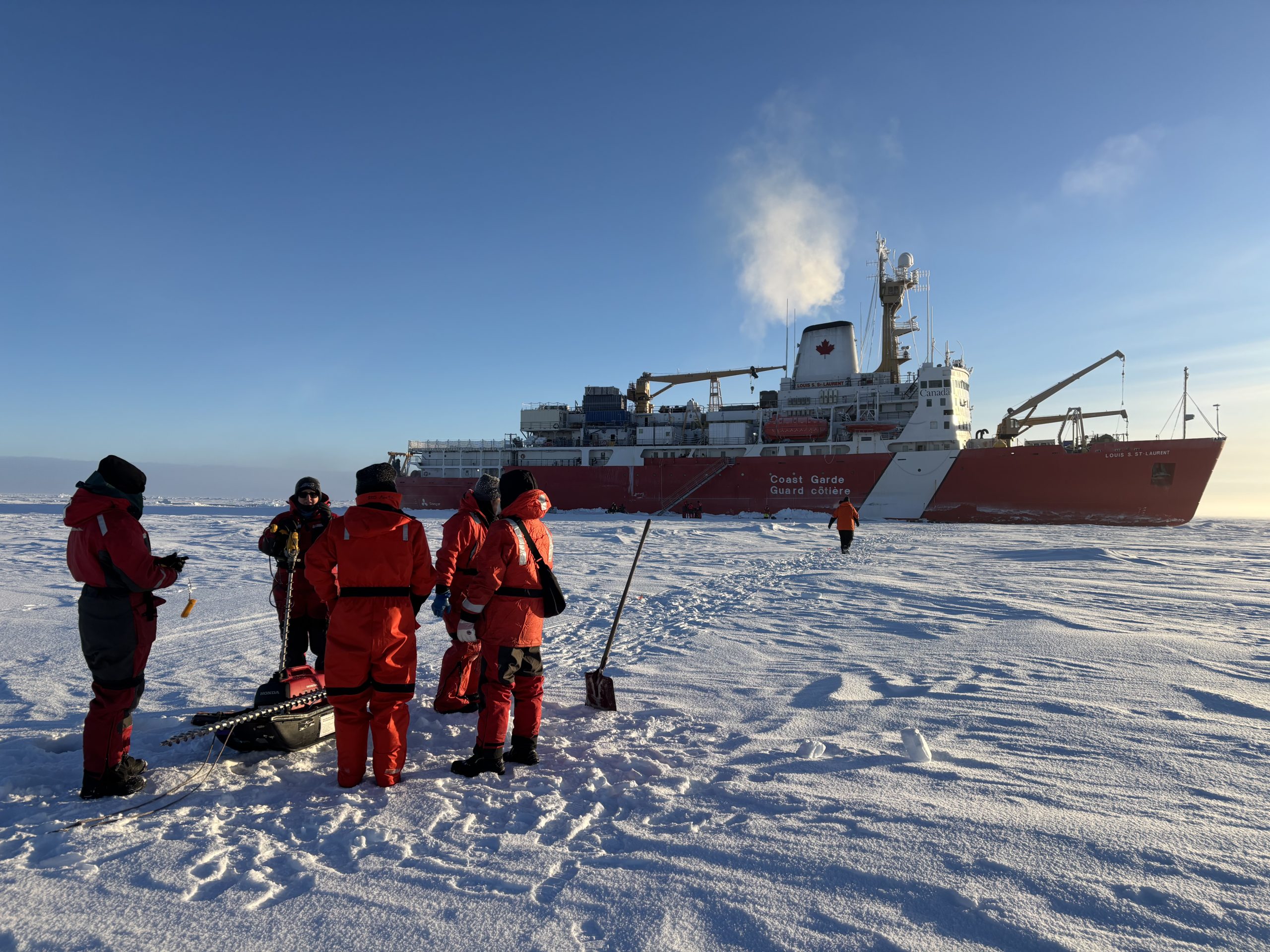
It’s chilly outside! Air temperatures dropped below -17◦C (1.5◦F) today. Despite the frigid conditions, we were still able to complete our second ice station! We had a slightly later start today, with the gangway being lowered around 11 am. We enjoyed a quick lunch of pan-fried cod, mashed potatoes, and sandwiches before bundling up and heading out to the ice.
Dispatch 14: Ice Station #1
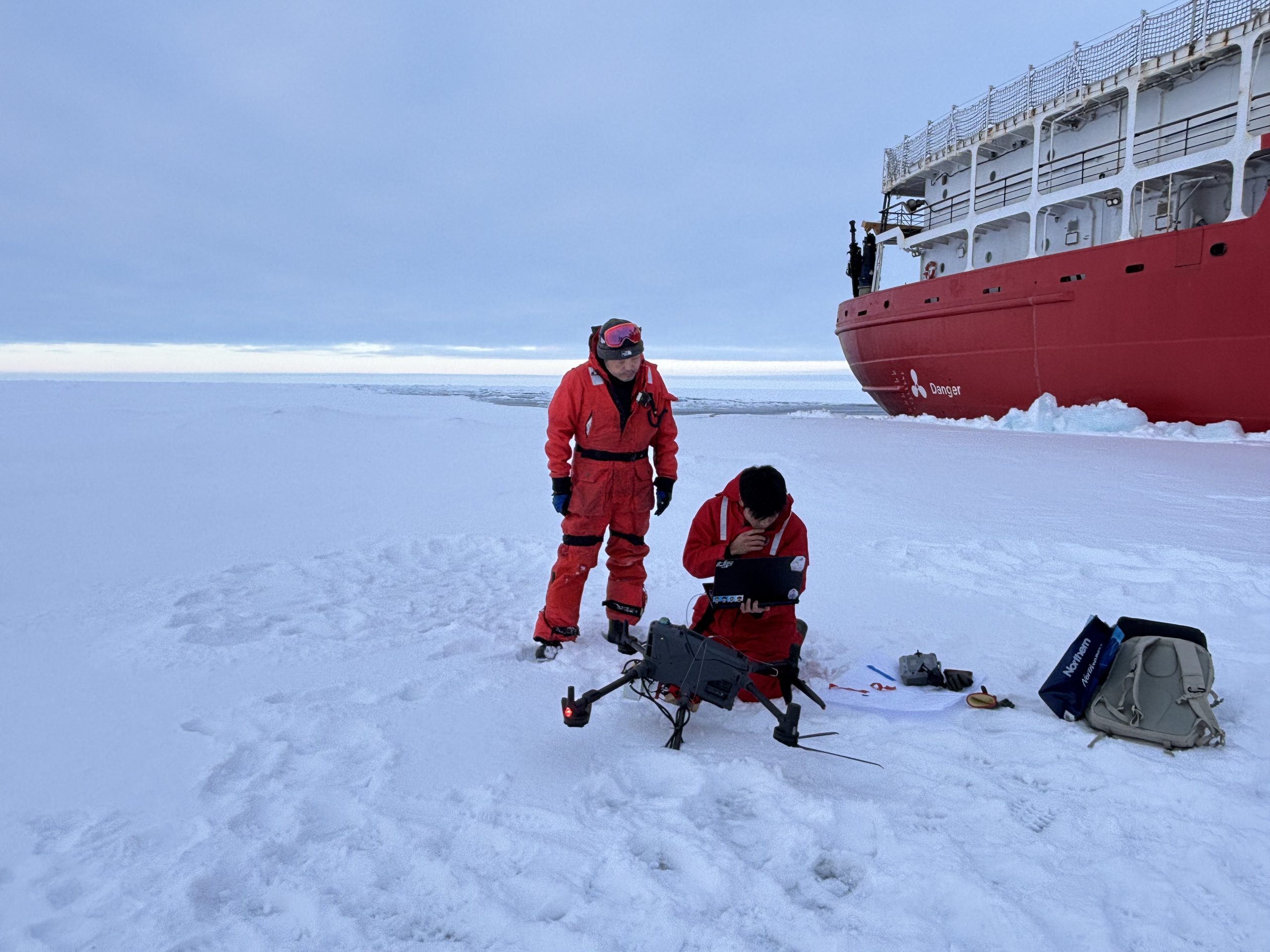
We completed our first ice station! Captain Duffett and the bridge crew positioned us within this large ice floe (14 km across!) late last night. We had visited one smaller ice floe earlier in the evening, but unfortunately, found that it was too thin. We went to bed hoping that this larger floe would be found suitable for our planned ice work.
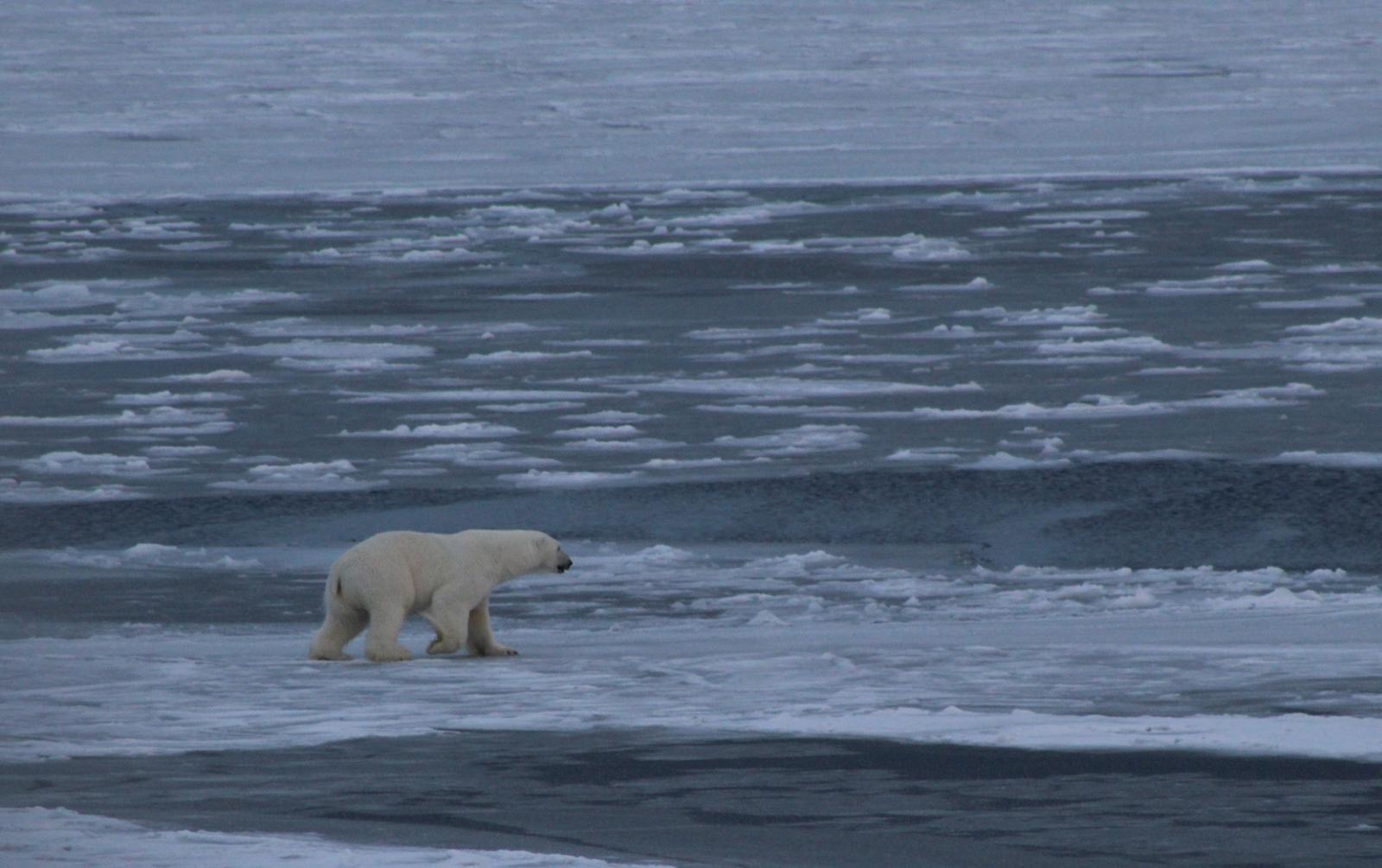
Dispatch 13: Polar bear sighting
We had our first polar bear sighting of the cruise! Around 6 pm last night, the bridge announced that a polar bear had been spotted wandering nearby. We all quickly donned our layers and headed out to the foredeck to see. Everyone felt incredibly grateful to witness this beautiful creature in its natural habitat.
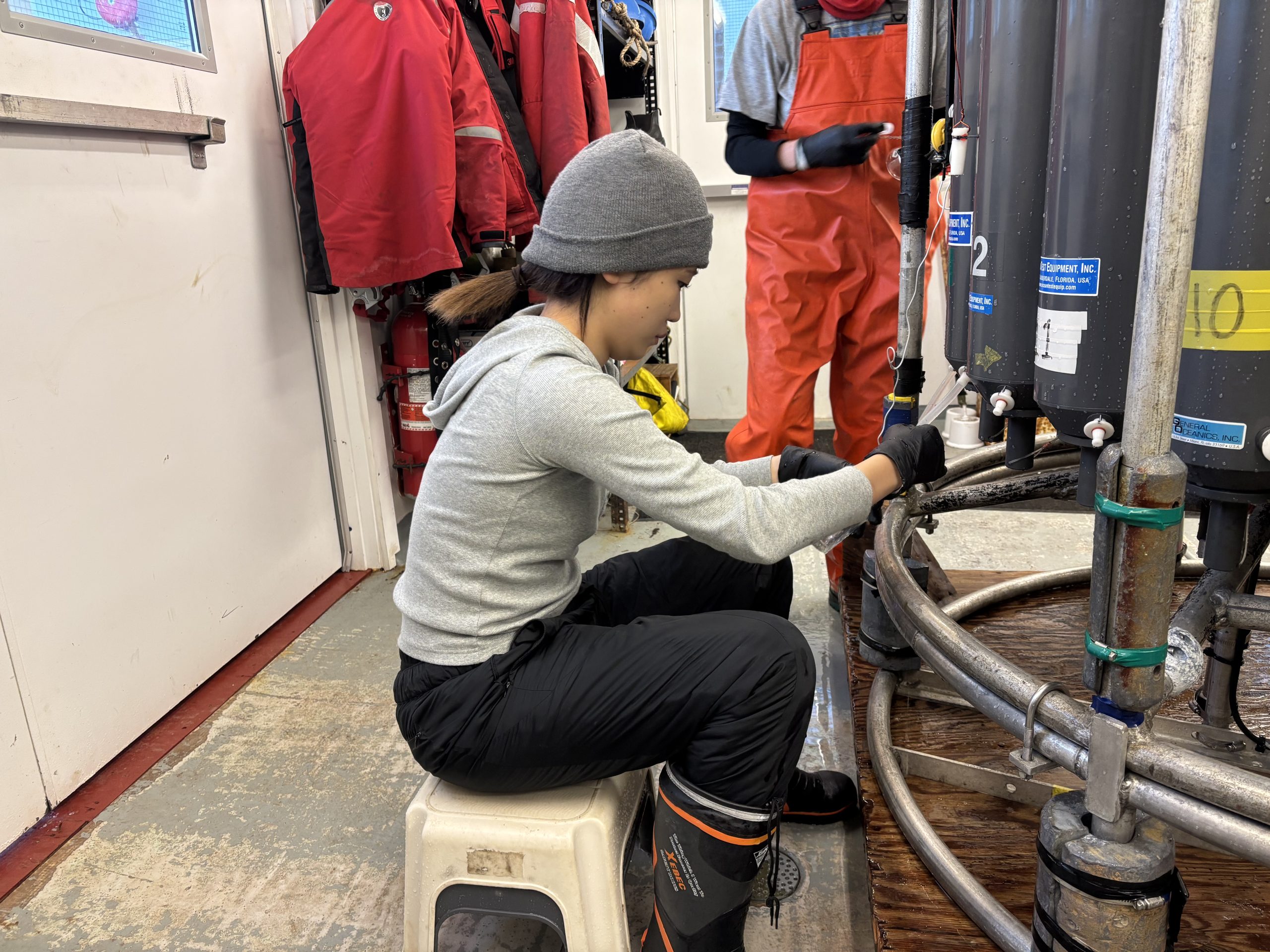
Dispatch 12: Coffee, coffee, coffee!
Happy National Coffee Day! Between the long shifts and cold weather, we take our coffee consumption very seriously. I polled the crew and science team at lunch today and found that most people drink 4+ cups per day! This includes coffee available 24/7 in the mess, from the drip coffee maker in the science boardroom, and from the Keurig coffee makers that many crew members keep in their cabins.
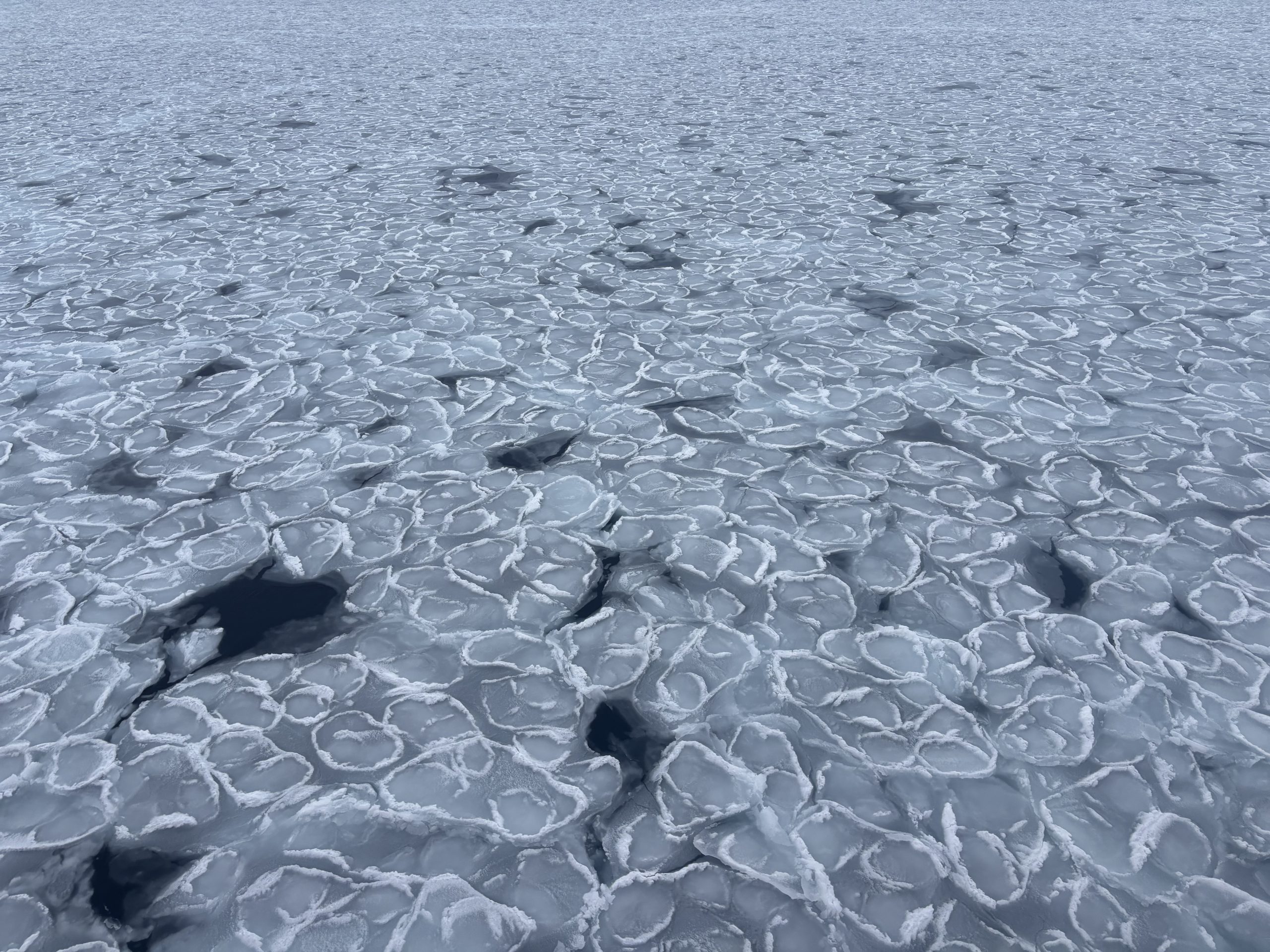
Dispatch 11: A quick quiz
We are currently steaming through a pack of fresh pancake ice! Pancake ice forms when wave and wind activity cause small ice crystals to collide and form flat discs. We are excited to be seeing signs of ice growth as we head northward in search of large floes for our upcoming ice work. Co-chief scientist Paul Macoun and WHOI engineer Jeff O’Brien have been consulting with our on-board ice specialist Roxane to identify promising floe candidates. In the meantime, the rest of the science team is remaining hard at work!
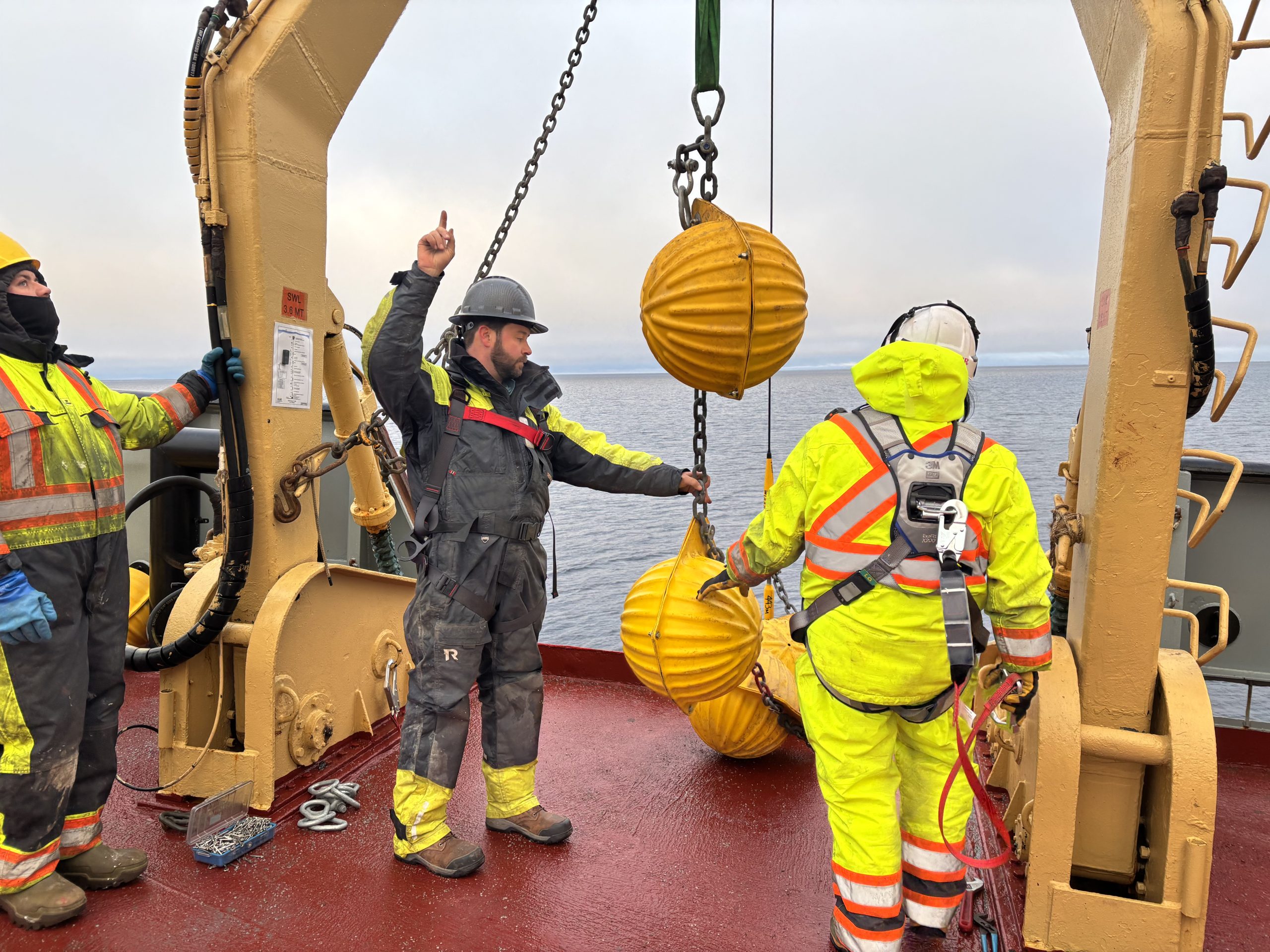
Dispatch 10: See you next year, Mooring D!
We have successfully redeployed Mooring D! The day started strong as we were treated to Eggs Benedict and banana bread at breakfast. We have officially reached the highly anticipated banana bread stage of the cruise now that our remaining banana stock has started to brown. We look forward to many more banana-flavored sweet treats over the next few days 😊.
Dispatch 9: A windy mooring recovery
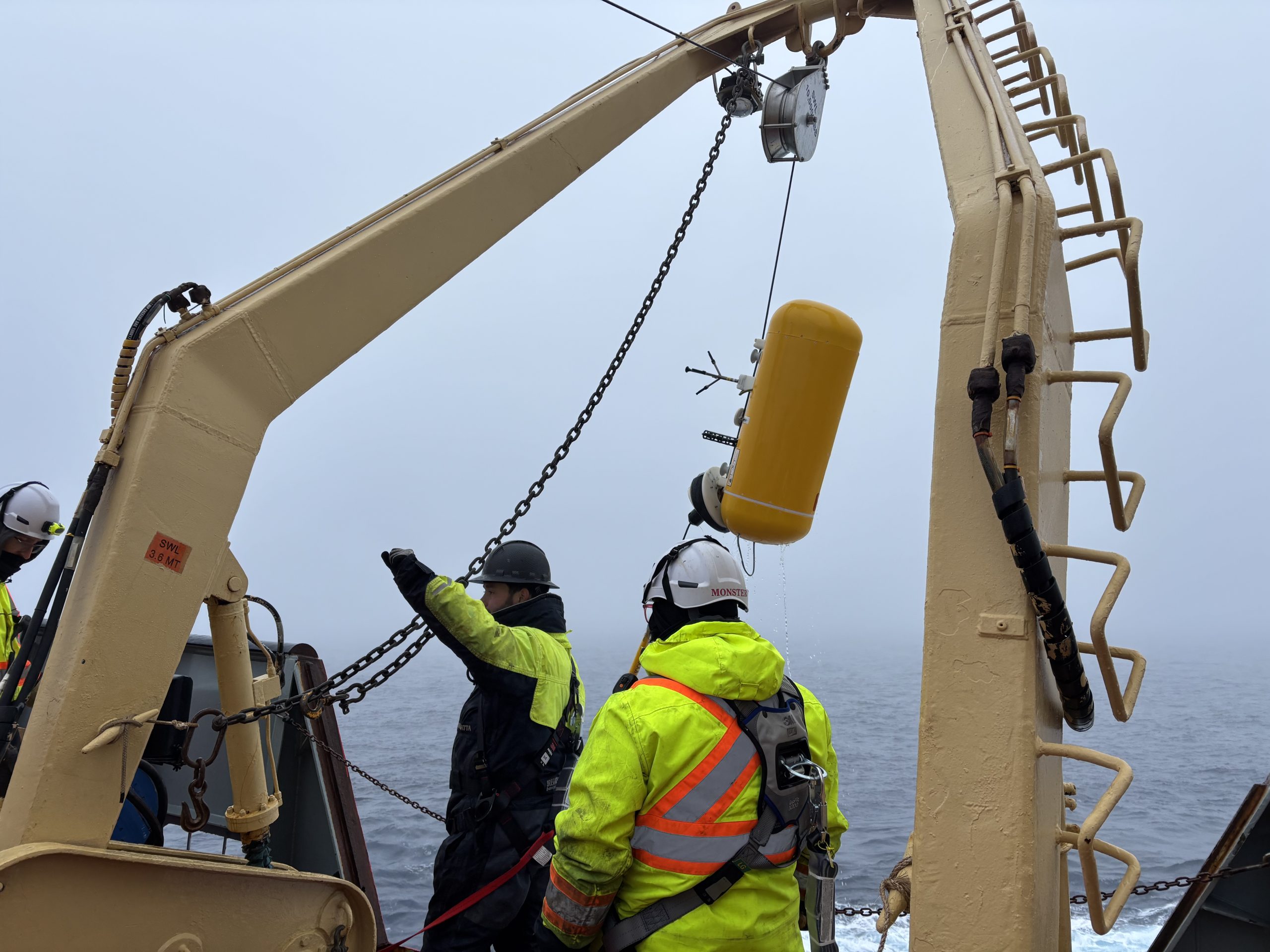
Today, we recovered Mooring D, the first of three full-depth moorings that we will recover and redeploy on this cruise. These moorings are positioned across the Canada Basin and provide us with year-round measurements of temperature, salinity, currents, sea ice draft, and bottom pressure. The sea ice cover prevents us from retrieving the mooring data remotely, so each year we must recover the moorings, download their data, and then redeploy. Mooring D was last deployed exactly one year ago on September 26, 2025. It’s exciting to be back here and see the data it collected for us this past year!
Dispatch 8: Northern lights!
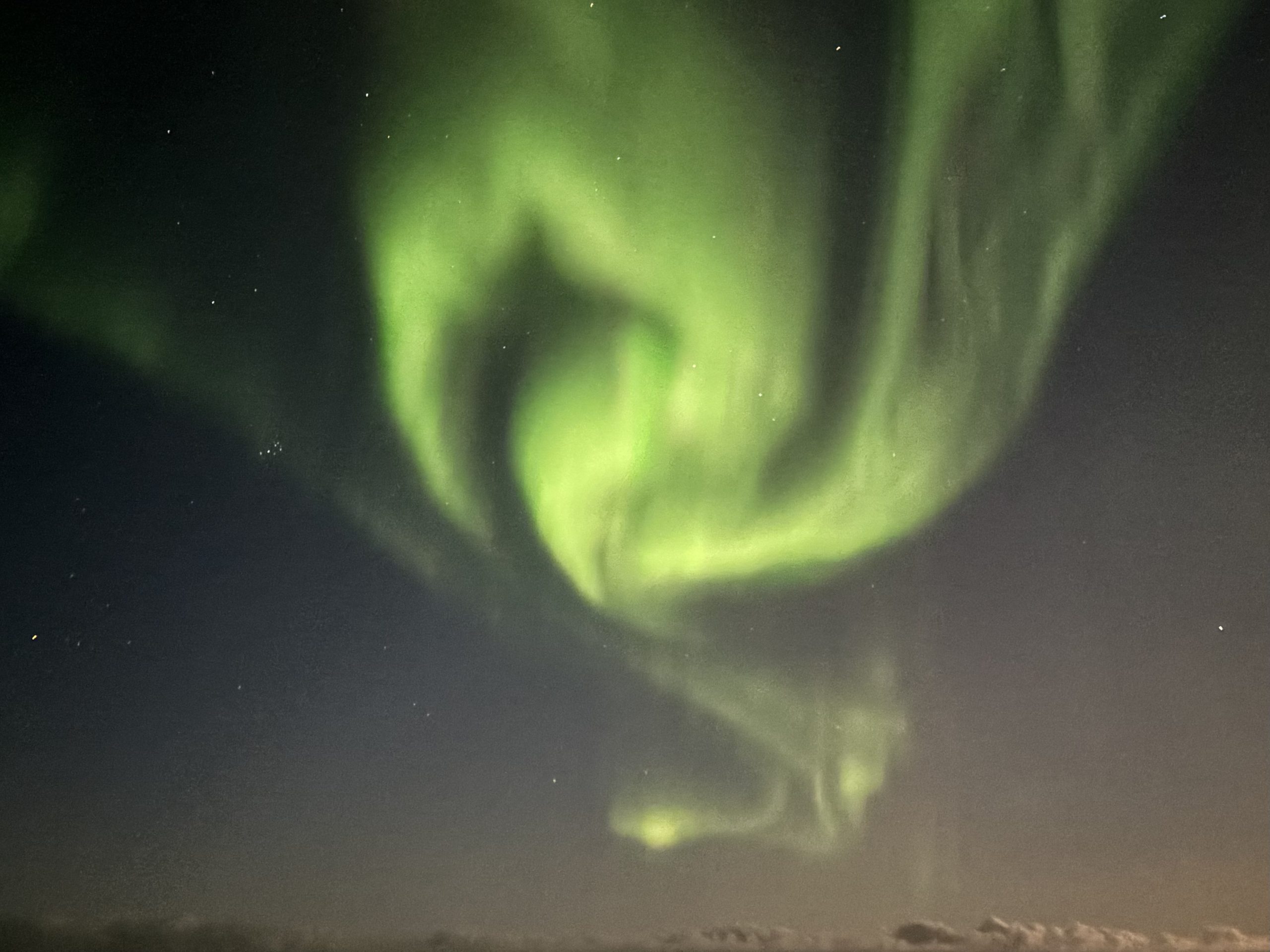
Early this morning, we were treated to incredible views of the northern lights! Everyone gathered on the helicopter deck to marvel at this beautiful natural phenomenon as we steamed through the night towards our next science station.
Dispatch 7: Arctic sushi
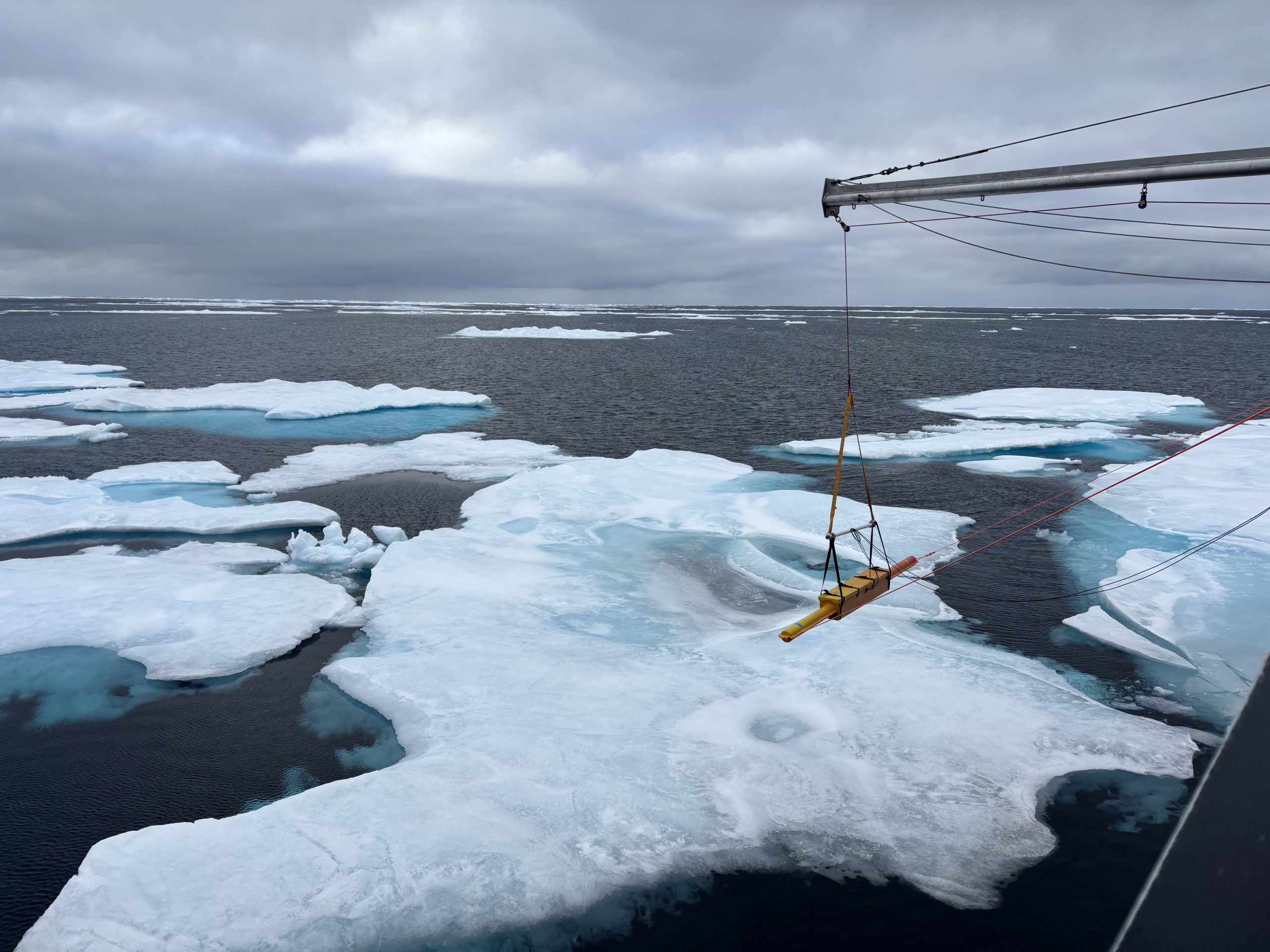
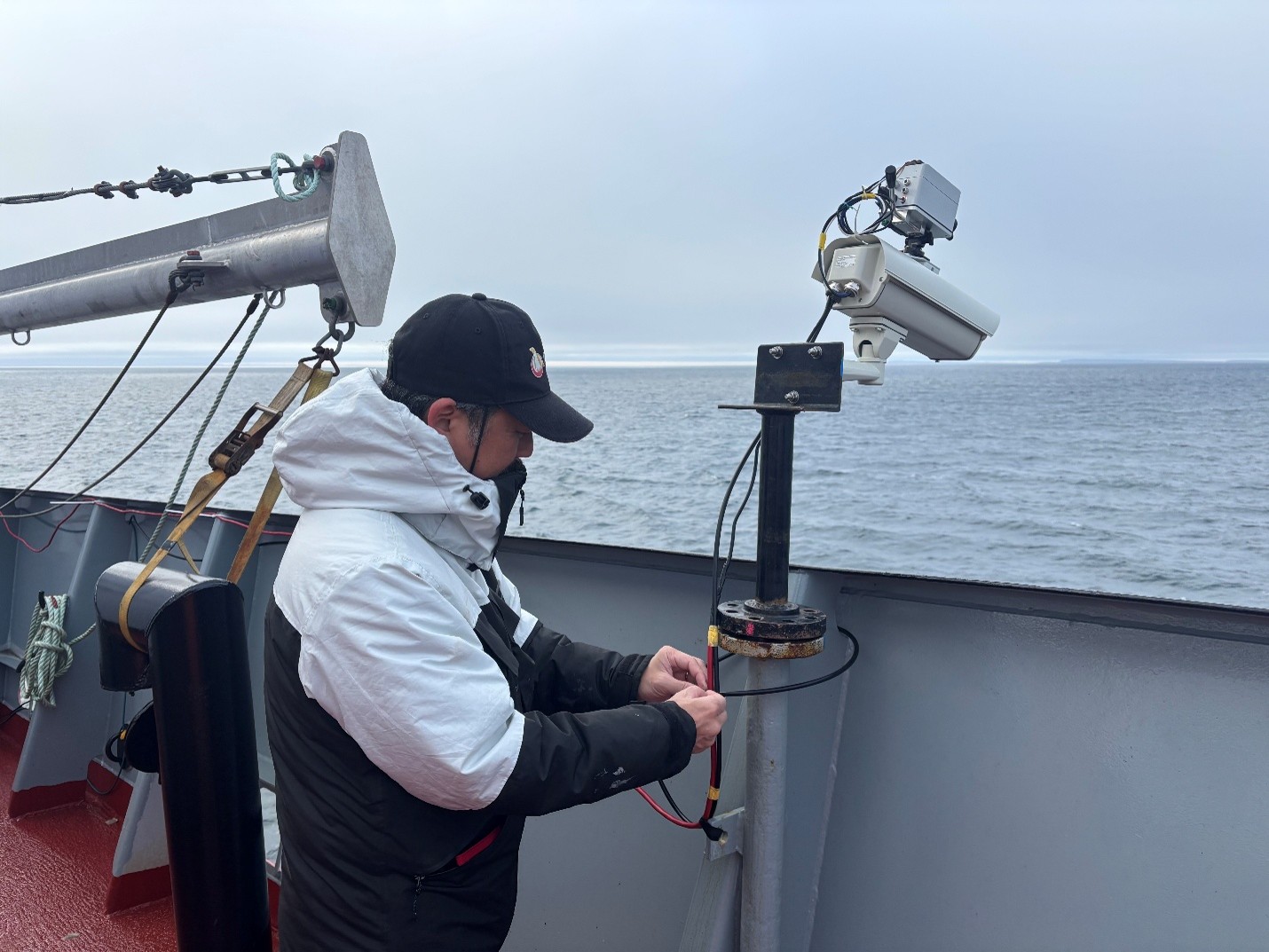
Now that we are cruising through ice, the team from Japan (Kazu Tateyama, Hayate Kato, Takuji Waseda, and Koya Sato) have deployed their sea ice measuring sensor, fondly known as the “sushi” (given its resemblance to a large, yellow sushi roll). The sushi is mounted on the port side of the foredeck and will collect measurements of sea ice thickness throughout the cruise.
Dispatch 6: Practice makes perfect
We found ice! Today, we were treated to gorgeous views of sea ice (including many fragments of thick, multi-year ice) as we transited between science stations. The ice provided an incredible backdrop to a productive day full of science.
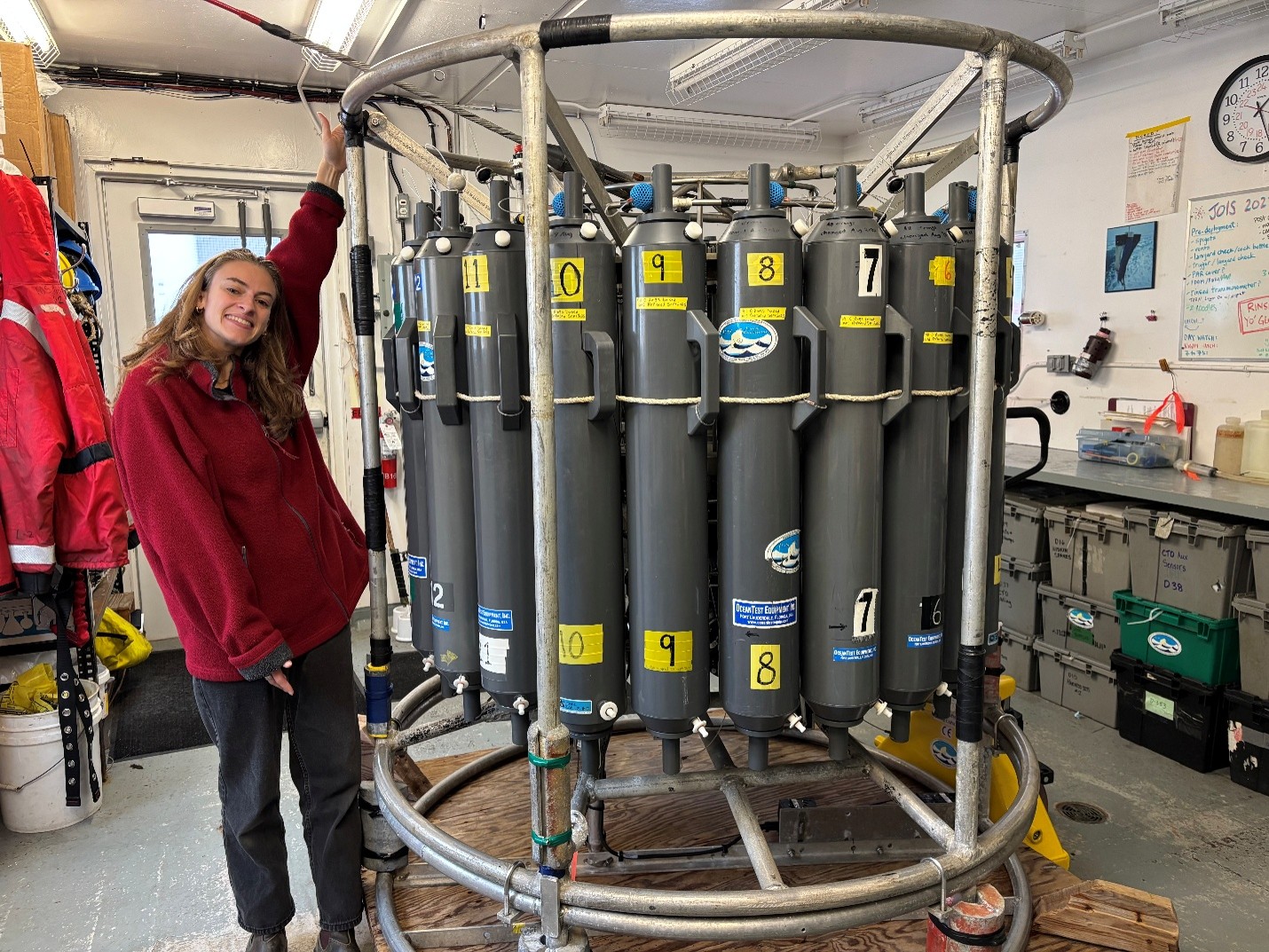
Dispatch 5: Meet Rosie
We had a quiet start this morning. The plan had been to arrive at our second science station (CB1) around 9 am, however, the Louis was diverted to the Tuktoyaktuk Peninsula to acquire additional medical supplies needed on board. This diversion has brought us into whale territory, so we have reduced our speed to 10 knots in order to protect any animals in the area. A lucky few have already reported sightings of bowhead whales today, so we are keeping our eyes peeled!
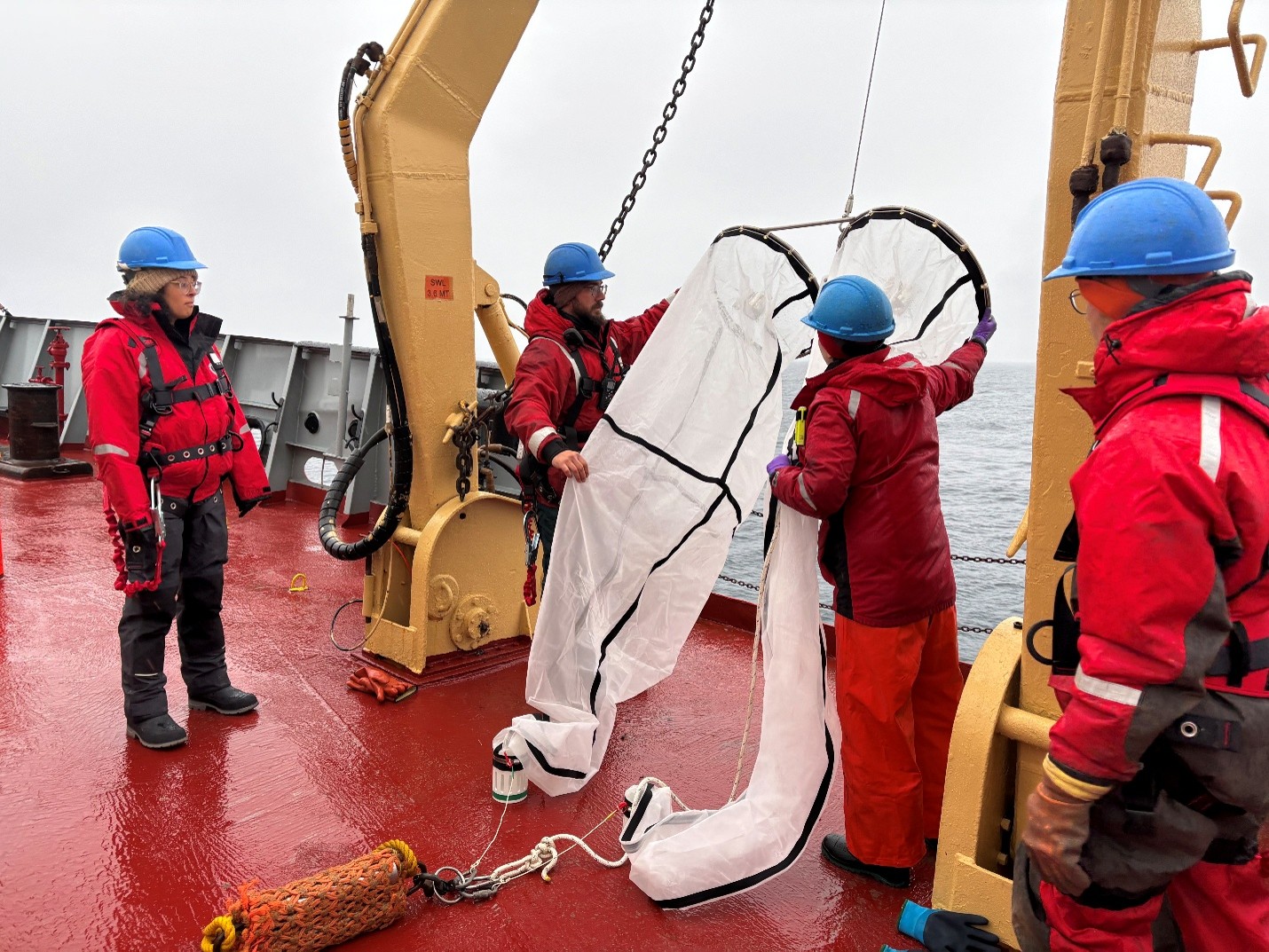
Dispatch 4: A rainy first science station
Today, we completed our first science station! We arrived at AG5 around 9 am, excited to begin collecting data despite the cold and rainy conditions.
Dispatch 3: Prepped and ready for anything!
Today’s theme was preparedness (for both ship-wide emergencies and our upcoming science operations!). We participated in a ship-wide emergency drill, which began with the alarm bells ringing just after lunch.
Dispatch 2: Refueling
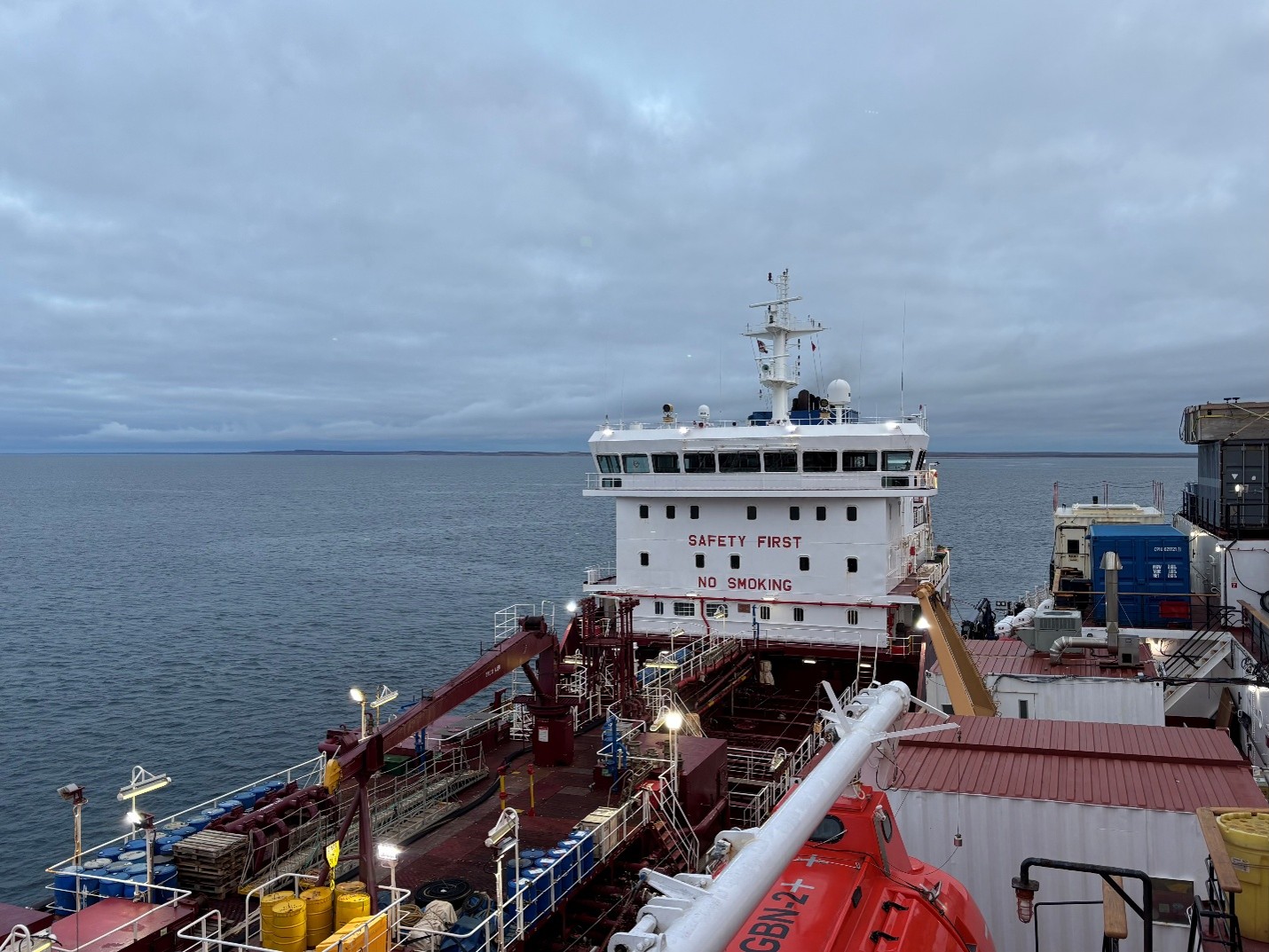
We spent the night in Cambridge Bay, so the Louis could refuel before we begin our long journey to the Canada Basin. Refueling began early in the morning and was an all-day operation. In the meantime, the science team kept busy with preparations for our upcoming work.
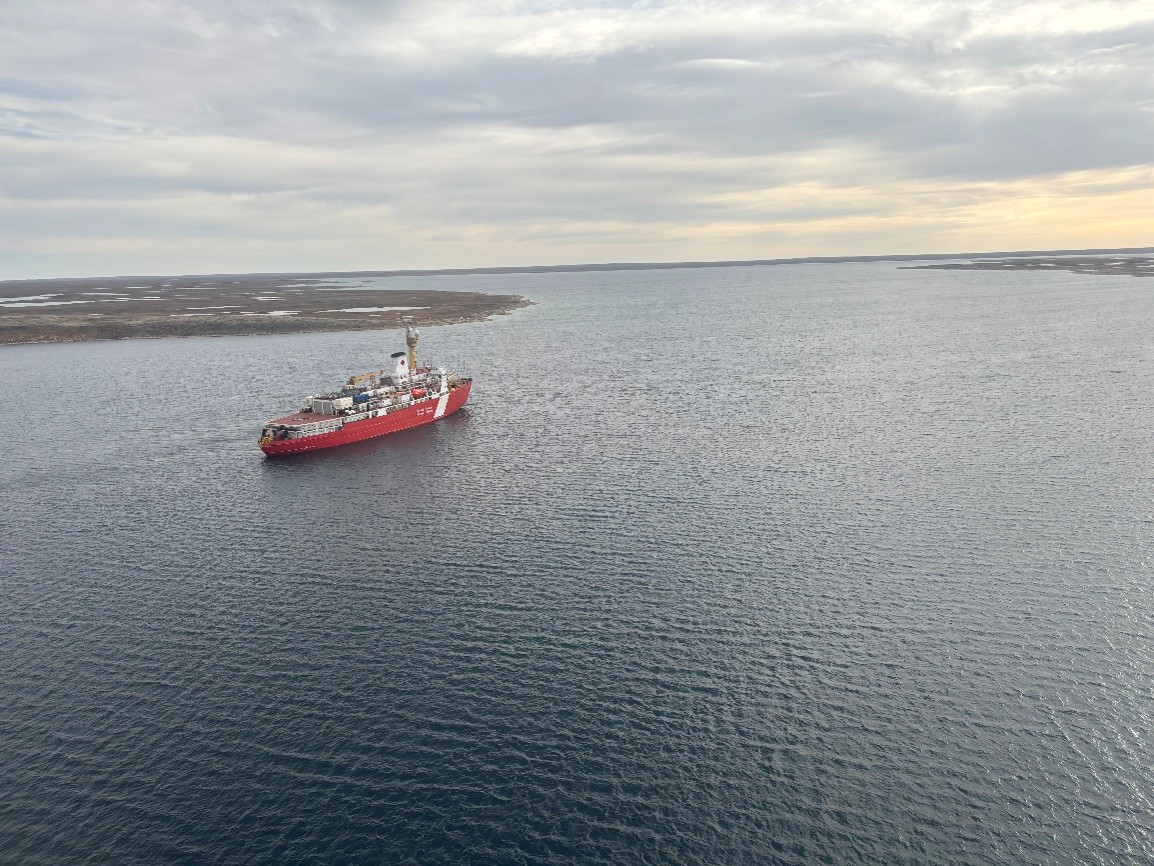
Dispatch 1: Let the Journey Begin!
Welcome to the 2026 Beaufort Gyre Observing System (BGOS) / Joint Ocean-Ice Study (JOIS) expedition! My name is Jennifer, and I am a member of the science team participating in this year’s expedition. I will be writing daily dispatches documenting our scientific activities and everyday life over the next 5 weeks. Thanks for following along!