Dispatch 4: A rainy first science station
Jennifer Kosty (Yale University)
September 21, 2026
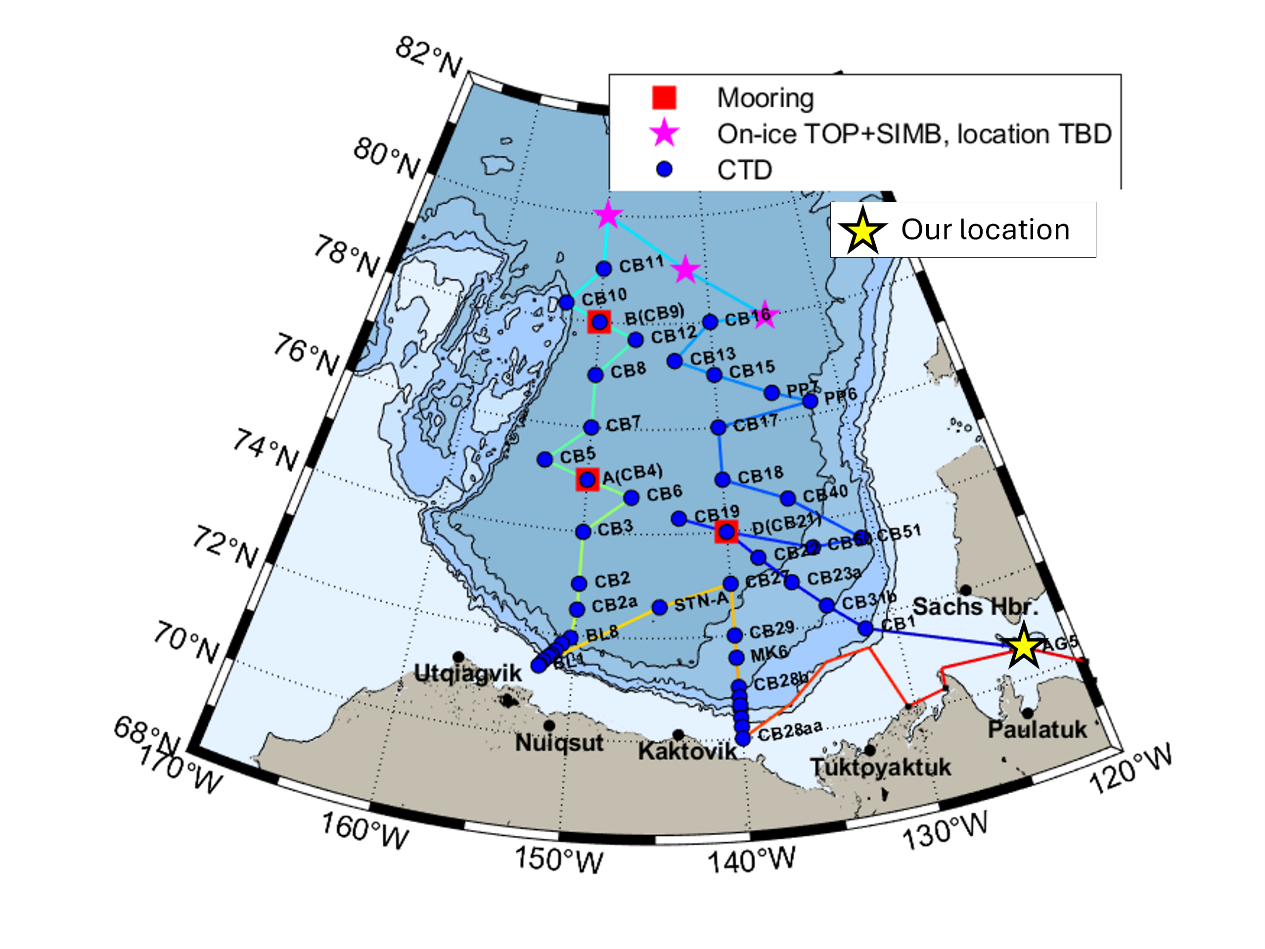
16:18 local, 70.42◦N, 124.42◦W
Conditions:
- Rainy
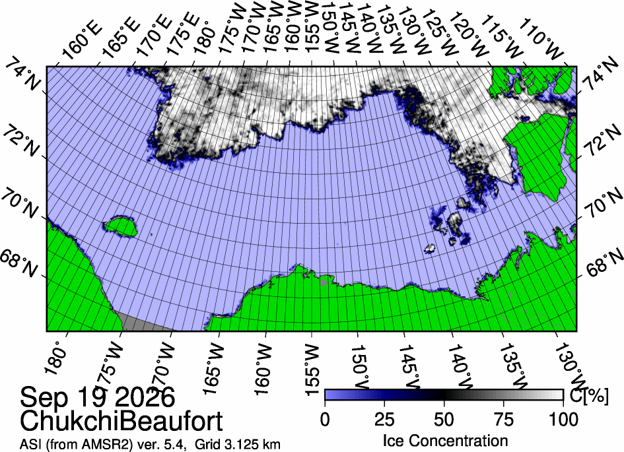
- 0% sea ice cover
- 1.8◦C
- Sunrise: 07:55 MDT (local)
- Sunset: 20:24 MDT (local)
- Day length: 12 hours, 29 minutes
Today, we completed our first science station! We arrived at AG5 around 9 am, excited to begin collecting data despite the cold and rainy conditions.
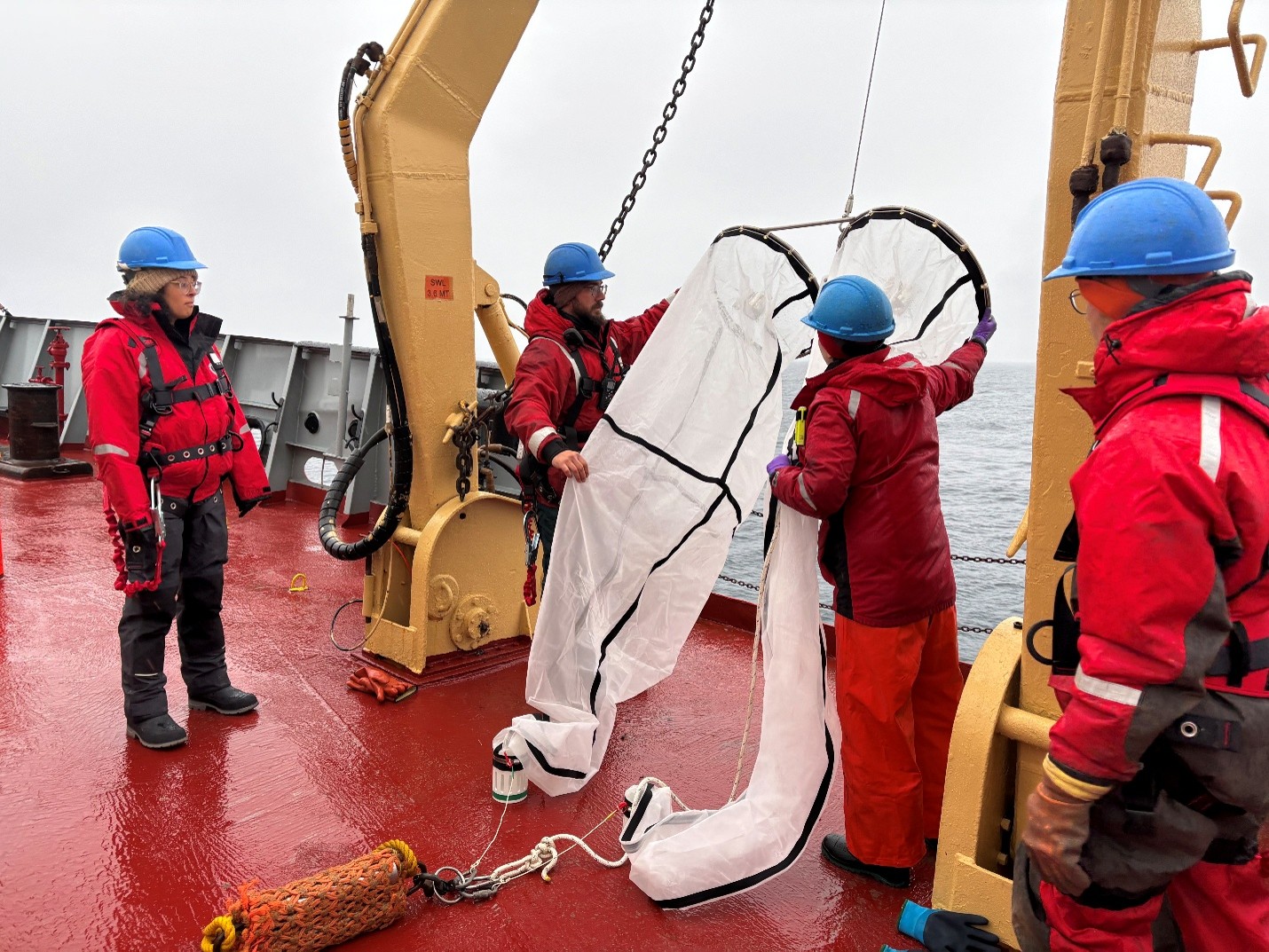
The station started with watch leaders Chris Clarke and Chloe Immonen leading the deck crew and watch standers through an orientation of the zooplankton sampling procedure. Zooplankton are small, free-floating animals that form the base of the global food web. Zooplankton samples will be collected at each of the science stations using Bongo sampling nets. Chris and Chloe demonstrated how to connect the Bongo nets to the foredeck winch. The nets were then lowered to 100 m and brought back to the surface, collecting a zooplankton sample as they ascended. Once the nets were back on board, the samples were preserved for future analysis.
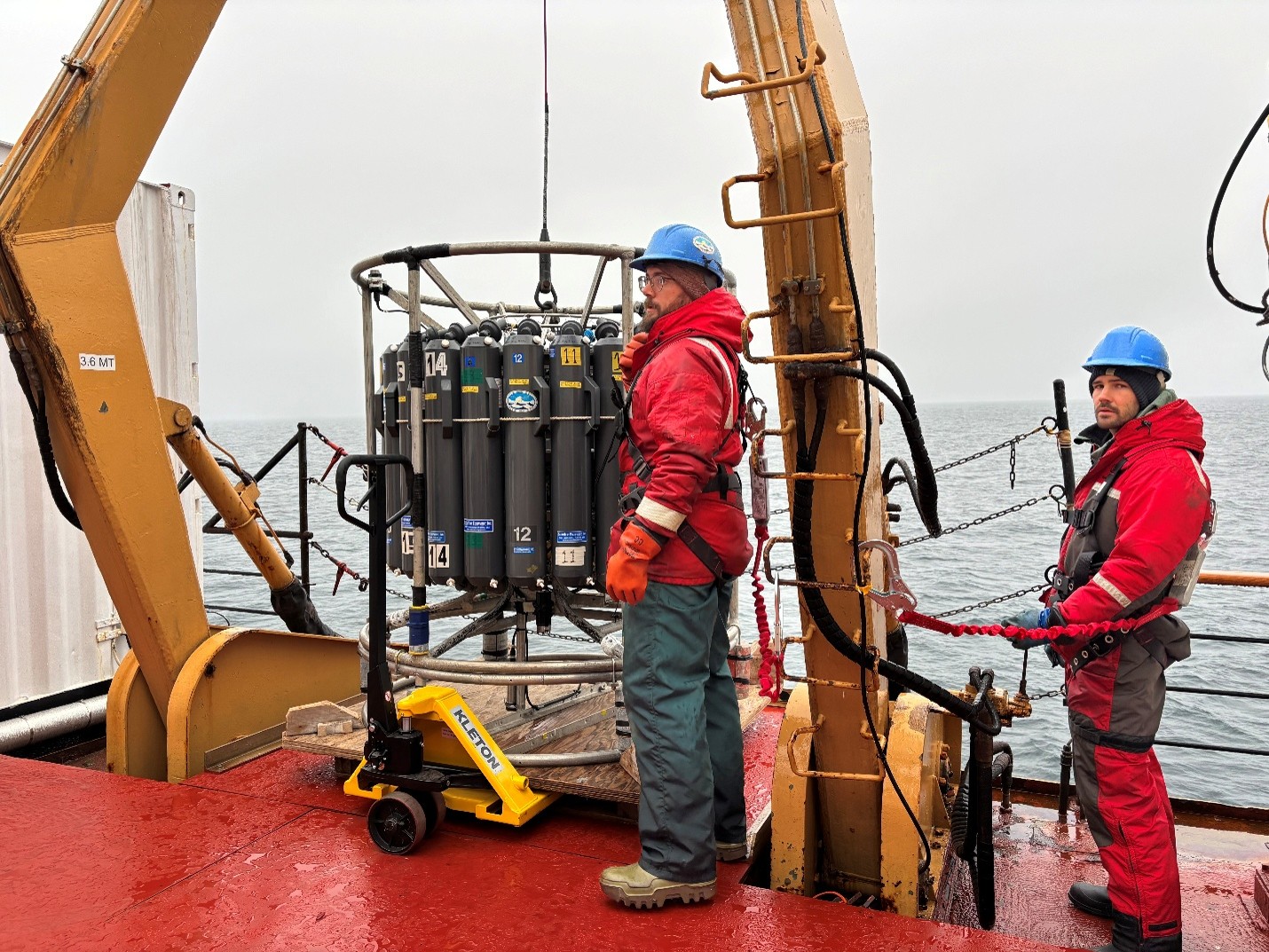
The watches then shifted their attention to completing our first CTD-rosette cast. These casts provide us with depth profiles and water samples of important oceanographic properties, including temperature, salinity, dissolved oxygen, nutrients, etc. (CTD stands for Conductivity-Temperature-Depth). More information to come in tomorrow’s dispatch!
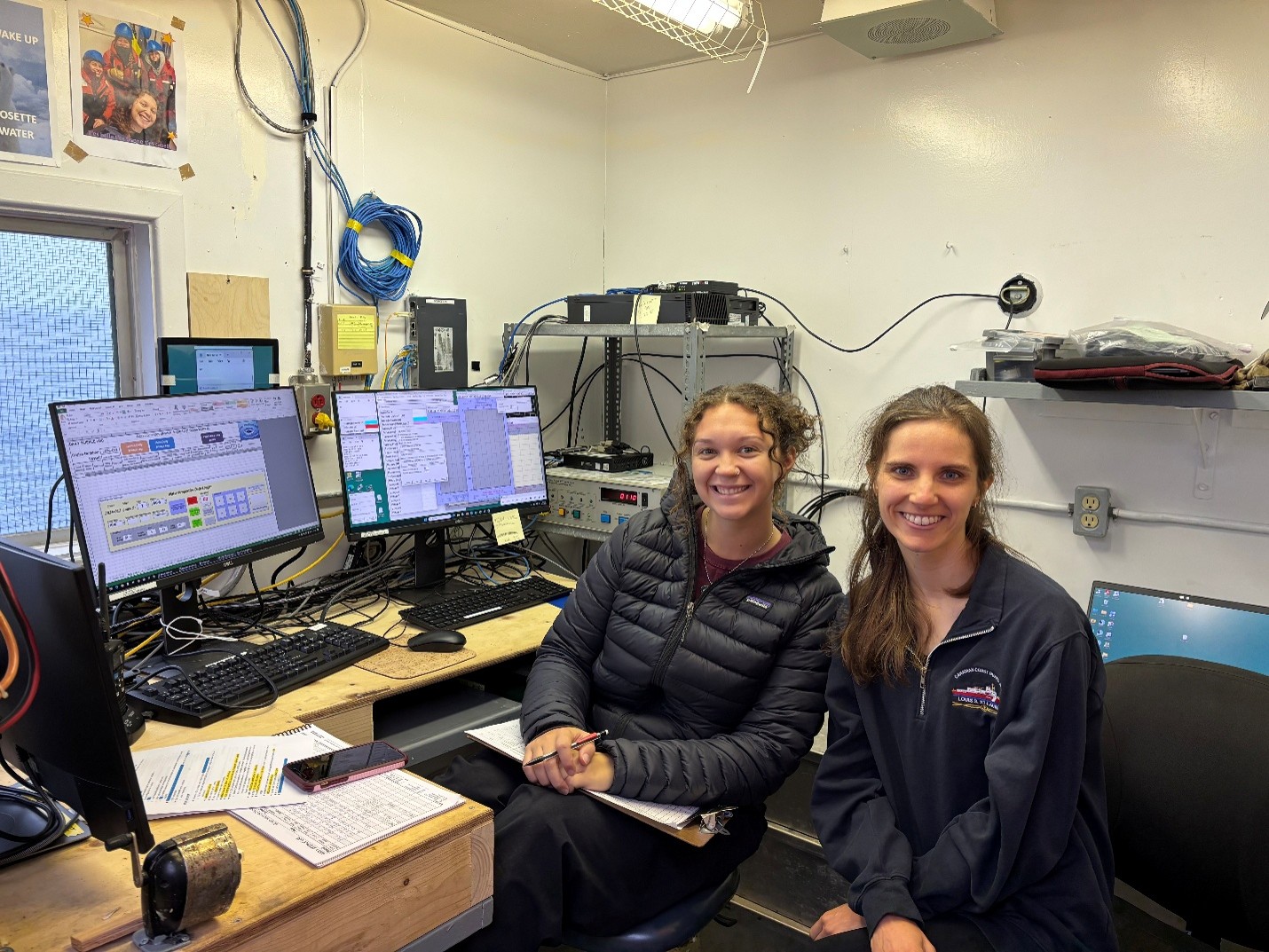
After the cast, our on-board analysts got to work processing the samples that were collected. Meanwhile, Jeff O’Brien and the team from Woods Hole led the deck crew through an introduction to the long-term moorings that we will be recovering and re-deploying later this week. We look forward to completing many more science stations in the upcoming weeks!