Dispatch 25: Welcome to the MIZ
Jennifer Kosty (Yale University)
October 12, 2026
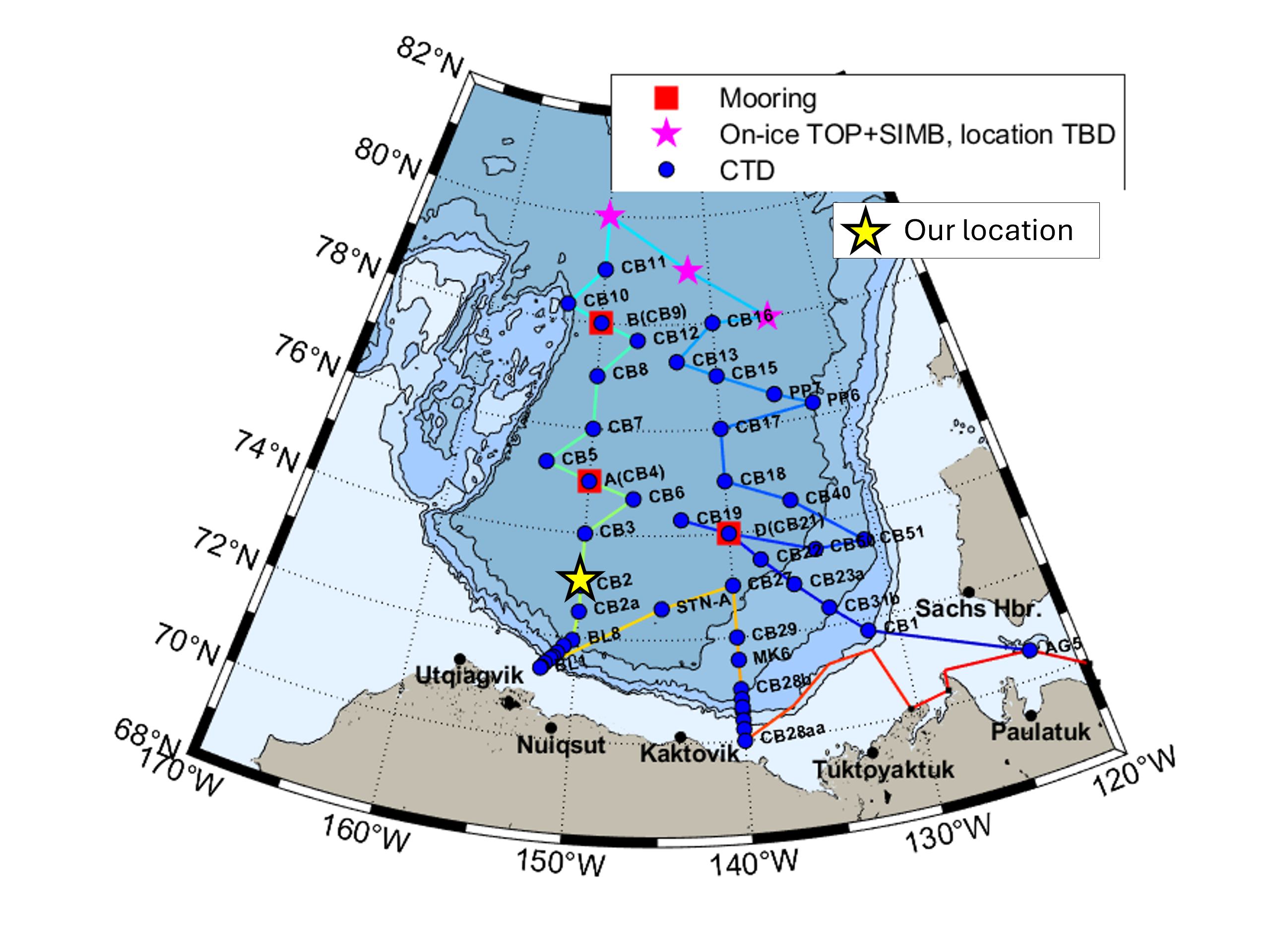
11:30 local, 72.59◦N, 150.01◦W
Conditions:
- 10% sea ice cover
- -8.8◦C
- Sunrise: 10:15 PDT (local)
- Sunset: 19:16 PDT (local)
- Day length: 9 hours, 1 minute
Happy Canadian Thanksgiving! We are incredibly grateful to have spent the past few weeks collecting data in the Arctic. The galley crew helped us celebrate yesterday with a proper Thanksgiving feast, complete with roast turkey, potatoes, dressing, and gravy. A huge thank you to them and the entire crew for their support – we couldn’t do it without you!
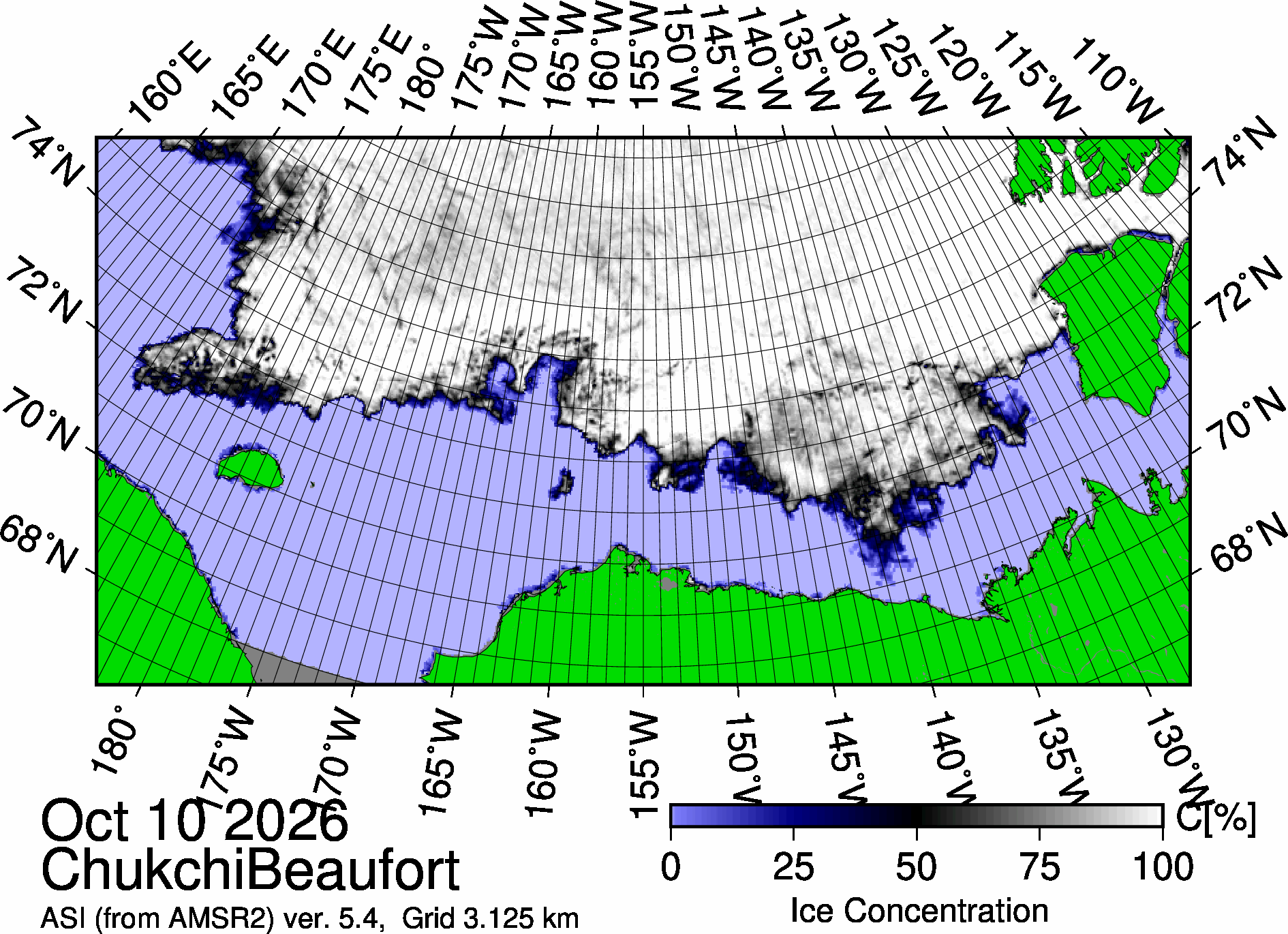
Today, we returned to the marginal ice zone (MIZ), the transition between open ocean and sea ice-covered waters. Although we have been steaming southward for over a week, the MIZ has remained just out of reach (until now), continuing to migrate southward as the seasonal freeze up progresses. Now that we have officially caught up, we are steaming through a beautiful patchwork of open water and fragments of thin, newly formed sea ice.
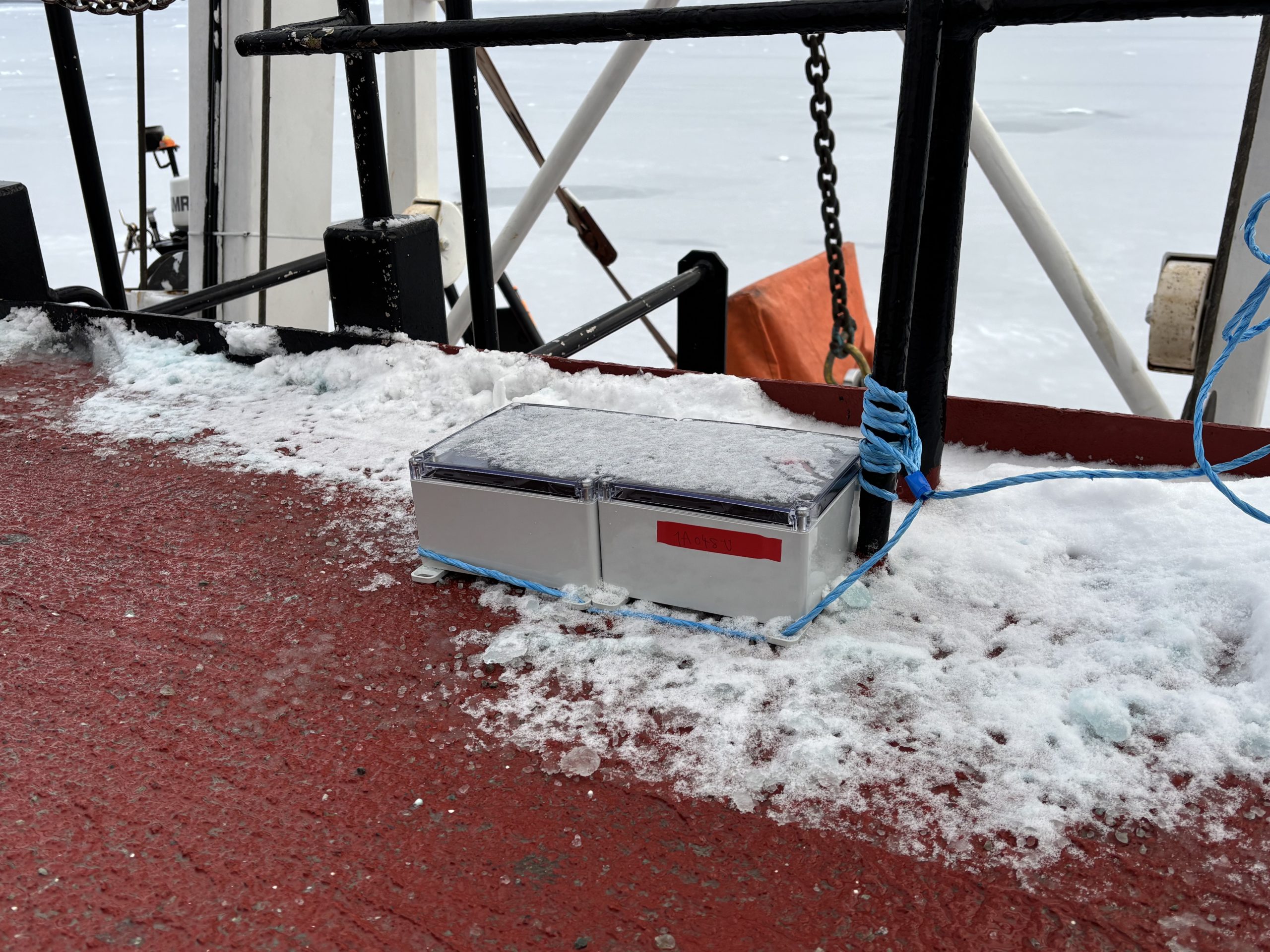
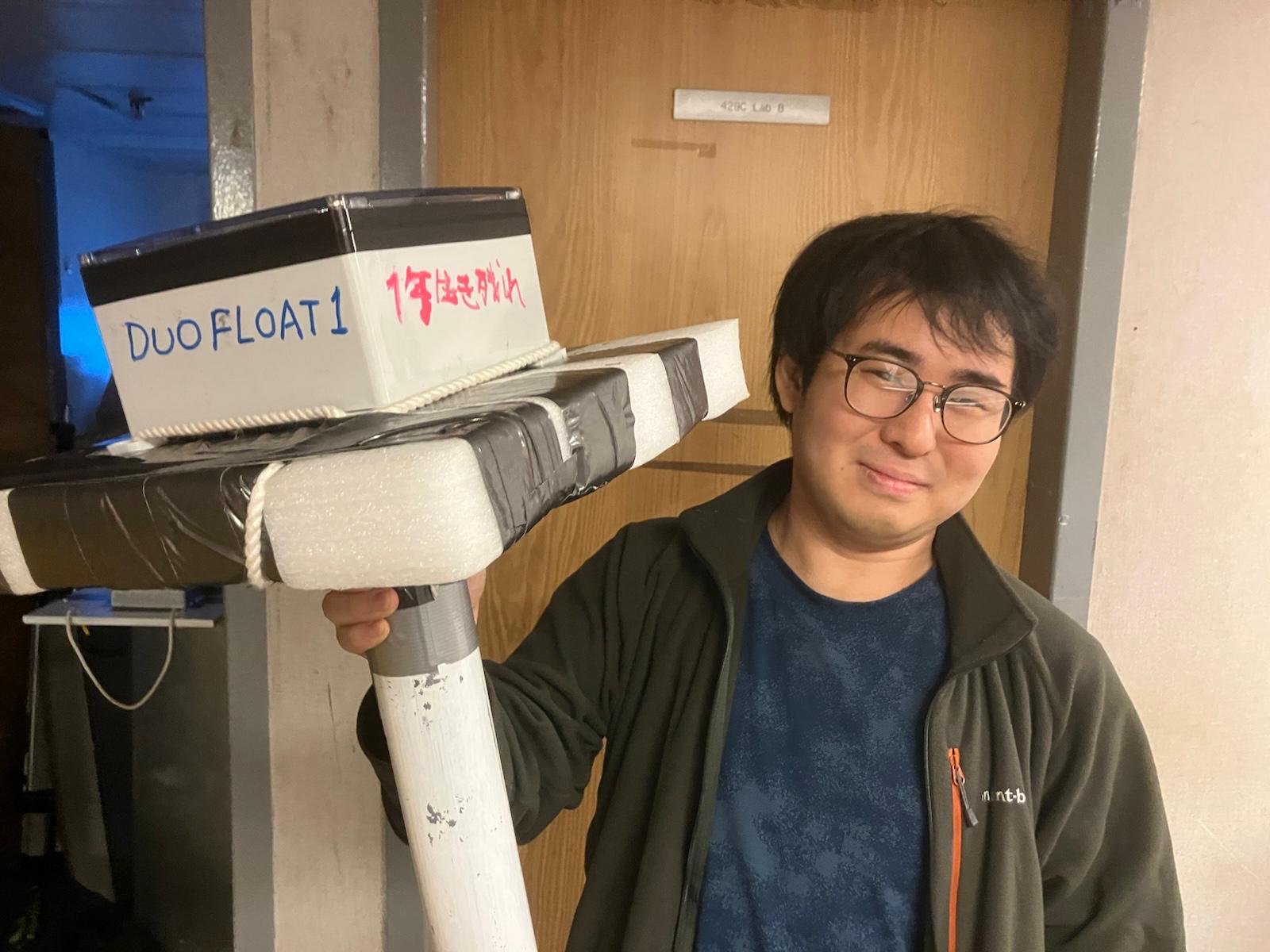
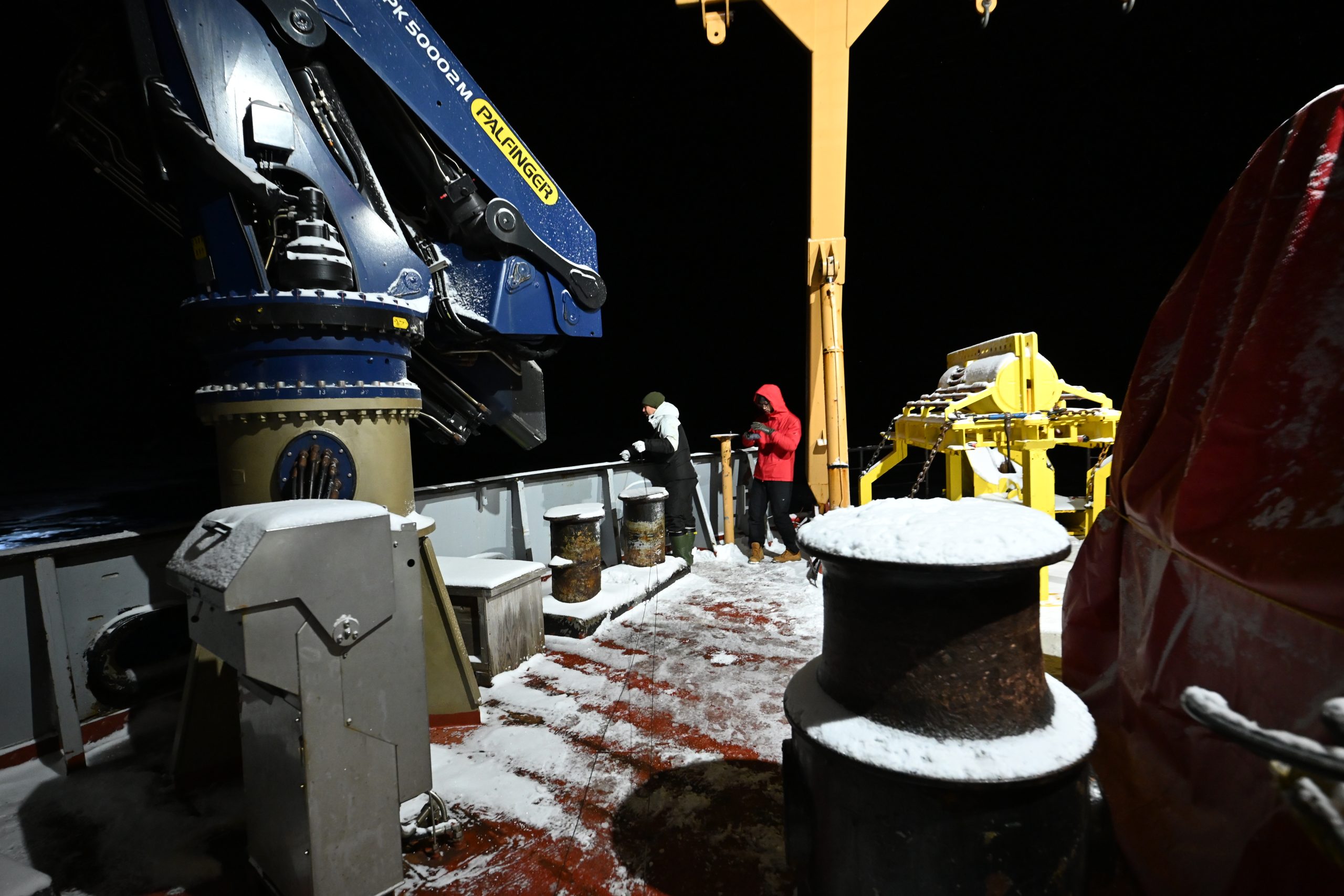
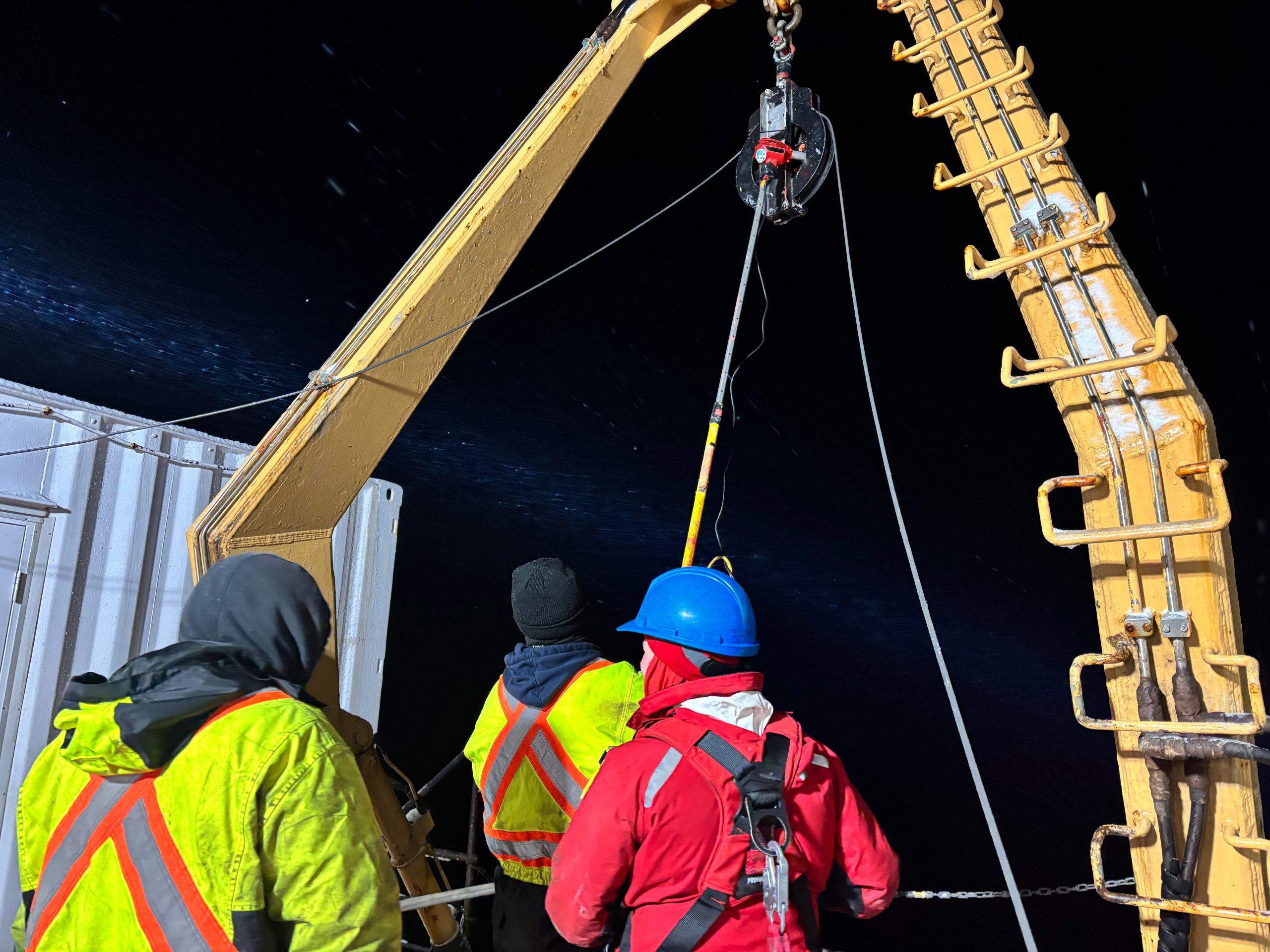
The team from Japan (Takuji Waseda, Koya Sato, Kazu Tateyama, and Hayate Kato) was especially excited about our return to the MIZ, as they have been patiently waiting to deploy a few additional wave sensors. Takuji and Koya brought extra instruments that were not needed for our big ice stations, so they decided to deploy the remaining ones within the MIZ. With the help of co-chief scientist Paul Macoun, they constructed a float out of foam board, PVC pipe, and tape, and then released the first sensor early this morning. We are super excited to see the data that these wave sensors collect! These instruments will help us better understand wave-ice interactions and how wave energy is attenuated within the MIZ.
We are currently en route to CB2a, where the day watch will complete another cast this afternoon. Although we are nearing the end of science operations for this year’s cruise, our last few days will be jam-packed with rosette casts!